

















Taxation plays an important role in the economy of any country; it is this aspect that determines its growth and prosperity. Some states offer low tax rates to investing residents, companies and businesses to attract more investment.
Sometimes, taxes are zero for certain categories, which also encourages workers to work harder for the benefit of the state. Let’s take a look at tax-free countries in 2024, as well as countries with low tax rates for certain categories, to understand their policies and how such decisions affect citizens in particular and businesses in general.
Citizenship-for-investment programs without income tax are more attractive to investors. However, a feature of this program is often that the investor must be physically present in that country for six months or more.
However, if you are looking for a tax haven for yourself, consider options of moving to one of the following tax-free countries, the conditions and requirements of which are quite feasible for wealthy businessmen. There are many such countries, and each has its own pros and cons. Let’s consider some of them further.

Turkey
Moving to this country gives investors the opportunity to run their own business in the comfort of a transparent and clear tax system, which, according to Immigrant Invest expert Zlata Erlach, can help any business develop quickly and successfully. Checks from regulatory authorities are carried out only at the initial stage of opening a business.
If there are no irregularities, you are not likely to be disturbed in the future. There are 18 free zones with special tax regimes in the country, which allows you to more actively develop your business in different industries. There is no corporate tax or income tax, but stamp duty and tax on movable and immovable property are required.
Vanuatu
Vanuatu is an exotic island in the Pacific Ocean whose government does not levy taxes on salaries, pensions, dividends and other personal income. Tax residents receive a tax exemption certificate. However, individuals are subject to a 12.5% tax on rental income from real estate located in the state.
Companies are granted a tax exemption on annual profits for as much as 20 years. However, they will have to pay $300 annually for a license. For most foreign goods and services, VAT is 12.5%. To become a citizen of Vanuatu, you need to invest $130,000 in the local development fund.
United Arab Emirates
The Emirates is the best example of a country with the lowest tax rates in the world. There is no income tax for individuals, companies and businesses on capital gains or wealth. Minimum duties are set to attract foreign investment, businesses and skilled professionals who flock to the country permanently. Working conditions for them are negotiated on an individual basis. And even with this policy, the UAE is prospering and getting richer day by day.
Antigua and Barbuda
Exotic islands have no income tax for individuals, and there are no duties on property, assets, inheritance, dividend and capital gains. VAT on most imported goods and services is 15%. However, basic foodstuffs, medicines, educational materials and some other goods are not subject to VAT.
As for companies, they are exempted from corporate income tax and duty on their assets for 50 years. Very favourable conditions, aren’t they? Investors wishing to invest in the local economy must have $100,000 and another $30,000 to pay the state duty.
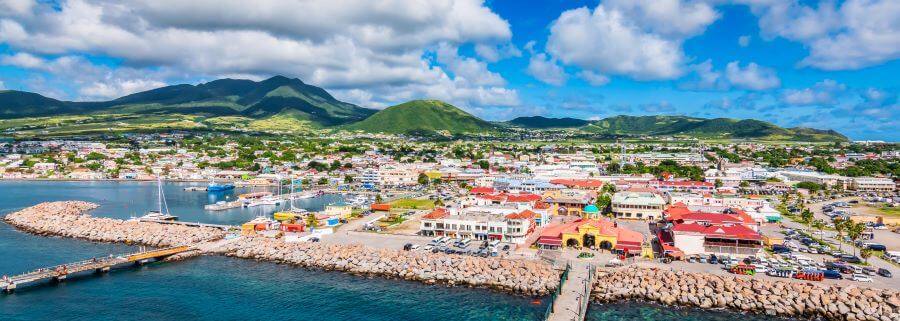
Saint Kitts and Nevis
Islands will not be an escape from duties for individuals, but the status of tax resident gives significant pros. Namely, an individual will not have to pay for capital gains, inheritance and wealth, unless he/she works for a company registered in the islands.
Individuals working for a local company in the country must pay taxes of:
- 5% on wages between $370 and $2405;
- 10% on wages between $2405 and $2960;
- 12% on wages of $2960 or more per year.
At the same time, the social contribution is 5% of local wages. If a non-resident receives corporate dividends, business interest and royalties from sources within the country, he has to pay a 15% duty.
For any activity related to tourism, VAT is 11%. And for other areas, it is 16 %. Companies, on the other hand, pay a high tax rate of 33% on their profits outside the tropical islands. If a company operates exclusively abroad, it can expect an exemption from this tax for up to 15 years.
Bottom Line
Now you understand which taxes in the above-mentioned countries can be waived and which ones are mandatory for an individual or a company. However, before applying for immigration and starting the process, it is important to consult with migration specialists and assess your chances of a positive response.














