British golf rarely gives you one kind of weather for a full round. A calm first tee can turn into a windy back nine, and a bright morning can become a wet walk up the eighteenth. Dressing well for golf is not about wearing the thickest jacket you own or a hat to shield from the sunshine. It is about building an outfit that keeps you warm, dry and free to swing properly.
The best approach is a simple layering system of a breathable base, a flexible mid-layer, and a weatherproof outer layer that can be added or removed as conditions change. With the right combination, you can stay comfortable without feeling restricted.
Start with a breathable base layer
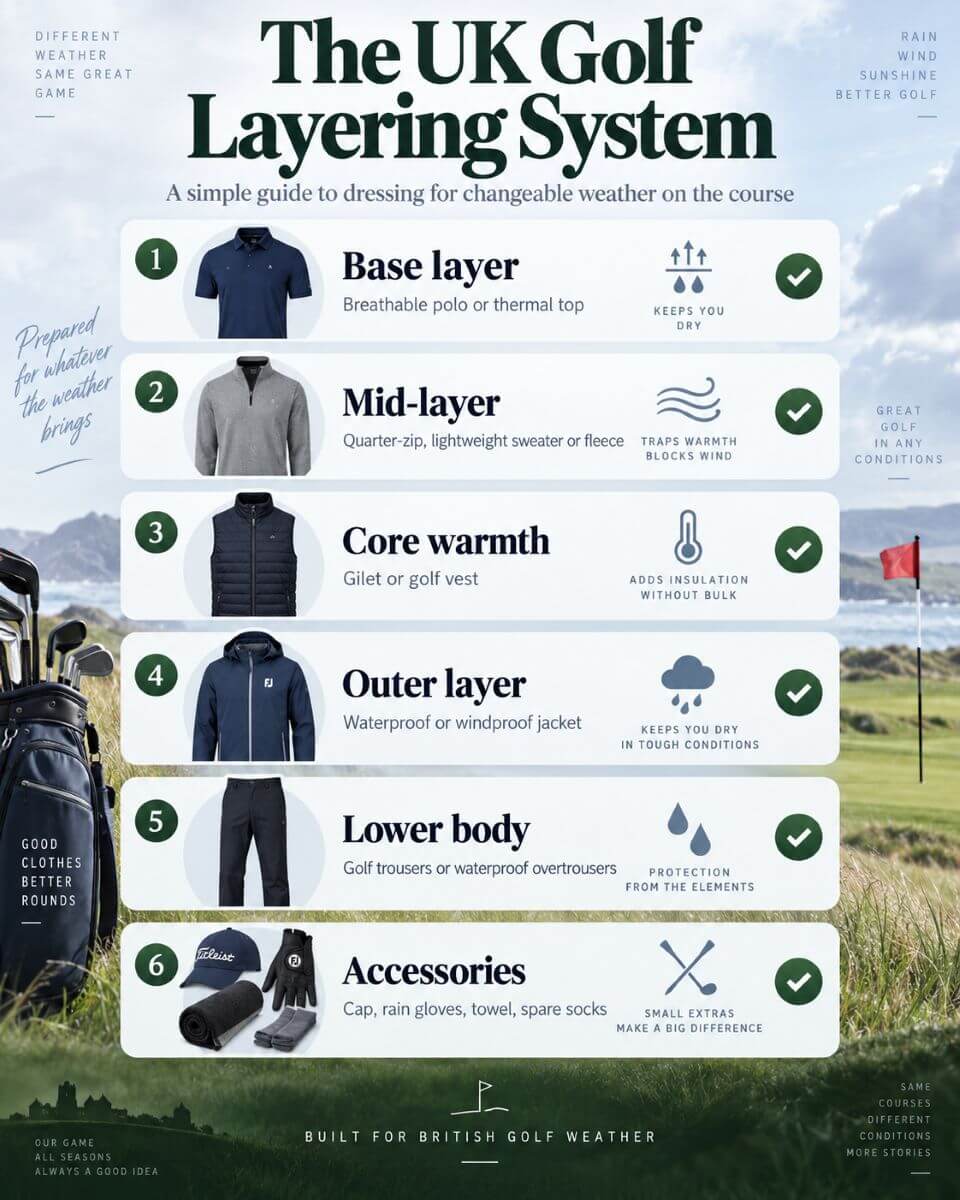
Your base layer sits closest to your skin, so it has the biggest effect on comfort. For most rounds, well-fitted Polo shirts are a popular choice and the most practical starting point. It looks smart enough for the clubhouse, works under a jumper or jacket, and gives you enough movement through the shoulders.
The key is fabric. Cotton can feel comfortable at first, but it holds moisture once you start walking or if rain gets through your outer layer. A technical or moisture-wicking polo is usually a better choice because it helps move sweat away from the skin and dries more quickly.
Fit matters just as much as fabric. A polo should sit close enough to layer over, but not so tight that it pulls across your shoulders during the backswing. If you play often in cooler months, consider a long-sleeve performance top or thermal base layer beneath your polo for extra warmth without bulk.
Add warmth without restricting your swing
The mid-layer is where many golfers get it wrong. A thick jumper may feel warm on the first tee, but it can restrict rotation and become uncomfortable once you start walking. Lightweight warmth is better than heavy insulation.
Quarter-zip tops are a reliable option because they are easy to adjust during the round. You can zip up while waiting on an exposed tee, then open the collar as you warm up. Lightweight golf sweaters also work well, especially when they have enough stretch through the arms and shoulders.
A golf vest or gilet is particularly useful in the UK. It keeps your core warm while leaving your arms free, which helps protect the rhythm of your swing. On windy days, a thin wind-resistant vest can be more practical than a heavy jacket.
Choose the right outer layer for wind and rain
A good outer layer should protect you from the weather without making you feel wrapped in plastic. For golf, that means looking for three things in water resistance or waterproofing, breathability, and stretch.
A lightweight waterproof jacket is worth carrying when showers are possible, even if the forecast looks mostly dry. It should be easy to fold into your golf bag and quick to put on between shots. The best golf rain jackets are cut for movement, with enough room across the shoulders and sleeves that do not tug when you grip the club.
For windy conditions, a windproof or wind-resistant jacket may be more comfortable than a full waterproof shell. Wind chill can make a mild day feel much colder, especially on open or links-style courses. A thin wind layer can make a noticeable difference without adding bulk.
If rain is likely, waterproof trousers are also worth considering. Many golfers remember the jacket but forget that wet trousers can make the rest of the round miserable. Choose a pair that can be pulled on quickly over your golf trousers and does not bunch around the knees.
Dress for the season, not just the forecast
A good forecast helps, but it does not tell the whole story. Golfers spend several hours outside, often in exposed areas, so the “feels like” temperature matters more than the number on the weather app.
In spring, expect changes during the round. A polo, light quarter-zip and packable waterproof will cover most conditions. In summer, focus on breathable fabrics, sun protection and a cap. Even then, a thin wind layer can be useful for early tee times or exposed courses.
Autumn golf usually calls for a warmer mid-layer, water-resistant trousers and an outer layer close to hand. In winter, build from the skin out with a thermal base layer, polo or long-sleeve top, insulating mid-layer, then waterproof or windproof protection. Gloves, a beanie and thicker socks can make more difference than simply adding another heavy jumper.
Do not forget your feet, hands and head
Accessories often decide whether a round feels comfortable or frustrating. Wet hands make it harder to grip the club, cold feet make walking unpleasant, and an uncovered head can make you lose warmth quickly in winter.
A breathable cap is useful in sunny or showery weather, while a waterproof bucket hat or rain hat offers better protection in persistent rain. In colder months, a thin beanie can keep you warm without interfering with your setup.
Gloves are worth planning carefully. A standard golf glove may be fine in dry weather, but rain gloves are designed to grip better when wet. On cold days, winter golf gloves or mitts between shots can help keep your hands warm enough to feel the club properly.
Socks are another small detail with a big effect. Moisture-wicking socks help prevent damp, uncomfortable feet during long rounds. In winter, choose warmer performance socks, but make sure your shoes still fit properly. Socks that are too thick can create pressure and blisters.
Keep your outfit smart enough for the course
Golf clothing needs to be practical, but it still has to look appropriate. Many clubs expect a collared shirt, smart golf trousers or shorts, and proper golf shoes. Dress codes vary, so it is worth checking before visiting a new course.
The easiest way to stay smart is to keep the base outfit simple and coordinated. Neutral trousers, a well-fitted polo and a clean mid-layer will work almost anywhere. Outerwear can be more technical, but it should still fit neatly and not flap around in the wind.
Avoid the temptation to wear bulky outdoor coats that were not designed for golf. They may keep you warm, but they often restrict your swing and look out of place on the course.
A simple outfit guide for changing conditions
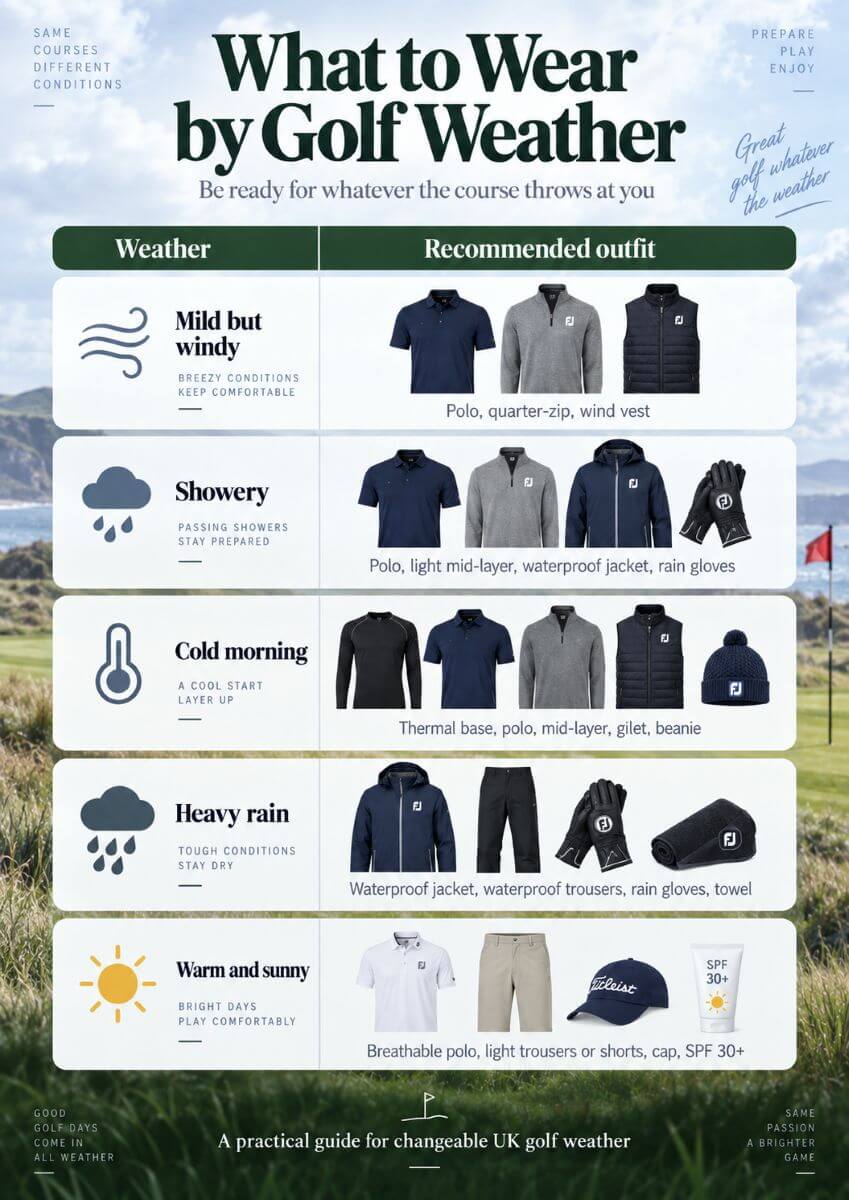
For a mild but breezy day, wear a performance polo, lightweight quarter-zip and wind-resistant vest or jacket. This gives you warmth through the body without restricting your arms.
For a wet forecast, choose a moisture-wicking polo, light mid-layer, waterproof jacket and waterproof trousers. Add rain gloves, a towel and a waterproof hat.
For a cold morning that may warm up later, start with a thermal base layer, polo, mid-layer and gilet. Keep a packable waterproof in your bag and remove layers as the temperature rises.
For summer golf, wear a breathable polo, lightweight trousers or tailored golf shorts, a cap and sun protection. Carry a thin wind layer if you are playing early, late or on an exposed course.
What should golfers avoid wearing in unpredictable weather?
Avoid bulky jumpers, heavy coats, cotton layers that hold moisture, and jackets that restrict shoulder movement. The wrong clothing can affect both comfort and swing mechanics. Anything that makes it hard to rotate, grip the club or stay dry will become a distraction by the middle of the round.
It is also worth avoiding over-layering at the start. If you are warm on the first tee, you may be too hot after a few holes. Start slightly cool, then adjust as your body warms up from walking.
The best golf outfit is flexible
Good golf clothing should let you concentrate on the shot, not the weather. The ideal outfit keeps your core warm, protects you from wind and rain, allows your arms and shoulders to move freely, and can be adjusted as the round changes.
Start with a breathable polo or base layer. Add a light mid-layer for warmth. Carry a waterproof or windproof outer layer. Finish with the right gloves, socks, hat and shoes for the conditions.
That combination will not stop the British weather from changing, but it will stop it from spoiling your round.
Frequently Asked Questions
What should I wear for golf in changeable UK weather?
Wear a breathable polo or base layer, a lightweight mid-layer such as a quarter-zip, and a packable waterproof or windproof jacket. In wet conditions, add waterproof trousers, rain gloves and a waterproof hat.
Is a golf vest better than a jacket?
A golf vest is often better in mild but windy weather because it keeps your core warm while leaving your arms free. A jacket is better when you need full protection from rain or stronger wind.
Are waterproof trousers worth wearing for golf?
Yes, waterproof trousers are worth carrying when rain is likely. They keep your legs dry, help preserve warmth and make the round more comfortable, especially when walking through wet rough or sitting in a buggy.
What fabrics are best for golf layering?
Technical, moisture-wicking and stretch fabrics are best for golf layering. They help manage sweat, dry more quickly than cotton and allow better movement during the swing.
How can I stay warm without restricting my golf swing?
Use several thin layers instead of one bulky layer. A thermal base layer, polo, light quarter-zip and gilet usually provides warmth while keeping your shoulders and arms free to move.