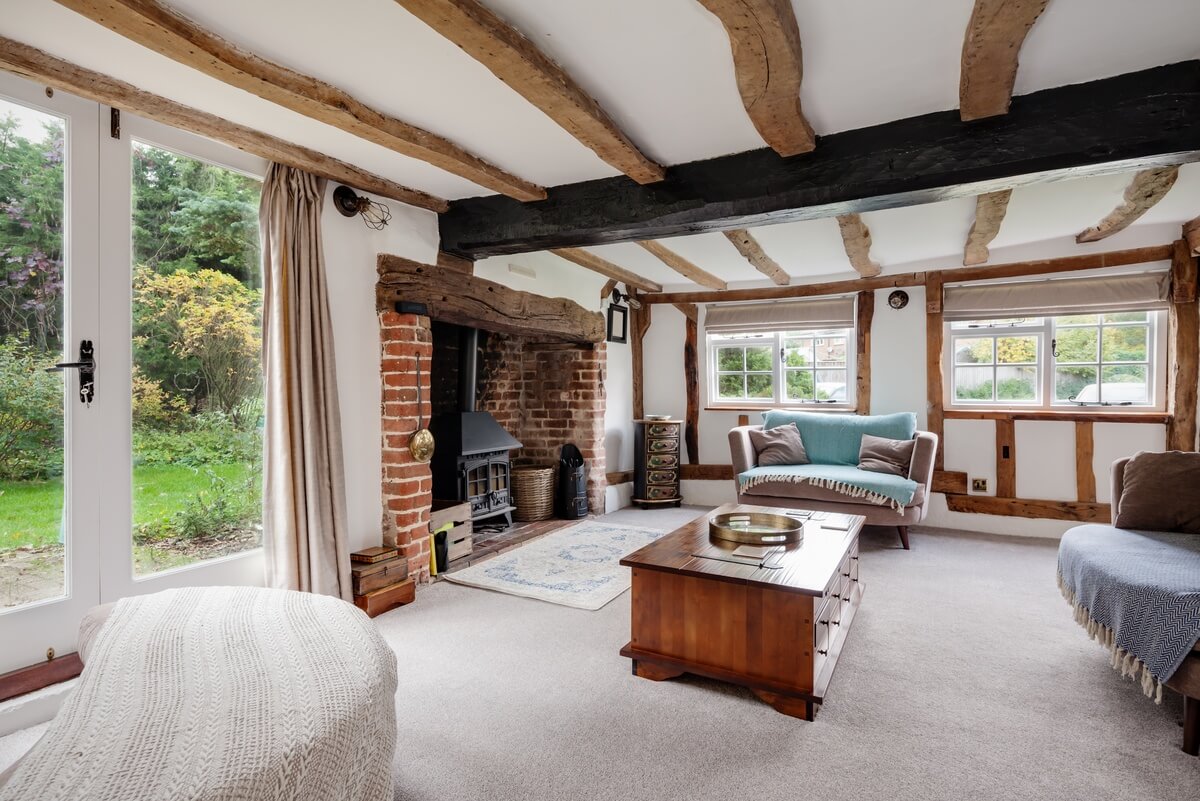
A wooden table with a few marks of everyday life, a comfortable armchair and a lamp switched on beside it. The appeal of modern country interiors often lies in these ordinary details: useful furniture, warm materials and rooms that feel comfortable to spend time in.
You do not need exposed beams or a farmhouse kitchen to make the look work. In an Oxford terrace, a village cottage or a newer family home, it can start with the furniture you already own. A few considered changes to colour, texture and layout can bring the room together without replacing everything.
Start with what you want to keep
Before choosing paint or browsing furniture, look at the pieces that already earn their place. That might be a solid dining table, a bookcase inherited from family or a sofa that is still comfortable but needs different cushions.
Build around those items. An older pine dresser can sit alongside a simple contemporary table. A dark wooden chest can give a pale room a stronger focal point. The contrast is part of the interest, so there is no need to make every piece look as though it came from the same collection.
It also helps to identify what is bothering you. If the room feels crowded, changing the layout may achieve more than buying another storage unit. If it feels bare, try moving a lamp, rug or picture from elsewhere in the house before ordering something new.
Choose colour around the room’s light
Warm white, oatmeal, muted green and soft clay are useful starting points for this style, but the right shade depends on the room. A colour that looks inviting beside a sunny window may look quite different in a shaded corner.
Try samples on more than one wall and look at them in daylight and with your lamps on. Compare them with the flooring, curtains and largest pieces of furniture. These are the surfaces the paint needs to work with every day.
Keep stronger colours in places where you enjoy them. An olive cupboard, a patterned curtain or a rust-coloured cushion can add depth to a quieter background. If you rent or want to avoid decorating, use those colours in textiles and pictures instead.
Mix wooden furniture with a little contrast
Wood gives a modern country room much of its character. The finish and shape matter as much as the timber itself. A pale table with slender legs will have a different presence from a dark, chunky sideboard, even when their dimensions are similar.
When mixing finishes, look for a connection rather than an exact match. Two pieces might share a warm undertone, curved edges or simple handles. Try repeating one finish elsewhere in the room, perhaps in a picture frame or smaller table, so the combination feels deliberate.
For examples of how wood can sit alongside other materials, look for companies selling oak, pine and mango wood furniture, alongside leather seating and pieces combining wood with metal. A wooden table with a restrained metal base is one option for introducing a more contemporary detail.
Measure before committing to a substantial purchase. Mark its footprint on the floor with paper or masking tape, allow room for doors and drawers to open, and check the delivery route. A sideboard that fits against a wall may still make the route through the room awkward.
Use texture to make the room comfortable
A room with painted walls and wooden furniture benefits from softer surfaces. Consider a woven throw, curtains with some texture or a rug that works with the seating arrangement. You can introduce these gradually, keeping what already suits the room.
Vary the scale of any pattern. A small check can work alongside a broader stripe when the colours have something in common. Leave some plain surfaces between them, particularly in a smaller space where several patterns can compete.
Choose fabrics for the way you live. Check washing instructions, removable covers and how a material feels before buying. A pale armchair that makes everyone nervous about sitting down is unlikely to become a favourite.
Give everyday objects somewhere to go
The relaxed look still needs practical storage. In a hallway, a narrow console with a drawer can hold keys and post. Beside the sofa, a small table gives a drink or book a home. A cupboard can keep chargers, paperwork and games close at hand without leaving them on display.
Keep the things you enjoy seeing on open shelves: books you read, a jug you use, a few photographs. Closed storage can take the less decorative necessities. Leave enough clear surface to put something down without rearranging a display.
Lighting deserves the same attention. Place a reading lamp beside a chair and a table lamp where you spend the evening. Check how the room feels with these on before deciding that it needs a new ceiling fitting.
Add character slowly
Second-hand furniture and homeware can help a room develop its own identity. The British Heart Foundation, for example, sells used furniture and homeware online and has a postcode search for its home stores. Inspect condition, measurements and delivery arrangements before buying.
For new wooden furniture, ask about construction, finish and care as well as appearance. If a product is advertised as FSC certified, the Forest Stewardship Council’s guidance explains how to check labels and supporting sales information. A rustic finish alone tells you nothing about how the wood was sourced.
Finish with things that mean something to you. A landscape print, a bowl from a local maker or a few stems from the garden can bring more personality than a shelf filled in one shopping trip.
Choose one part of the room to improve first, then live with the change. A better layout, a useful table or curtains you enjoy may be enough. Give the rest of the room time to catch up.