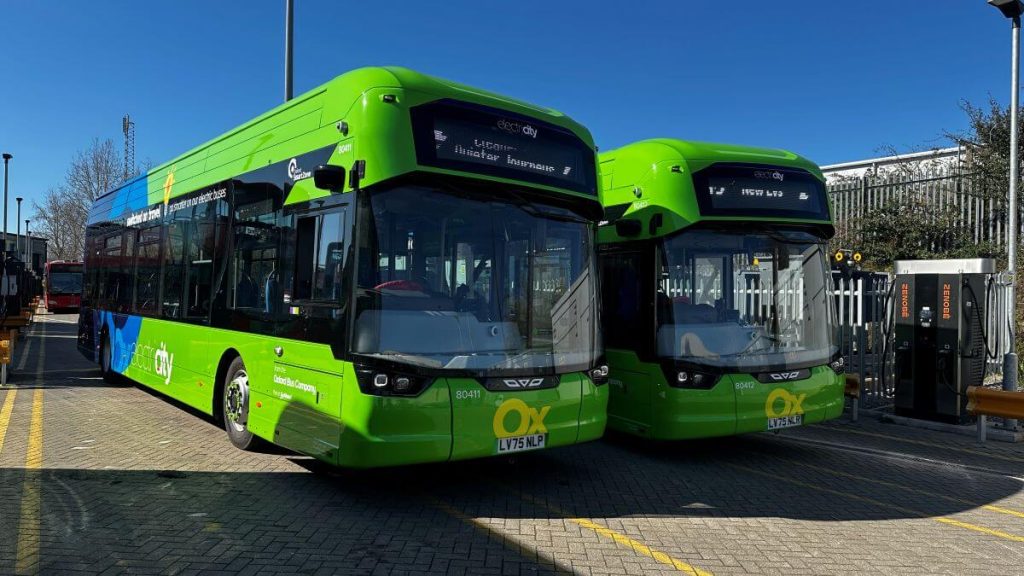
In March 2026, Oxford Bus Company announced that thirteen new electric buses would be added to Oxfordshire’s network following an investment of just over £5.1 million, with services in Abingdon, Great Milton, Wytham, Bicester and Chesterton set to benefit. The details were set out in the operator’s announcement on 26 March 2026.
The investment was announced by Oxford Bus Company, with funding coming from both the operator and Oxfordshire County Council.
The Go-Ahead Group, Oxford Bus Company’s parent company, has invested £3.9 million, while the county council has contributed £1.2 million through its Vehicle Improvement Fund. That grant uses part of the £10 million awarded to Oxfordshire by central government to improve local bus services.
Which routes will get the new electric buses?
Oxford Bus Company said the new vehicles would be used on routes outside the Oxford SmartZone, extending bus travel with no exhaust emissions beyond the city centre.
The routes announced were:
- 35 to Abingdon
- 46 to Great Milton
- ST2 to Wytham
- 21 between Bicester and Chesterton
The order comprised:
- nine large electric single-deckers
- four smaller electric single-deckers
The operator said on 26 March 2026 that the first batch had entered service the previous week.
Why this matters for Oxfordshire
The expansion is aimed at improving air quality in communities across the county, not just in Oxford itself.
Battery-electric buses have no exhaust emissions of nitrogen oxides or particulate matter. They can still produce particles through tyre, brake and road wear: zero tailpipe emissions does not mean no particulate pollution. These non-exhaust sources are described in Oxford City Council’s air-quality report.
Councillor Andrew Gant, Oxfordshire County Council’s Cabinet Member for Transport Management, said the move showed what partnership working could achieve.
He said: “This is really good news and an excellent example of partnership working delivering real benefit and value to our residents.”
He added that more than one third of bus services operating in Oxfordshire were, at the time of the announcement, run by vehicles with no tailpipe emissions.
Oxford Bus Company says bus use has helped support investment
Oxford Bus Company managing director Luke Marion said the latest investment marked another major step in the company’s sustainability plans.
He said the purchase would allow electric buses to operate more widely across the county, beyond the routes concentrated in Oxford.
He also linked the investment to improving traffic conditions in Oxford, including measures such as the temporary congestion charge and free Park and Ride travel, which he said had helped increase bus use and confidence in expanding the electric fleet.
Part of a wider shift to electric buses
Oxford Bus Company first introduced an electric bus in March 2020, before a much larger rollout followed in 2024.
That year, Oxford Bus Company worked with Oxfordshire County Council, Oxford City Council and Stagecoach to bring 159 electric buses into service across the area.
The original funding deal for the wider scheme, announced in January 2023, comprised:
- £32.8 million from the government’s Zero Emission Bus Regional Areas scheme
- £6 million directly from Oxfordshire County Council
- £43.7 million from bus operators
A charging hub was also installed at Oxford Bus Company’s Cowley House depot as part of that investment.
Ten million kilometres completed by end of 2025
By the end of 2025, Oxford Bus Company said its electric buses had completed 10 million kilometres — the equivalent of more than 26 trips to the moon.
The operator said the 13 vehicles had been produced by UK manufacturers Wrightbus and Alexander Dennis.
At a glance
| Detail | Information at the March 2026 announcement |
|---|---|
| Investment | £5.1 million |
| Oxford Bus Company / Go-Ahead contribution | £3.9 million |
| Oxfordshire County Council contribution | £1.2 million |
| Number of new electric buses | 13 |
| Vehicle types | 9 large single-deckers, 4 smaller single-deckers |
| Routes | 35, 46, ST2, 21 |
| Areas served | Abingdon, Great Milton, Wytham, Bicester, Chesterton |
For journey planning, consult Oxford Bus Company’s current service information. This announcement does not guarantee which vehicle will operate an individual departure.
Clarification, 16 October 2026: We have distinguished exhaust emissions from particles caused by tyre, brake and road wear, dated the announcement and the fare references, and added primary-source links.