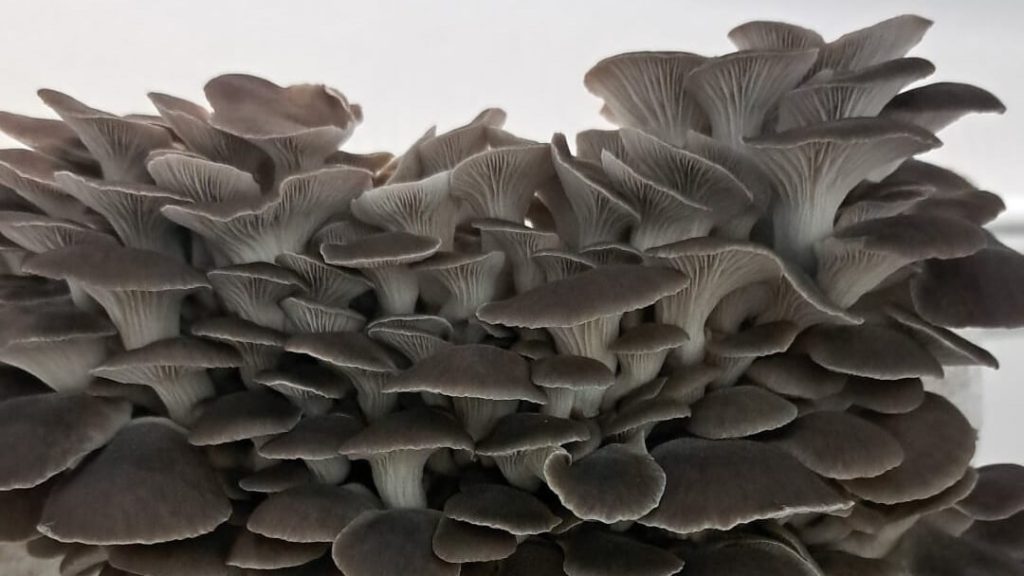
The first gourmet mushrooms, including Blue Grey, Golden, Pink and King Oyster and Lion’s Mane, have been harvested and sold from a pioneering mushroom farm set up last year on the Blenheim Estate.
Following a five-star Food Safety hygiene rating from West Oxfordshire District Council, the farm is now able to sell its gourmet mushrooms, all of which have been grown on spawn-inoculated substrate, a sustainable growing base made from sawdust and recycled coffee grounds from the 440,000 cups of coffee sold at Blenheim Palace every year.
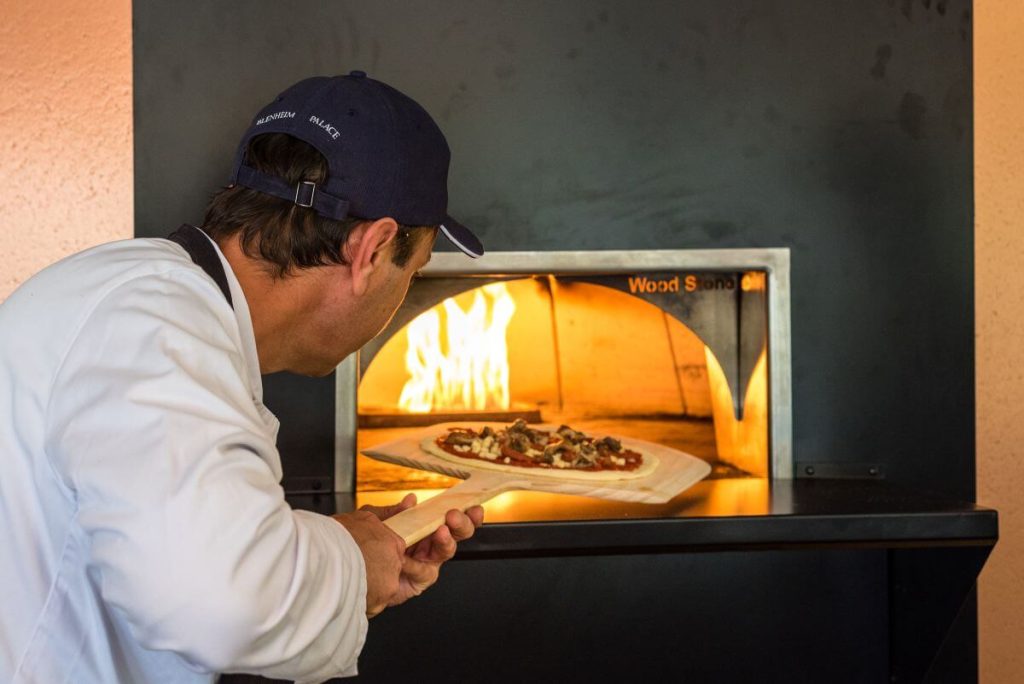
When the mushroom farm is running at full capacity, 15kg of mushrooms will be sent each week to the kitchens at Blenheim Palace, including the popular Walled Garden Pizzeria; the remaining 100kg will be sold locally through the OxFarmToFork platform and local farmers’ markets.
OxFarmToFork is a collaborative project led by Good Food Oxfordshire that connects Oxfordshire caterers directly with local agroecological food producers. By simplifying the supply chain, this empowers producers, enhances food security, and helps institutions source sustainable, local produce that support our community and planet.
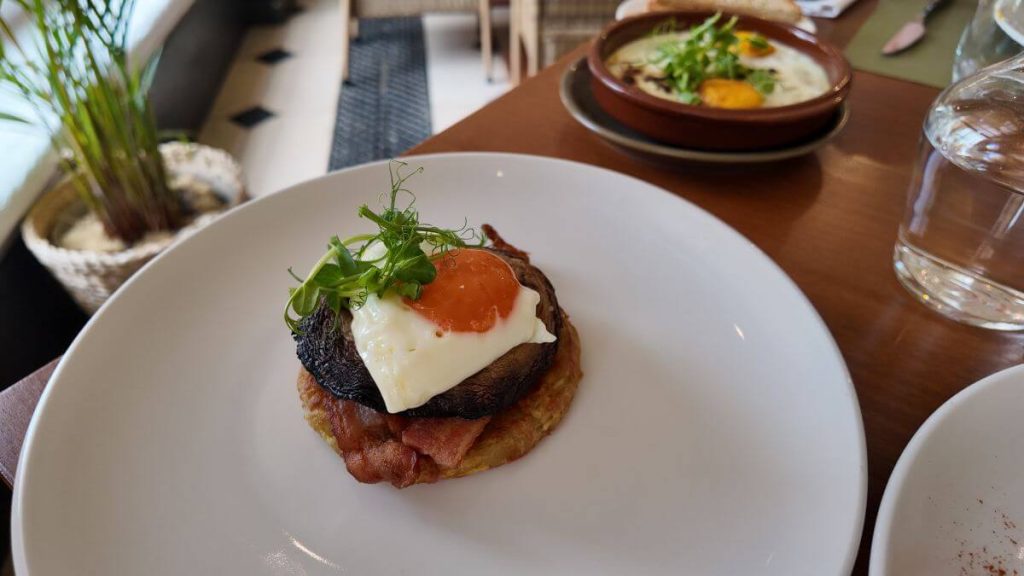
Over 20 Oxfordshire venues, including Michelin-starred restaurants local to the Palace, have expressed interest in buying mushrooms from the Blenheim Estate. The mushroom farm, based in Combe, Oxfordshire, consists of three units – one for preparation of the substrate and inoculation with mushroom spawn; one for incubation; and a fruiting room.
Roy Cox, Managing Director – Estates at Blenheim Palace, commented:
“The mushroom harvest is the final piece of the puzzle, which completes this self-sustaining circular ecosystem. It’s incredible to see mushrooms in our restaurant kitchens which have been grown using our own organic waste, and it’s another major step towards us becoming a net zero business by 2027.”
The mushroom farm with recovery to biochar growing medium is the latest stage in the Country Estate Carbon Demonstrator Project, Blenheim Estate’s collaboration with visionary circular bioeconomy company Tumblebug. The Country Estate Carbon Demonstrator Project unlocks the value of Blenheim’s organic waste (food, coffee, compostable packaging, card, manure, green horticultural waste, forestry waste and sheep wool) using Tumblebug’s Ecobot machines, mushroom farm and pyrolysis technology.
Once harvested, the spent substrate from the mushroom growing is converted to a peat-free biochar compost in the Walled Garden using a method called pyrolysis (which heats organic waste without burning it) to produce biochar, a sustainable compost alternative that boosts soil health and locks away carbon. The compost is used to grow produce and the cycle begins again.
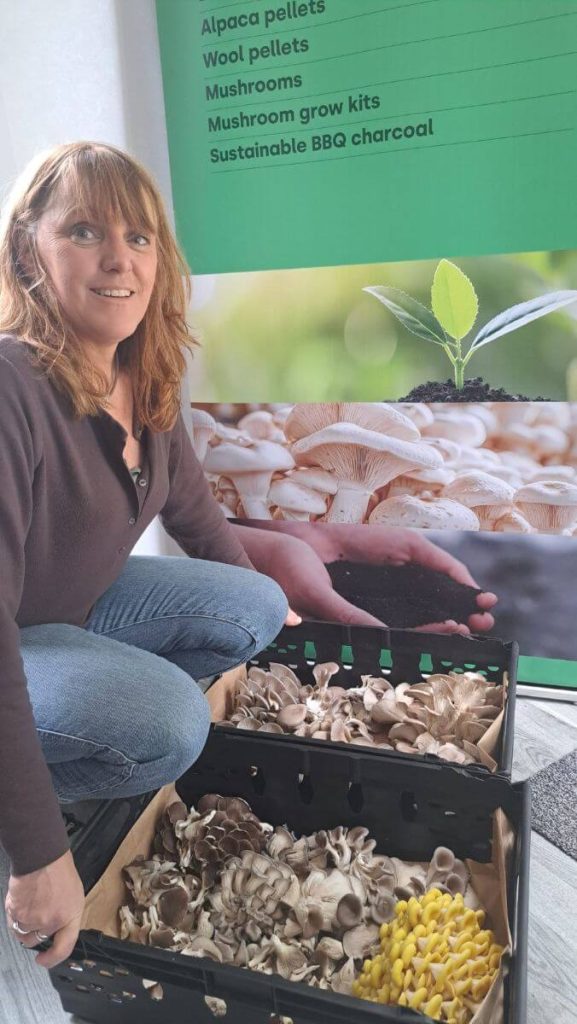
Tumblebug Founder and CEO, Sylvie Verinder remarked:
“We called the company Tumblebug, the friendly name for the dung beetle. By embracing the spirit of the dung beetle, we are unlocking the value in organic waste at Blenheim – capturing carbon, growing these beautiful mushrooms, creating biochar and using it to produce peat free compost and fertiliser – restoring soils, and building resilience in food supply chains. This is a demonstrator- we hope others will come and see and adopt the model on their farms and estates.”
To sample the mushrooms at the Orangery or Walled Garden Pizzeria: www.blenheimpalace.com/visitus/cafes-restaurants/