

















A temporary hosepipe ban will come into effect from midnight on Tuesday, 22 July, for residents across Oxfordshire, Gloucestershire, Berkshire and Wiltshire, as Thames Water grapples with severely depleted water supplies caused by one the driest start to a year on record.
The ban will affect customers in the OX, GL, SN, RG4, RG8 and RG9 postcode areas, as reservoir levels at Farmoor in Oxfordshire continue to fall and water usage spikes across the region.
What the Ban Means for Residents
The temporary use ban restricts the use of hosepipes for:
- Watering gardens or allotments
- Cleaning cars, windows or patios
- Filling swimming or paddling pools
Although businesses where hosepipe use is essential for operations are currently exempt, Thames Water is urging all customers to conserve water where possible.
According to the company, demand has surged by up to 30% on days when temperatures exceed 25°C. In addition to falling levels at Farmoor Reservoir, aquifers in the Cotswolds that feed the Thames are draining rapidly, limiting replenishment.
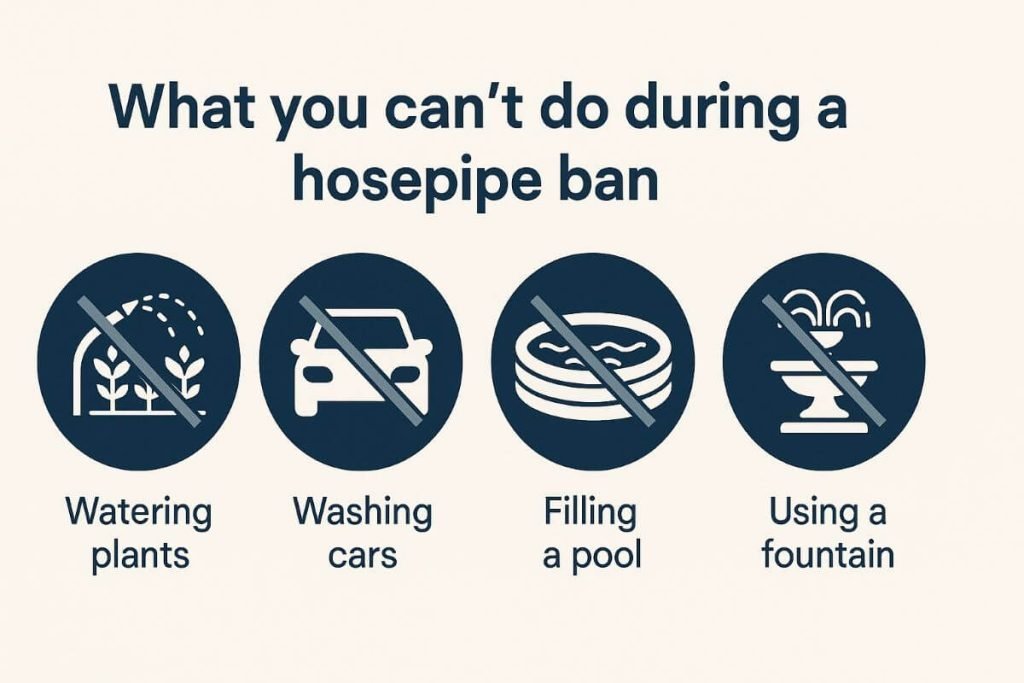
What You Can’t Do During a Hosepipe Ban
According to Thames Water’s restrictions, the following activities are prohibited during the hosepipe ban:
- Watering your garden with a hosepipe: This includes private gardens, public parks, sports grounds, verges, and lawns. Exceptions apply for commercial horticulture and temporary floral displays.
- Washing your car: Using a hosepipe to clean private vehicles is not allowed (including motorbikes and trailers). Car washes and professional cleaning businesses are exempt.
- Filling paddling pools or swimming pools: Hosepipes cannot be used to fill or top up pools used for leisure purposes.
- Watering outdoor plants with a hose: Includes window boxes, pots, hanging baskets, even those on balconies or terraces. Watering cans and collected water (e.g., rainwater butts) are still allowed.
- Cleaning windows, walls, patios or paths: No hosepipe use for domestic cleaning of buildings or hard surfaces.
- Cleaning boats: Recreational boat cleaning with a hosepipe is banned (unless it’s for health and safety purposes).
- Filling ornamental ponds or fountains: Unless they house fish or aquatic animals essential to their survival.
- Drawing water for recreational use: Includes water games, water fights, slides and any personal recreation that uses hose-fed water.
Note: These restrictions only apply to domestic use. Businesses that rely on water for their operations (such as plant nurseries, professional window cleaners, and car wash stations) may continue under certain conditions.
Why the Ban Is Being Introduced
The Environment Agency has placed the Thames Valley under “prolonged dry weather” status, which signals an increased risk of drought. As of June, reservoir levels across England were reported at 76%, the lowest since the 2022 drought.
“This has been a challenging spring and summer with big spikes in customer demand during hot dry days and very little rainfall to replenish local supplies in the Thames Valley area,”
said Nevil Muncaster, Thames Water’s Strategic Water Resources Director.
“We have to take action now to ensure essential supply, protect the environment and prepare for what could be a long, dry summer.”
He urged customers to take additional conservation steps, including:
- Turning off taps while brushing teeth
- Taking shorter showers
- Allowing lawns to dry naturally
Public Response & Criticism
The decision has prompted backlash from some corners. Gary Carter, of trade union GMB, criticised Thames Water for failing to address leaks:
“Thames Water lost 200 billion litres of water through leaks last year — that’s 570 million litres wasted every single day,” Carter said.
“For Thames Water to now impose a hosepipe ban while bills rocket is disgraceful.”
Despite criticism, Thames Water says it has no choice but to act. Without meaningful rainfall, there is no estimated end date for the hosepipe restrictions.
National Drought Fears
The government’s National Drought Group is scheduled to meet this week to coordinate a wider response. Across the country, several major water companies have issued similar bans, including Yorkshire Water, South East Water, and United Utilities. Some bans could last into the winter as aquifers and reservoirs slowly recharge.
How You Can Help:
- Fix dripping taps promptly
- Collect rainwater using water butts
- Delay non-essential outdoor water use
For more guidance and updates, visit: thameswater.co.uk
Smart Gardening During a Hosepipe Ban
Long stretches of hot, dry weather can be tough on your garden, but with a few adjustments, it can stay healthy and green:
- Water smart: Water early in the morning to reduce evaporation and ensure it soaks into the roots, watering in the late evening can cause fungal disease. Use watering cans at the base of plants for maximum efficiency, hopefully from a water butt.
- Mulch generously: Use bark, grass clippings or compost to lock in moisture and protect roots from heat.
- Protect pots and baskets: Group containers together to reduce moisture loss and use trays to collect runoff.
- Prioritise: Focus water use on young, fruiting or newly planted greenery. Let lawns go dormant, they are hardy and will bounce back.
- Mow less: Avoid cutting grass too short in heat, it stresses the lawn and exposes roots to sun damage.
- Reuse greywater: Repurpose bath or washing-up water (without bleach/harsh chemicals) to responsibly nourish plants.
With the right strategies, your garden can still thrive, even under tough restrictions.














