As a glasses wearer who spends most of his time sitting in front of a VDU in an office with overhead fluorescent lights, I can happily champion anti-glare glasses as a vital part of combating headaches caused by eye strain. But their uses go far beyond that.
Whether you’re driving home on a rainy Oxfordshire night or scrolling your phone in the sun, glare can quickly turn a normal day into a strain on your eyes. It’s not just inconvenient, excessive glare has been linked to eye fatigue, visual distortion, and even long-term damage such as macular degeneration or solar retinopathy.
As more people rely on glasses for vision correction or style, anti-glare technology is playing a bigger role in everyday eyewear. From enhanced night driving to screen comfort, anti-glare lenses are fast becoming a year-round essential.
Here’s what you need to know, and ask for, next time you visit your optician.
Why Anti-Glare Glasses Matter
While the term “anti-glare” might sound cosmetic, the benefits are anything but.
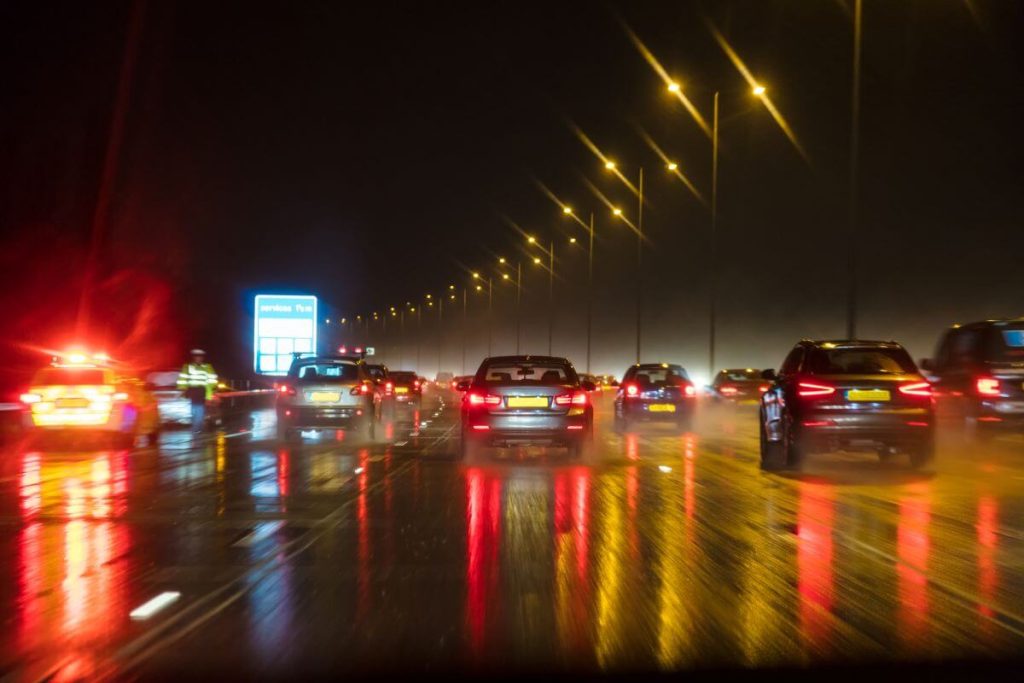
- Night Driving: Headlights, reflective road signs, and wet surfaces can create intense light scatter at night. According to the College of Optometrists, an anti-reflection (AR) coating enhances lens transmission, crucial for night-time drivers. Please note, the NHS recommends using lenses with at least 75% light transmission and avoiding yellow-tinted night-driving glasses,
- Screen Time & Office Work: The combination of screens and overhead lighting is a major source of eye strain. The RNIB recommends regular breaks and good lighting to reduce discomfort and protect your vision when using screens for extended periods.
- Long-Term Eye Health: Glare can contribute to conditions such as cataracts and retinal stress. According to the NHS, cataracts are one of the most common eye conditions in the UK, particularly among older adults. Protecting your eyes now could help delay these outcomes.
Anti-glare lenses improve both visibility and comfort, especially in unpredictable UK lighting where overcast skies often reflect light in disruptive ways.
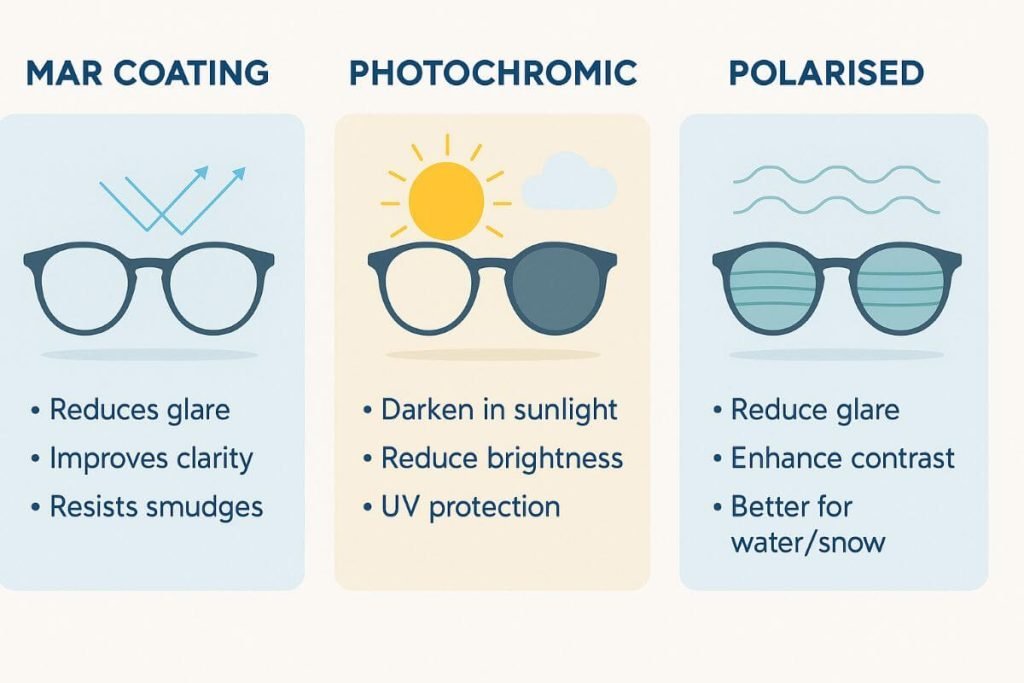
MAR Coating: The Go-To for Everyday Glare Reduction
MAR coating lenses (Multi Anti-Reflective) are one of the most common solutions, often known simply as AR lenses. This ultra-thin layer is applied to both the front and back of the lens, helping eliminate reflective light and allowing more “true light” to pass through.
Why consider MAR coating?
- Improves night driving visibility
- Reduces reflections from indoor lights or computer screens
- Enhances the aesthetic (no more light bouncing off your lenses in photos)
- Resists smudges and is easy to clean
Most UK opticians offer MAR coatings as an add-on to standard prescription lenses, often for around £30–£70 depending on the provider.
Transitioning with Photochromic Lenses
For those constantly moving between indoor and outdoor spaces, photochromic lenses (commonly known as Transitions) offer adaptive shading based on light exposure.
When UV light increases outdoors, these lenses darken, offering sun protection without needing to swap into sunglasses. They’re ideal for errands, garden visits, or train commutes, although I’m not a fan personally.
However, note:
- They don’t typically darken inside vehicles (windscreens block UV)
- They reduce overall brightness but don’t always cut reflective glare
Photochromic lenses are a great hybrid, but may need to be paired with MAR or polarised lenses depending on your lifestyle.
Polarised Lenses: Built for Bright, Reflective Conditions
Not all sunglasses are created equal. While many tint your vision, polarised lenses actively reduce glare, particularly horizontal light reflected from surfaces like roads, water, or snow.
That’s why polarised glasses are a favourite for:
- Driving on bright days
- Fishing, boating or time by water
- Snowy winter walks or ski trips
They work by filtering out specific light waves, letting through only the light you need to see clearly. Just note they may slightly distort screen displays (like phones or car sat-navs), depending on the angle.
How to Choose the Right Anti-Glare Glasses
We know different types of light affect your eyes, so when shopping for anti-glare options, don’t just rely on one feature. The best results often come from combining coatings and lens types based on your lifestyle.
Here’s a quick checklist for your next optician visit:
- Do you drive frequently at night? Ask for MAR coating.
- Do you move between inside and out? Try photochromic lenses.
- Are you often outdoors or near water? Consider polarised sunglasses.
- Want all-day comfort? Ask about combining MAR with blue light filtering.
And don’t hesitate to describe your typical day, your optician can tailor lens options to your work, hobbies, or travel patterns.
Frequently Asked Questions
Are anti-glare glasses suitable for driving in the UK?
Yes. MAR coatings are ideal for night driving and polarised lenses are excellent for daytime visibility, especially in wet or low-angle sun for that optical clarity.
How much do anti-glare coatings cost?
In the UK, expect to pay between £30 and £70 on top of your standard lens price, depending on provider and add-ons.
Can I get prescription sunglasses with polarised lenses?
Absolutely. Many opticians offer prescription polarised lenses, ideal for drivers or outdoor workers.
What’s the difference between blue light glasses and anti-glare lenses?
Blue light lenses filter light from screens, while anti-glare lenses reduce light reflection in general. Some lenses combine both.
Is this recommended by UK health authorities?
While not currently NHS-prescribed, opticians across the UK recommend anti-glare solutions for common visual stress and night driving discomfort.
Final Thoughts
Whether you need sharper vision at night, clearer screen time, or just more visual comfort outdoors, anti-glare glasses can make a real difference. With options ranging from MAR coating to polarised and photochromic lenses, it’s easier than ever to match your glasses to your life.
Next time you’re at the optician, ask how anti-glare technology can work for you, and enjoy a summer (and winter) that’s easier on the eyes.