When a marriage breaks down, it is often the children who feel the upheaval most deeply. Their daily routines shift, homes are divided, and loyalties can feel painfully torn. Yet family mediators and child psychologists are clear: while divorce is difficult, children can come through it well if parents keep their needs at the centre of every decision.
“Consistency and respectful communication are what matter most,” says Jane Smith, a mediator based in Oxfordshire. “Children need to know that both parents still love them and that the everyday rhythms of life, school runs, bedtimes, familiar rituals, won’t suddenly vanish.”
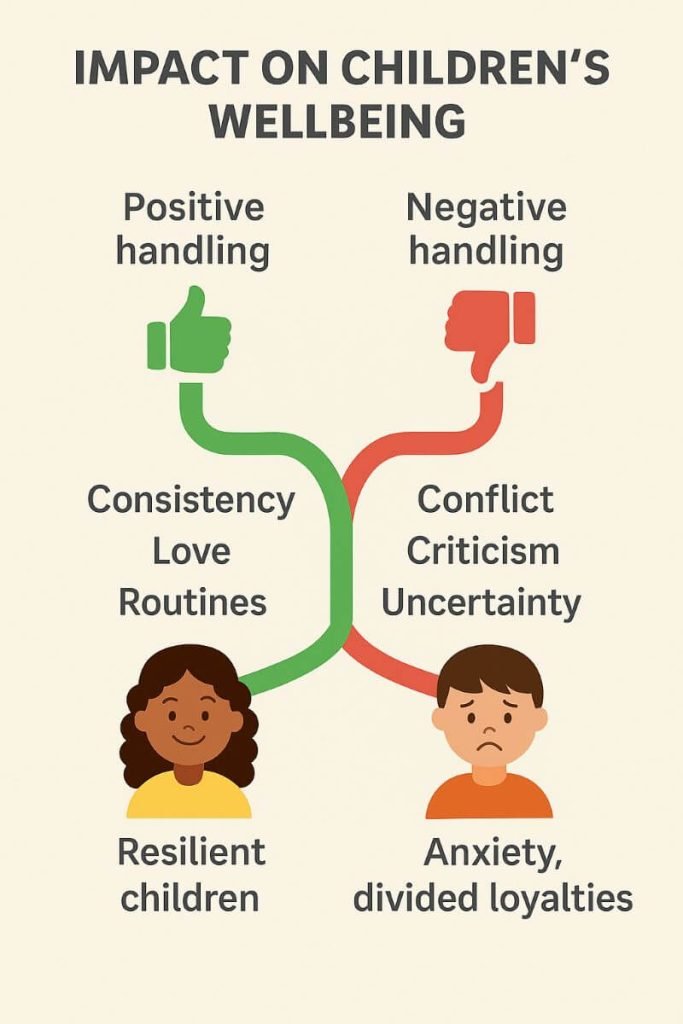
Keeping emotions in check
It is natural for resentments to surface during a separation, but professionals warn against letting them spill into earshot of children. Hearing one parent criticise the other can cause anxiety and confusion. Research from University College London has shown that the age of children at the time of separation, and the way parents handle it, can impact their mental health.
Parents are advised to reassure children that the divorce is not their fault and to emphasise that both households are safe and loving places. Stability, experts agree, is the best gift parents can offer at a time of uncertainty.
New tools for a new family shape
The end of a relationship does not end the shared responsibility of parenthood. Many families are now turning to technology to help manage communication in calmer ways. Co-parenting apps, or even a dedicated email address, allow parents to share calendars, track expenses and arrange pick-ups without unnecessary friction.
“Children learn by watching,” says Dr Alan Hughes, a child psychologist who works with families in Oxfordshire schools. “If parents can show they are able to compromise and resolve disputes respectfully, their children gain confidence that disagreements don’t have to mean the end of relationships.”
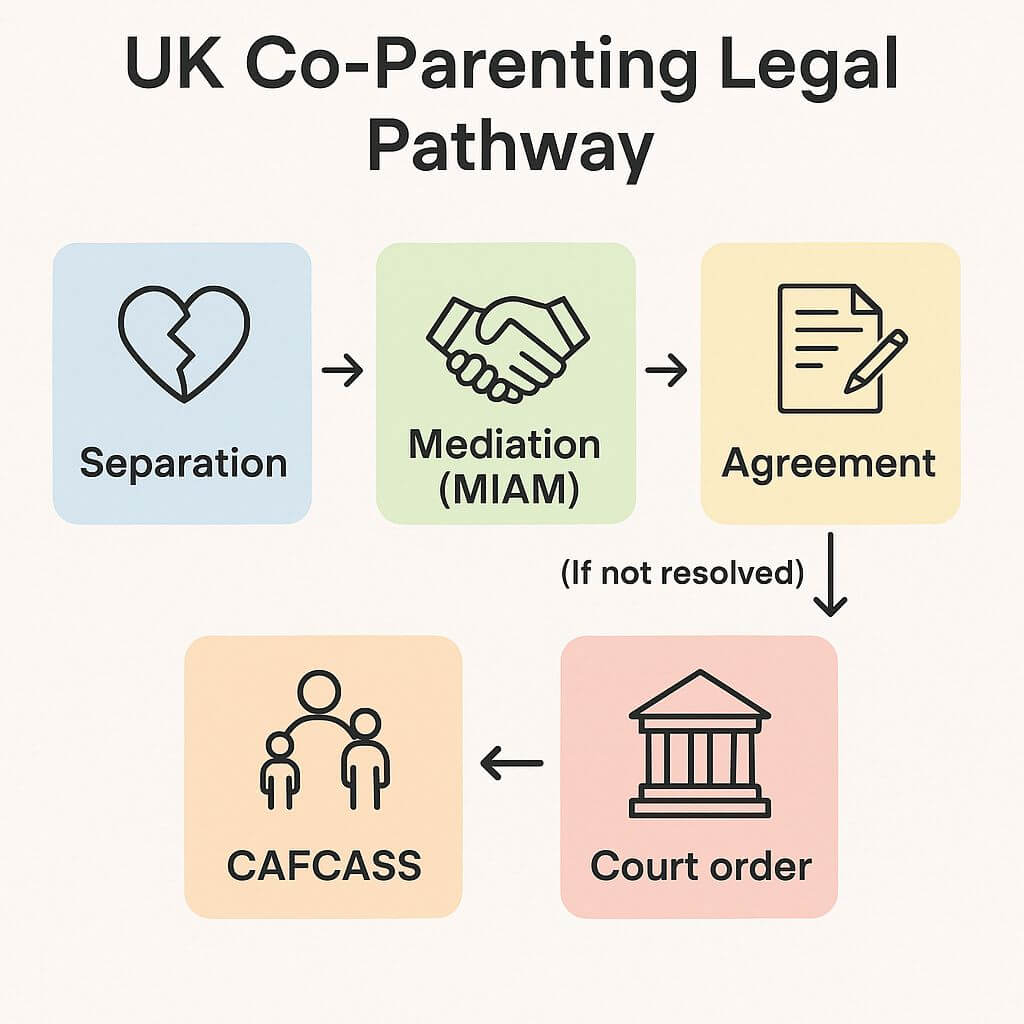
Custody plans and flexibility
For children, predictability is vital. A written plan covering term-time schedules, holidays, birthdays and special occasions can give clarity and reassurance. In England and Wales, separating couples are expected to attend a Mediation Information and Assessment Meeting (MIAM) before going to court. If agreement cannot be reached, a Child Arrangements Order may be issued, often with input from CAFCASS (the Children and Family Court Advisory and Support Service).
Families with more complex situations, particularly those involving relocation or cross-border living arrangements, should seek professional custody advice and support to ensure agreements are legal and workable.
Still, experts say flexibility is just as important as structure. Illnesses, school events or family emergencies will arise, and a willingness to adapt can ease tensions and strengthen trust.
Looking forwards, not back
Perhaps the hardest step for many couples is letting go of past grievances. Yet psychologists stress that focusing on what has gone wrong prevents families from moving on. Once agreements are in place, the task is to create homes where children feel comfortable and loved, regardless of who they are with.
“Divorce can be the end of a marriage, but it does not have to be the end of family stability,” says Jane “Children thrive when parents find a way to cooperate, even if their relationship as a couple has ended.”
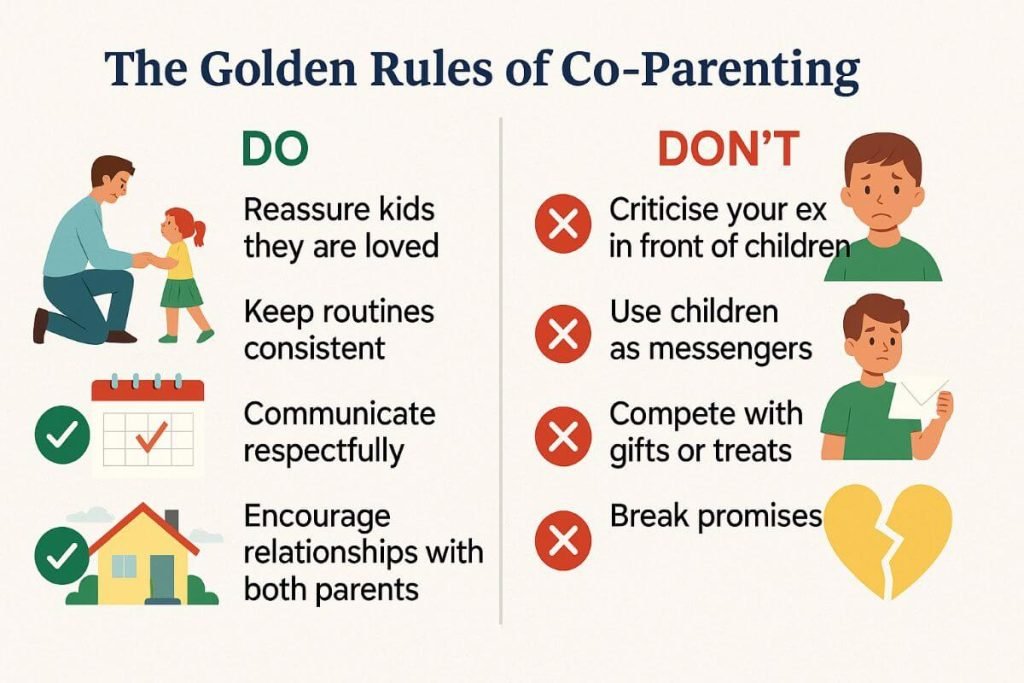
At a glance: Co-parenting after divorce
Do:
- Reassure children they are loved by both parents
- Keep routines consistent
- Communicate respectfully
- Encourage your child’s relationship with both sides of the family
Don’t:
- Criticise your ex in front of your child
- Use children as messengers
- Compete with gifts or treats
- Break promises
Support in Oxfordshire & UK:
Relate: relate.org.uk
Gingerbread: gingerbread.org.uk
NSPCC: nspcc.org.uk
Government guidance: gov.uk/looking-after-children-divorce