Visitors today to Cotswold Wildlife Park are in for a treat as it’s Saturday 13 May is World Binturong Day, and you can see two new arrivals in Barry and Bennie. Of all of the Cotswold Wildlife Park’s 1,500 animals from 250 different species.
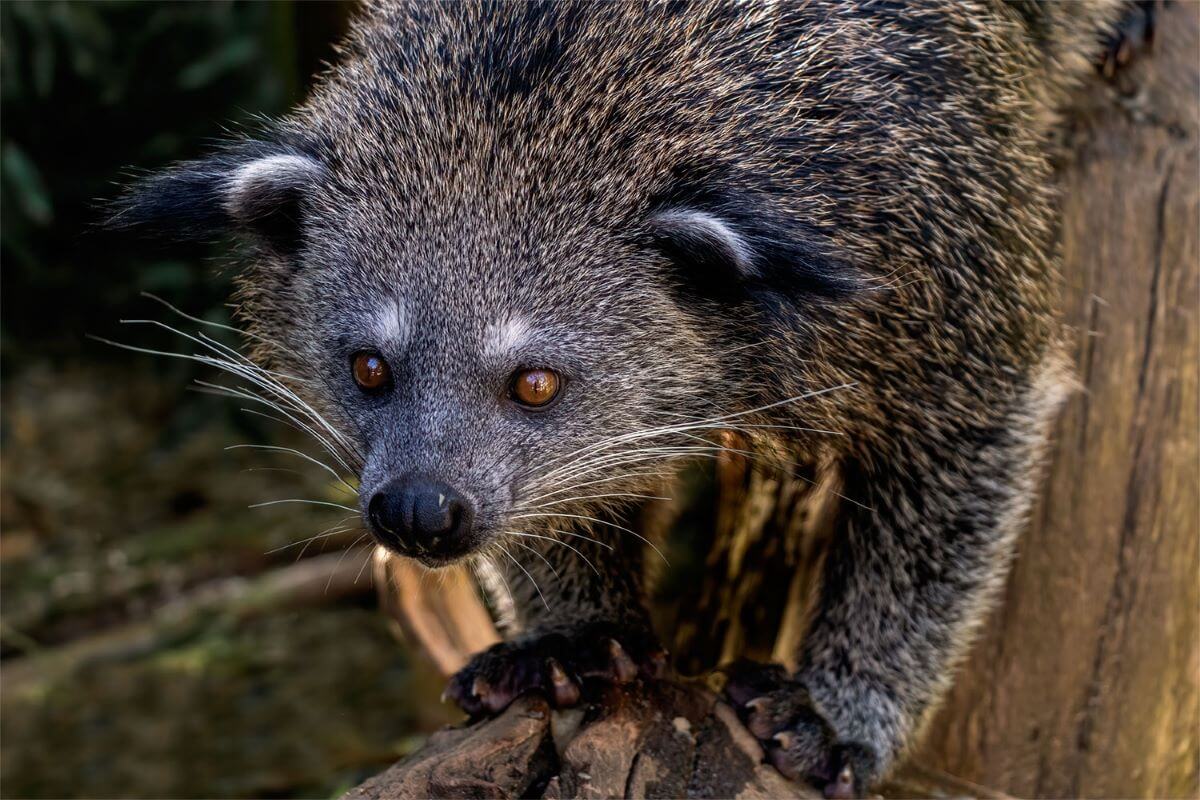
The Binturong (Arctictis binturong) sparks a great deal of curiosity from visitors due to its bizarre appearance and sweet-smelling aroma. Also known as Bearcats, they originate from the rainforests of south-east Asia and are related to small forest predators like Fossas, Civets and Genets. They are also the only creature to emit a completely unique scent which smells like buttered popcorn.
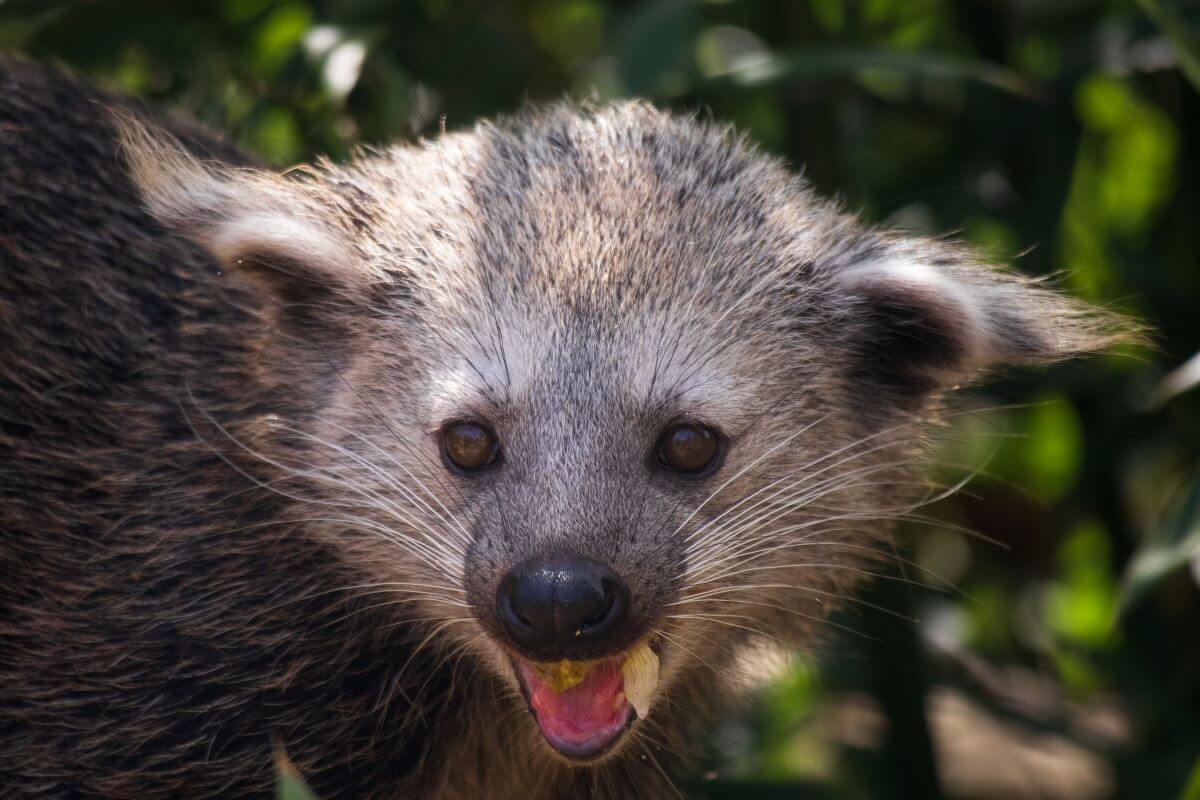
World Binturong Day
Saturday 13 May is World Binturong Day – a worldwide event to raise awareness for this rare and endangered mammal. This year, keepers are thrilled to announce that the Park’s adult Binturong pair, Dobby and Himala, have recently produced twins.
Named Barry and Bennie by their keepers, the cubs have made their public debut just in time for World Binturong Day. Cotswold Wildlife Park is one of only two zoological collections in the UK to have successfully bred Binturong in the last twelve months.
Keepers suspected Himala was pregnant earlier this year due to her size and voracious appetite. After a three month gestation period, she gave birth to twins. Her babies were born in seclusion inside the nest box where they spent several weeks out of sight. Cubs are born with their eyes sealed and are completely reliant on their mother for the first few months of their life.
They eventually emerged from the nest box and began exploring their heated indoor home under the watchful eye of their parents. Recently the cubs started to venture into the exhibit’s outdoor area much to the delight of visitors who are amazed at their acrobatic prowess. Assistant Animal Manager at Cotswold Wildlife Park, Chris Kibbey, said:
“Since introducing our Binturong pair in 2018, they have been doing a fantastic job of contributing to the captive breeding programme and have recently produced their 8th and 9th kits to be born here at the Park. Young from previous years have already gone to other zoological collections which helps to maintain the captive ‘safety net’ for this vulnerable civet species. The latest youngsters are beginning to explore their enclosure under the watchful eye of their parents and older siblings”.
Cotswold Wildlife Park is dedicated to animal conservation and proudly supports World Binturong Day. Now in its ninth year, its aim is to highlight the plight these relatively unknown animals face in the wild. Population numbers have declined by 30% in the last 20 years.
They are listed as “Vulnerable” on the International Union for the Conservation of Nature’s (IUCN) Red List of Threatened Species. Main threats to their survival include deforestation to make way for palm oil, rubber and teak plantations. They are also sold as pets or used for their fur and meat in the illegal wildlife trade.
To raise awareness and funds for their conservation programme, this Saturday, 13 May 2023, there will be a dedicated World Binturong Day stand at the Park where visitors can learn more about these fascinating creatures and take part in fundraising activities.
All funds raised will go to ABConservation. The stand can be found at the Binturong exhibit opposite the Insect and Invertebrate House.
The Binturong plays a remarkable role in its rainforest ecosystem; it has the ability to aid the regeneration of the forest. It does this by swallowing the seeds from fruits whole and then spreading them across the forest in their faecal matter. Seeds germinate faster after travelling through the Binturong’s gut.
Binturong are also a vital seed disperser of the Strangler Fig tree. Strangler Fig trees are very important as they provide sleeping and nesting sites for many rainforest birds, mammals and insects. Cotswold Wildlife Park also supports the Bearcat Study Programme which aims to improve the knowledge of this species in its native habitat and collect field data to assist with its IUCN status.
According to ABConservation, the research team behind the Bearcat Study Programme, there are very few scientific studies in existence for this species. The majority of available data comes from studies in captivity as they are so challenging to observe in the wild. As Binturong are arboreal, live between 10 and 20 metres high and are mostly active at night, conventional research methods often fail to provide accurate information. T
he Bearcat Study Programme continues to collect vital information using camera traps and GPS-equipped radio collars to discover more about these secretive animals. Further information about the project can be found here: https://www.abconservation.org/en/.
Facts about Binturong
- They are one of only two carnivores with a prehensile tail which can be used as an extra limb to help it climb (the other is a Kinkajou).
- A female can produce up to six cubs after a three month gestation period.
- A study published in The Science of Nature in 2016 to discover why Binturong smell like popcorn found that the chemical compound known as 2-acetyl-1-pyrroline or 2-AP (which gives cooked popcorn its delicious smell) is also emitted in Binturong urine. It is totally unique to this species and is believed to convey information about sex and reproductive state.
Normal admission price applies for World Binturong Day and Cotswold Wildlife Park is open every day from 10.00 am until 6.00 pm (last admission at 4.00 pm). Latest Visitor Guidance and advanced E-tickets information available at www.cotswoldwildlifepark.co.uk.