Residents of a South Cotswolds village are raising money for professional planning and legal advice as they prepare to challenge a draft allocation for 1,658 new homes.
The Down Ampney Action Group says the proposal would overwhelm the existing rural community and has raised concerns about flooding, drainage, roads, public transport, employment, healthcare, agricultural land and aircraft noise from nearby RAF Fairford.
Cotswold District Council says the scale of the strategic allocation would allow a new or expanded primary school, local services, transport improvements and other infrastructure to be planned alongside the housing.
The 1,658-home figure is contained in the council’s Regulation 19 Local Plan for development up to 2043. It is a proposed planning-policy allocation, not permission for 1,658 homes to be built immediately.
At a glance
| Proposed allocation | 1,658 homes at Down Ampney by 2043 |
| Previous Preferred Options figure | 369 homes, according to the action group and published plan comparison |
| Current settlement | Council meeting minutes refer to approximately 231 dwellings; the campaign estimates around 280 to 300 homes across the wider parish |
| Current planning stage | Regulation 19 consultation, the final draft before independent examination |
| Consultation deadline | 11.59pm on Tuesday 3 November 2026 |
| Campaign fundraising target | £35,000 for independent planning and legal advice |
| Is this planning permission? | No. Future masterplanning and one or more planning applications would still be required |
| Official plan information | Cotswold District Council Local Plan 2026-2043 |
Residents say the scale would transform the village
The Down Ampney Action Group has been established to oppose what it describes as a disproportionate expansion of the village.
The group says it is not against new housing and supports continued organic growth, including affordable and social housing where suitable infrastructure and services can be provided.
Its concern is that adding 1,658 homes would create a settlement fundamentally different in scale and character from Down Ampney today.
Jane Dickson, the group’s Chair of Planning, said:
“Meeting a housing target is not the same as creating a sustainable community.”
She said residents wanted the location’s transport, flooding, agricultural and infrastructure constraints to be examined alongside the need for additional homes.
Adam Crawford, a member of Down Ampney Parish Council and the action group, said:
“This isn’t about saying no to homes. It is about supporting organic growth while asking whether 1,658 homes in and around a village of around 300 is proportionate, sustainable and appropriate.
“This is about getting the right development in the right place.”
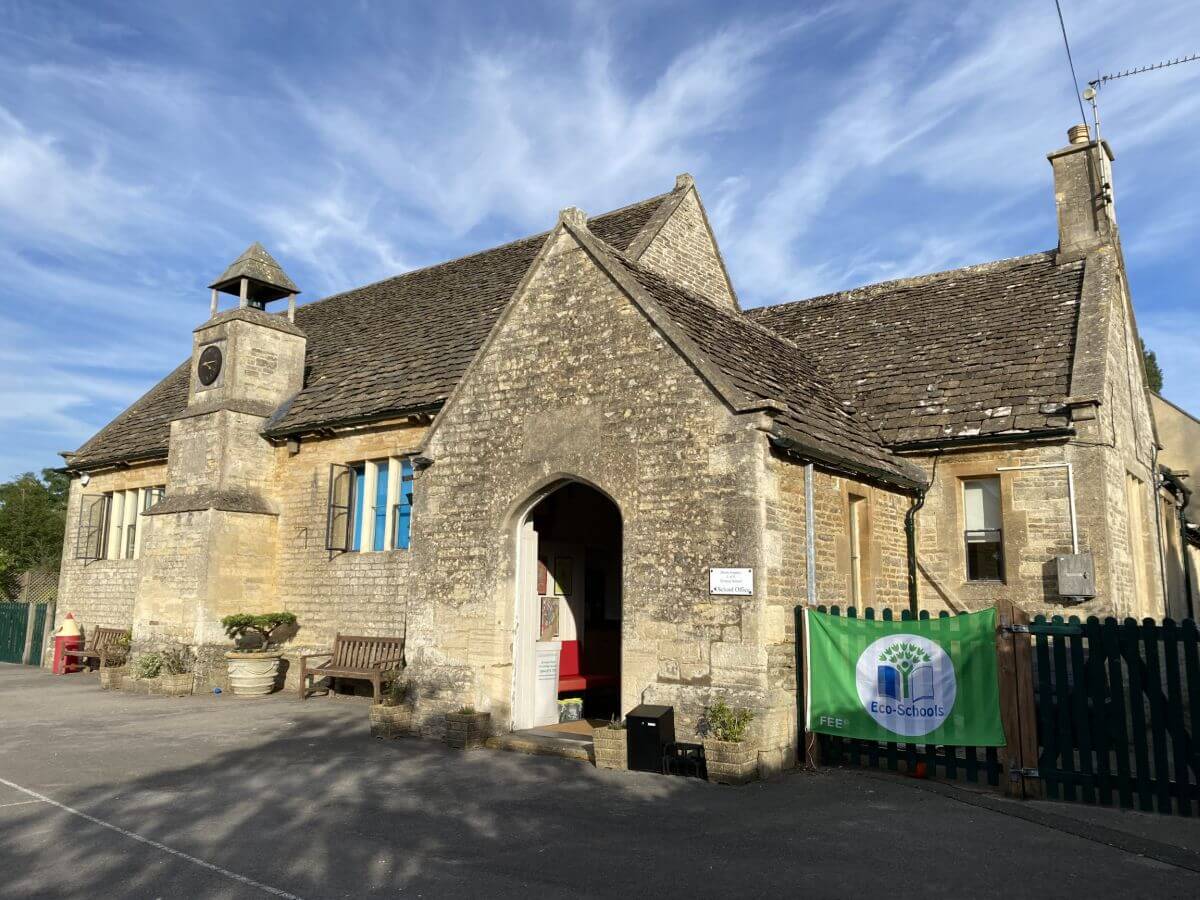
The village has already accommodated recent housing growth. Residents say they supported earlier developments which brought new families into the community and helped sustain local facilities, including the primary school.
Down Ampney’s Neighbourhood Plan was backed by 95.6% of votes cast at a referendum in February 2024 and was formally made by Cotswold District Council the following month.
Allocation increased from 369 to 1,658 homes
A central part of the residents’ case concerns the scale of the change between two stages of the Local Plan process.
The Preferred Options consultation, known as Regulation 18, ran from November 2025 to January 2026. At that stage, Down Ampney was associated with an allocation of 369 homes.
The Regulation 19 publication draft subsequently increased the figure to 1,658.
The action group says no further Regulation 18 consultation was held specifically on the substantially expanded allocation before the final draft was published.
It argues that residents therefore had no opportunity to examine and respond to the larger proposal until the process had reached the more technical Regulation 19 stage.
Mr Crawford said:
“We know that the council says another Regulation 18 consultation was not legally required.
“But our concern is whether the process has given ordinary residents a genuine opportunity to understand what changed and why, and to challenge the evidence behind that change.”
Cotswold District Council says earlier consultation responses were considered alongside updated evidence, technical studies and additional sites submitted during the plan-making process.
The council has also acknowledged that publication of the draft proposals caused anxiety and came as a surprise to some communities.
What does the Local Plan propose for Down Ampney?
The publication draft identifies land around Down Ampney as a strategic development location capable of accommodating approximately 1,658 homes during the period to 2043.
Much of the housing would be positioned to the north and east of the existing settlement, with additional land identified for open space and other supporting uses.
The draft policy expects the development to be comprehensively masterplanned rather than delivered as a collection of unrelated estates.
| Part of the proposal | What the draft plan expects |
|---|---|
| Housing | Approximately 1,658 homes, including affordable housing in line with council policy |
| Education | A new or expanded primary school, subject to education planning and delivery arrangements |
| Community facilities | A community hub and local centre containing services and social facilities |
| Employment | Flexible workspace and opportunities for local economic activity |
| Public transport | Enhanced bus connections, including links towards Cirencester |
| Walking and cycling | New routes connecting the development, existing village and surrounding area |
| Roads and access | A new internal road network and connections to the wider highway system |
| Water and drainage | Utilities, wastewater provision and sustainable drainage systems |
| Green space | Green corridors, play and sports provision, retained vegetation and approximately 31 hectares of alternative recreational greenspace |
These facilities are policy requirements and aspirations rather than completed or funded projects.
Their delivery would depend on the eventual masterplan, planning applications, viability assessments, legal agreements, developer contributions and decisions by infrastructure providers.
Flooding and wastewater among the main concerns
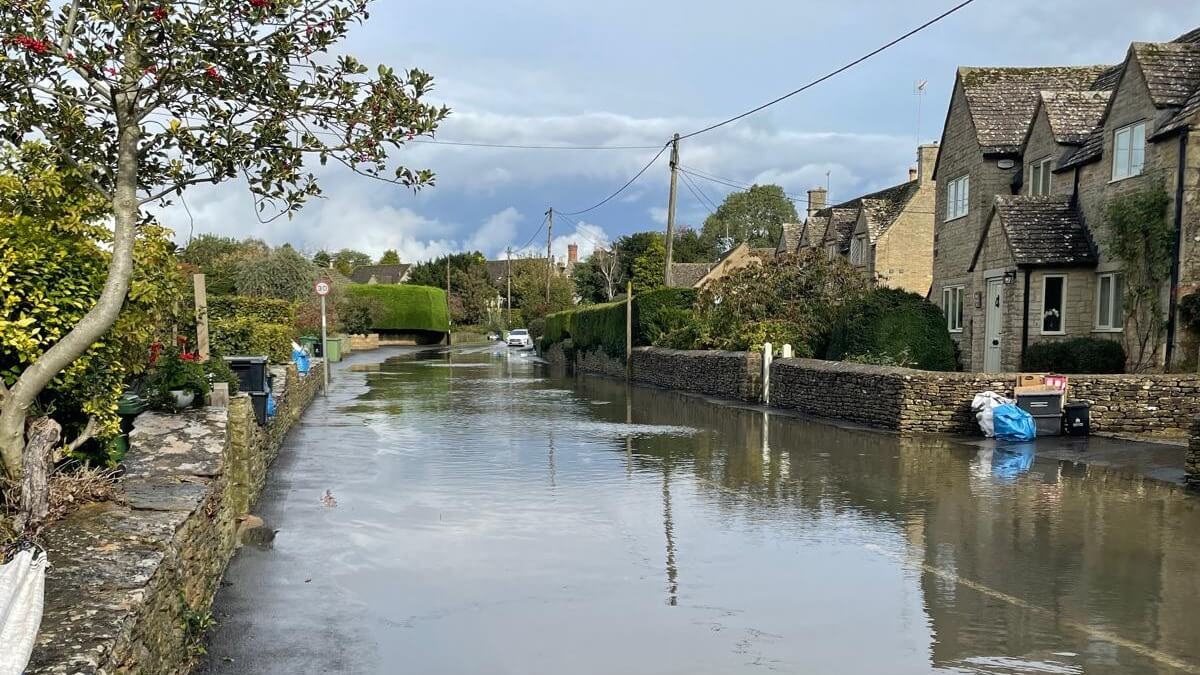
Residents say Down Ampney has experienced repeated surface-water flooding and already has concerns about the capacity and condition of drainage and wastewater infrastructure.
The action group says flood risks associated with the Ampney Brook and Poulton Brook require detailed assessment before development on this scale can be considered sustainable.
It is particularly concerned that a proposed access route would pass through an area at the western end of the village where flooding has previously been raised as an issue.
The group wants clearer evidence showing:
- how additional surface water would be managed;
- whether wastewater treatment capacity can accommodate the proposed growth;
- when any necessary upgrades would be delivered;
- who would fund the improvements; and
- whether homes or roads would be placed in areas vulnerable to future flooding.
The council says its Local Plan is supported by more than 40 technical studies and assessments, including work on infrastructure, transport, water and flood risk.
Those documents will ultimately be considered by an independent Planning Inspector alongside the representations made by residents, councils, landowners and statutory bodies.
Roads, public transport and local employment
The action group also argues that Down Ampney has limited public transport and relatively few local employment opportunities.
It fears that a settlement of the proposed scale could generate substantial additional car journeys towards Cirencester, Swindon, Fairford and other employment and service centres.
Residents say the Local Plan must demonstrate not only where people would live, but how they would reach work, healthcare, education and everyday services without placing unsustainable pressure on rural roads.
The council’s position is that a larger strategic site can support infrastructure that would be difficult to secure through smaller, piecemeal developments.
Its draft plan includes public transport improvements, walking and cycling routes, a local centre and flexible employment space intended to reduce the number of journeys residents would need to make elsewhere.
Residents fear loss of productive farmland
Down Ampney has been a farming community for generations and is surrounded by agricultural land.
The action group says the debate should consider the productive value of that land, rather than treating every undeveloped site as vacant space.
It argues that the permanent loss of food-producing land must be weighed against alternative development locations and the district’s overall housing requirement.
The precise agricultural classification and impact of each part of the proposed allocation will form part of the evidence considered through the Local Plan examination and any future planning application.
RAF Fairford aircraft noise remains a live issue
The proximity of RAF Fairford creates an additional and unusual point of contention.
The action group says part of the northern allocation would sit beneath or close to an operational military flight path and has questioned whether the effects of aircraft noise have been assessed adequately.
Down Ampney Parish Council representatives have raised concerns about noise, public health, aviation safety and the absence of a published military airfield noise assessment during council meetings.
Cotswold District Council says the Ministry of Defence has been consulted and has not identified an objection to the Down Ampney allocation.
Officers have also said engagement with the Ministry of Defence and other statutory consultees will continue throughout the plan-making process, and that any fundamental new evidence would need to be addressed.
No official finding has been made that the proposed allocation is unsafe because of military aviation.
Why the council says more homes must be planned
Cotswold District Council says a revised government method increased its annual assessed housing need from 475 to 1,054 homes.
The publication draft makes provision for 18,877 homes across the district between 2026 and 2043, which the council says provides approximately 5.3% headroom above its identified requirement.
More than 11,000 homes are proposed on ten new strategic sites, with around 90% of development concentrated on larger allocations where infrastructure can be planned collectively.
The council says the overall plan could support around 5,600 affordable homes.
Council leader Mike Evemy has said an up-to-date plan would give the authority greater control over design, infrastructure, affordable housing, green space and environmental standards.
He has argued that delaying or rejecting the process could leave the district more exposed to speculative applications while it lacks a five-year supply of housing land.
When responding to Down Ampney Parish Council, he said land submitted by landowners had to be assessed and that the Regulation 19 consultation and independent examination provided opportunities for the evidence to be challenged.
Campaign raising £35,000 for professional advice
The Down Ampney Action Group has launched a crowdfunding campaign with a target of £35,000.
The group says the money will be used to appoint independent planning and legal specialists who can review the council’s evidence, prepare formal representations and advise residents during the examination process.
Members have also organised a 17-mile sponsored walk between Down Ampney and Cirencester and back to raise awareness and funds.
Jane Dickson said:
“We believe we have a strong case, but challenging a proposal of this scale requires specialist planning and legal expertise.
“We are raising funds so that the community can be properly represented and our concerns can be tested through the formal planning process.”
The belief that there are strong planning or legal grounds for challenge is the action group’s position. No court or Planning Inspector has yet ruled on the allocation.
More information is available from the Down Ampney Action Group and its community fundraising page.
This is an allocation, not planning permission
No developer currently has permission to build one completed 1,658-home scheme through the Local Plan alone.
If the allocation remains in the adopted plan, it would establish the planning principle that the site could accommodate strategic development.
A detailed masterplan and one or more future planning applications would still need to address matters such as access, layout, housing mix, drainage, ecology, design, infrastructure, phasing and developer contributions.
Those applications would be subject to their own consultation and decision-making processes.
The independent Planning Inspector can also recommend changes, known as Main Modifications, before the Local Plan is adopted.
How to comment on the Down Ampney allocation
The Regulation 19 consultation closes at 11.59pm on Tuesday 3 November 2026.
At this stage, comments should address whether the plan is legally compliant and sound, rather than only recording general support or opposition.
The four tests of soundness are whether the plan is:
- positively prepared, by seeking to meet identified housing and infrastructure needs;
- justified, as the most appropriate strategy when reasonable alternatives and evidence are considered;
- effective, meaning it can realistically be delivered during the plan period; and
- consistent with national policy.
Respondents should identify the policy, map, chapter or appendix they are commenting on, explain why they consider it sound or unsound and describe any change they believe is required.
The council’s online system requires a separate response for each aspect of the plan being discussed.
Comments can be made:
- through the Cotswold District Council Local Plan portal;
- by completing the council response form and emailing it to Local.Plan@cotswold.gov.uk; or
- by post to Planning Policy and Infrastructure Team, Cotswold District Council, Trinity Road, Cirencester, GL7 1PX.
Representations must be in writing and include the respondent’s name and address. Duly made responses will be available for public inspection as part of the examination process.
What happens after the consultation?
Cotswold District Council will review the Regulation 19 representations before submitting the plan, its evidence and the consultation responses to the Secretary of State.
An independent Planning Inspector will then assess whether the plan has been prepared legally and whether it is sound.
The examination may include public hearing sessions at which the council, residents, campaign groups, developers and other interested parties can discuss disputed issues.
The Inspector can:
- find the plan sound;
- recommend Main Modifications;
- require additional evidence or consultation; or
- conclude that the plan cannot proceed in its submitted form.
No construction would begin simply because the Regulation 19 consultation has closed.
Key documents and links
| Information | Link |
|---|---|
| Cotswold District Local Plan 2026-2043 | Official Local Plan page |
| Publication draft, maps and appendices | View the Local Plan documents |
| Down Ampney Neighbourhood Plan | View the made Neighbourhood Plan |
| Down Ampney Action Group | Campaign website |
| Campaign fundraiser | View the Crowdfunder |
Frequently asked questions
Have 1,658 homes already been approved?
No. The figure is a proposed allocation in the Regulation 19 Local Plan. The plan must undergo independent examination and future developments would require planning applications.
Why does the action group say the village would become six times larger?
The group compares the 1,658 proposed homes with its estimate of around 280 to 300 existing homes across the parish. Council meeting minutes have referred to approximately 231 dwellings in the present village. The exact comparison therefore depends on the boundary and baseline being used.
Why did the allocation rise from 369 to 1,658?
The council says its government-assessed housing requirement more than doubled and that additional sites and updated evidence were considered after the Preferred Options consultation. Residents argue that the resulting increase was too great to proceed without another earlier-stage consultation.
What infrastructure is proposed?
The draft plan refers to a new or expanded primary school, community facilities, a local centre, employment space, enhanced buses, roads, utilities, sustainable drainage, walking and cycling routes and substantial green space.
Is the infrastructure guaranteed?
No. Its delivery would depend on planning applications, phasing, viability, developer contributions and cooperation from bodies responsible for highways, education, water, health and other services.
What has the Ministry of Defence said?
Cotswold District Council says the Ministry of Defence has been consulted and has not raised an objection to the Down Ampney allocation. Residents continue to seek more detailed evidence about military aircraft noise and its potential effects.
Can residents simply state that they object?
They can express opposition, but a Regulation 19 representation will carry more weight during examination when it explains why a policy is legally non-compliant or unsound and identifies the modification required.
When does the consultation close?
Representations must reach Cotswold District Council by 11.59pm on Tuesday 3 November 2026.