Like every other sector in the financial market, the foreign exchange space has its unique terminology. Forex traders need to equip themselves with the knowledge necessary to thrive and adapt to the customs and standards of the trading world.
Also, it is common knowledge that trading can be complex, and the best way to ensure you can handle these intricacies is to start with the basics. Here is a straightforward compilation of the rudiments of the currency market.

Bear Market/Bull Market
You’ve likely come across images of bulls and bears in the context of trading forex and wondered what they mean. The bull and bear markets explain the current foreign exchange market situation regarding price performance.
Bear Run
The bear run, or market, refers to days when asset prices fall. At this time of year, currency values are likely taking a free fall. This is when traders and investors sell off their holdings to avoid losses. On the other hand, some traders see it as an opportunity to buy the dip and position for the best gains when the market recovers.
Bull Run
The bulls are the opposite of the bears. They lead ferociously, with some market gains in their wake. When traders see prices rising, the market starts to bubble with new investors. This means that the value of most currencies is rising, and things are looking promising for participants.

Currency Pairs
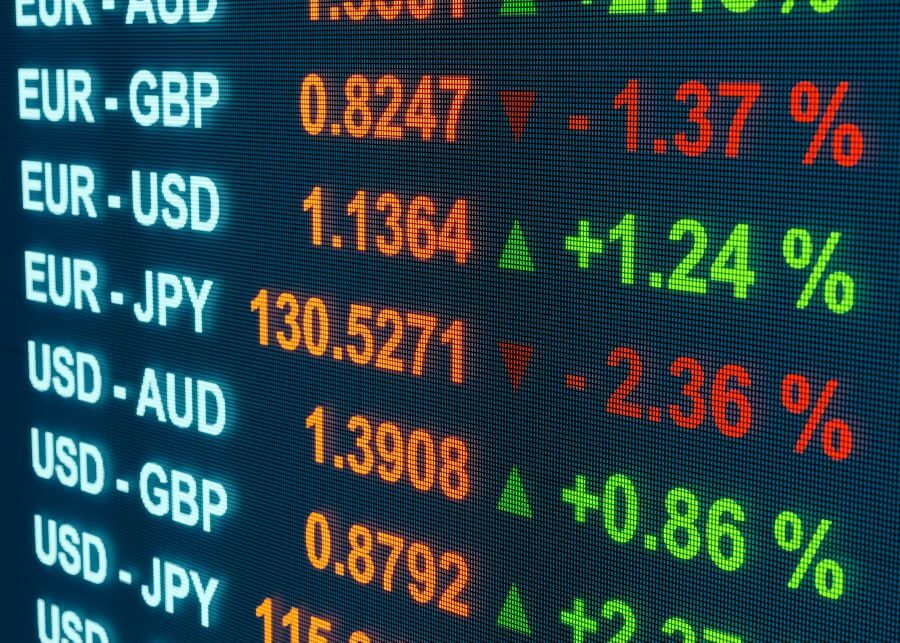
These are national currencies from two countries traded on the F.X. market. It is the method of pairing these currencies to show their relative value.
For instance, EUR/USD shows the euro’s value relative to the U.S. dollar. There are three common categories of currency pairs: major, cross, and exotic pairs. Major pairs are the most commonly traded in the FX space. They include EUR/USD, USD/JPY, GBP/USD, and AUD/USD.
Crosses are also called minor pairs and often do not include the U.S. dollar. Examples are EUR/GBP, NZD/JPY, and CHF/JPY. Exotic pairs comprise one major currency and another from a developing country. They include EUR/TRY, USD/MXN, and CAD/JPY pairs.
Exchange Rate
The exchange rate is the price at which a currency is exchanged for another. Several economic factors, such as supply, demand in the market, and political conditions, can influence this.
The financial position of a country is the dominating factor influencing its exchange rate. If the U.S. economy is facing a recession, there is a high chance the currency will lose value and be traded for less against other currencies in the F.X. market. The exchange rate can be either floating or fixed. The country’s central bank determines the fixed rate, while the floating rate is set based on supply and demand dynamics.
Bid/Ask Price & Spread
The bid price is the amount the dealer is willing to offer for a currency, while the asking price is the rate at which the same dealer would choose to sell it.
For instance, if the GBP/USD bid price is 0.86, the buyer is ready to pay 0.86 GBP for one dollar. On the other hand, if the asking price is 0.86 for the same pair, it translates to the buyer’s willingness to receive 0.86 US dollars and nothing less for one GBP.
The spread is the difference between the bid and ask price. The value of a good spread is around 0 to 5 pips; anything above that might not benefit one party.
What Is A Pip?
A pip in forex is the smallest unit of measurement used by traders and translates to 1/100th of 1% or 0.0001 in value. For instance, the GBP/USD moving from 0.86123 to 0.86124 equates to one pip movement. Fractional pips are smaller units of pips and are used to value 1/10th of a pip. For instance, GBP/USD moving from 0.861230 to 0.861231 would be considered a 0.1 pip.
Margin and Leverage
Leverage is a term in foreign exchange that allows you to explore investments higher than your capital or initial deposit. It will enable trading in a more prominent position using a smaller percentage of the funds needed. The initial investment you’d need to deposit is the margin to open this leverage trade. With these two forex terms, traders have been exploring more considerable profit potential irrespective of how much initial capital they have.
Long/Short Positions
Going long or short are two terms many traders use because they refer to the position an investor decides to take on an asset.
Going long means a trader believes a price pump is coming, and the market will go up, so they open a buy trade. On the other hand, going short signifies a trader’s predictions of a price decline, so they open a sell trade.
Base and Quote Currency
When looking at currency pairs, it’s essential to understand the concepts of base and quote currencies. In a pair like GBP/USD, the first currency (GBP) is the base currency, whilst the second (USD) is the quote currency. The exchange rate shows how much of the quote currency is needed to purchase one unit of the base currency.
Lot Size
In forex trading, currencies are traded in specific amounts called lots. There are three main lot sizes:
- Standard Lot: 100,000 units of the base currency
- Mini Lot: 10,000 units of the base currency
- Micro Lot: 1,000 units of the base currency
Understanding lot sizes is crucial for managing your position size and overall risk.
Stop Loss and Take Profit
These are vital risk management tools in forex trading:
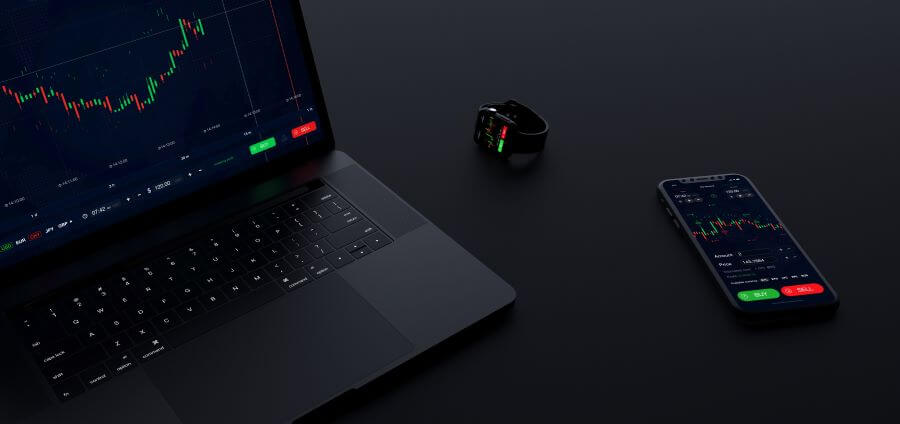
- Stop-Loss: An order to close a trade automatically when the price reaches a specified level, limiting potential losses.
- Take-Profit: An order to close a trade automatically when a certain profit level is reached, securing gains.
Proper use of these orders can help protect your capital and lock in profits.
Order Types
Forex traders use various order types to enter and exit the market:
- Market Order: An instruction to buy or sell at the current market price.
- Limit Order: An order to buy or sell at a specific price or better.
- Stop Order: An order that becomes a market order when a specified price is reached.
Understanding these order types allows for more strategic trade execution.
Fundamental Analysis
Whilst technical analysis is crucial, fundamental analysis plays a significant role in forex trading. Key factors to consider include:
- Interest Rates: Central bank decisions on interest rates can significantly impact currency values.
- GDP (Gross Domestic Product): A measure of a country’s economic health.
- Employment Data: Indicators like unemployment rates can influence currency strength.
- Inflation: Measured by indices like CPI (Consumer Price Index), inflation rates affect currency value.
Rollover and Swap
When you hold a forex position overnight, it’s subject to a rollover:
- Rollover: The process of extending the settlement date of an open position.
- Swap: The interest rate differential between the two currencies in the pair, which can result in either a credit or debit to your account during rollover.
Slippage
Slippage refers to the difference between the expected price of a trade and the price at which the trade is executed. It’s more common during periods of high volatility or when executing large orders.
Volatility
Volatility measures the degree of variation in a trading price over time. High volatility means rapid and significant price movements, which can present both opportunities and risks for traders.
Broker Types
Different types of forex brokers operate in slightly different ways:
- ECN (Electronic Communications Network): Provides direct access to other participants in the currency markets.
- STP (Straight Through Processing): Routes orders directly to liquidity providers.
- Market Makers: Create a market for clients by taking the opposite side of a trade.
Understanding your broker’s type can help you better navigate trading conditions.
Trading Sessions
The forex market operates 24 hours a day, but it’s divided into three main sessions:
- Asian Session: Begins with Tokyo, includes Singapore and Hong Kong.
- European Session: Starts in London, overlaps with the end of the Asian session and the beginning of the North American session.
- North American Session: Starts in New York, overlaps with the end of the European session.
Translating Forex Knowledge Into Profits
It is impossible to cover all the terminology in the forex market in one article, but the list above covers the most essential fundamentals of these terms. For forex traders, knowledge translates to money because it means you understand how to make the most of market conditions and invest in the right opportunities.
It also extends to understanding basic trading strategies, technical indicators, and charts that increase your chances of making profitable investments. As the adage goes, “knowledge is power,” which could easily translate to wealth for you in the financial market. So, endeavour to learn more as you navigate the space.