

















Oxford has always been a city where history and discovery walk hand in hand. But on the northern edge of the city, a bold new chapter is being written. Oxford North, a £1.2 billion, 64-acre innovation district, is rising on former farmland, deliberately designed to become the beating heart of England’s knowledge economy.
It is a place where business and education converge; where laboratories and lecture halls sit alongside cafés and cycle paths; where the world’s brightest scientists will share green parks with families and schoolchildren; and where the city’s nine-century tradition of scholarship meets the 21st-century demands of AI, biotech and climate science.
The Vision: Growth With Purpose
Oxford North’s ambition is simple in concept yet radical in scope: to keep Oxford at the cutting edge of global science and technology while creating a liveable, connected community.
Oxford generates more spin-outs and start-ups than any other UK city, but too often promising ventures are pushed away by a shortage of lab space and specialist facilities. Oxford North aims to reverse that brain-drain, offering workspace designed by scientists, for scientists, with flexibility for everything from start-ups to industry behemoths.
This is more than a property scheme: it’s an investment in Oxford’s future, designed to provide opportunity for entrepreneurs, students, researchers and residents alike. Positioned within the Golden Triangle of Oxford, Cambridge and London, Oxford North is intended as a collaborative ecosystem, a home for discovery on par with Europe’s leading science clusters.
The Masterplan: Building a Neighbourhood for Science
The scale is striking:
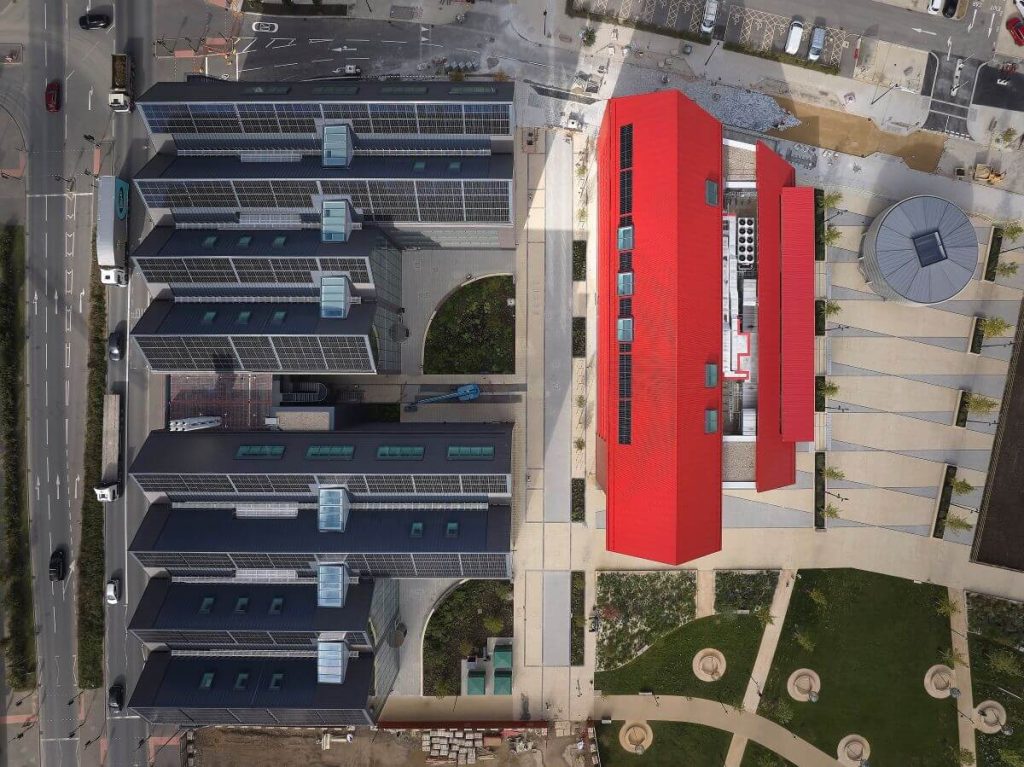
- 1 million sq ft of labs and offices, fully enabled for cutting-edge science and business growth.
- 480 new homes, housing around 1,500 residents, with a significant proportion affordable.
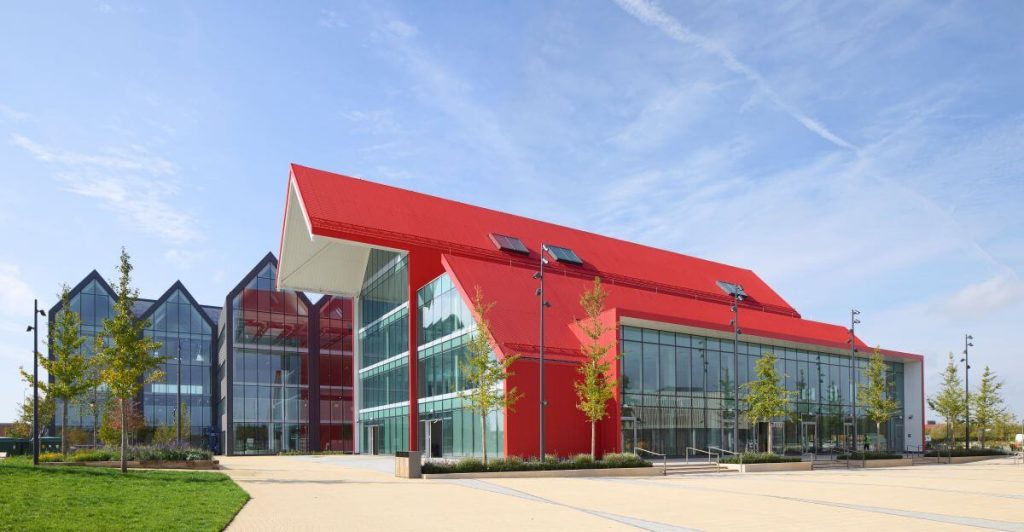
- The Red Hall, a four-storey hub with co-working suites, retail, community space and an 80-seat café.
- 23 acres of landscape, parks and biodiversity corridors.
- New retail, a nursery, and a hotel in later phases.
At its heart is Fallaize Park, a two-acre public green space named after Professor Elizabeth Fallaize, the first female fellow of St John’s College. It has already become a landmark thanks to Your planetary assembly, the glowing glass installation by world-renowned artist Olafur Eliasson.
This balance of workspace, buildings, architecture and landscape ensures Oxford North is not a fenced-off campus but a neighbourhood, blending innovation with public life.
The Partnership: Collaboration on a Global Scale
Delivering a project of this ambition requires global collaboration. Oxford North is led by Oxford North Ventures, a joint venture uniting:
- Thomas White Oxford, the development company of St John’s College.
- Ontario Teachers’ Pension Plan, a global investor providing long-term stability.
- Stanhope PLC, one of the UK’s leading developers.
The masterplan is by Fletcher Priest Architects, with Gustafson Porter + Bowman designing the landscape. This fusion of architecture, business vision and community design mirrors the collaborative ethos Oxford North seeks to foster among its future tenants.
Phases and Progress: From Vision to Reality
- Phase 1A (2025): Two laboratory buildings (158,500 sq ft), the Red Hall and Fallaize Park now open.
- Phase 2: Three further lab buildings, adding 374,400 sq ft of flexible space for growing firms and global HQs.
- Future phases: More homes, amenities and a hotel to follow, completing the transformation.
Each building is designed with adaptability in mind, ensuring Oxford North can evolve with the science and education it supports.
Who Will Work Here?
Oxford North caters for the entire innovation lifecycle:
- University spin-outs needing fitted lab space.
- Scale-ups seeking multi-tenant workspace.
- Global corporations requiring bespoke headquarters.
Target sectors include life sciences, quantum computing, AI and green technology. With Oxford producing more unicorn founders than any other European city, the demand for this type of campus is intense – and Oxford North is already signing tenants.
The opportunity is clear: a pipeline for researchers from Oxford’s world-class universities to grow into thriving businesses without leaving the region.
Economic Impact: A Catalyst for Oxfordshire
The numbers underline its importance:
- 4,500 permanent jobs created on site.
- 1,700 construction roles supported during build.
- £150 million per year added to the local economy.
The 480 homes – much needed in a city of chronic housing shortages – will allow scientists and families to live near their workplaces. Training and employment schemes will ensure opportunities spread into the wider Oxfordshire community.
Oxford North is not just about buildings; it is about Oxfordshire’s long-term growth and investment in skills, business and education.
Sustainability and Transport
Oxford North has been designed as a climate-conscious district. All-electric buildings, rooftop solar PV and ground-source heat pumps underpin a net-zero strategy. All new buildings are targeting BREEAM Excellent ratings.
On transport, developers have committed £10.5 million to active travel infrastructure, with segregated cycle lanes linking directly into Oxford, bus connections, and easy access to Oxford Parkway and the A34. When East–West Rail is completed, the district will sit on one of the UK’s most important new corridors.
By embedding sustainability into both buildings and landscape, Oxford North sets a new benchmark for how science districts can reduce their environmental impact.
Cultural Value and Community
Oxford North is deliberately designed to feel like part of the city rather than an isolated park. Its cafés, shops and parks are open to the public. Events, art installations and science festivals are already being programmed in partnership with Modern Art Oxford, IF Oxford and Creation Theatre.
This is as much about culture as it is about commerce: a district where research breakthroughs are celebrated alongside theatre, art and public debate. Oxford North draws on Oxford’s history as a place of ideas and education, blending business with cultural life in a way that few projects attempt.
Looking Ahead
Oxford North is not just a property scheme; it is a statement of intent. It signals that Oxford, already home to vaccine breakthroughs, AI pioneers and Nobel-winning research, is building the infrastructure to compete on the world stage for decades to come.
As Simon Ruck, managing director of Oxford North, put it:
“Inspirational public realm is central to Oxford North’s vision. Olafur’s cosmic sculptures will illuminate Fallaize Park and create cultural moments for everyone who visits, works or lives here.”
From laboratories buzzing with next-generation science to the glow of Eliasson’s planets at dusk, Oxford North is where Oxford’s history of discovery meets its future.
Oxford North is not the city’s first innovation hub, Oxford Science Park, established in 1991 by Magdalen College, has long been home to global names such as Oxford Nanopore Technologies. But where Oxford Science Park is a dedicated campus for science and tech, Oxford North is designed as a new kind of mixed-use district.
By combining lab space with housing, culture, transport links and public parks, it seeks to address Oxford’s twin challenges of growth and liveability, ensuring the city remains competitive on the global stage.
The landscape is changing, and with it, the opportunity to redefine Oxford as both a cultural and scientific powerhouse of England. Research and innovation play a pivotal role in the vision for Oxford North, as it aims to create a dynamic environment that builds collaboration between academics, start-ups, and established businesses.














