From Cornmarket’s changing shopfronts to Banbury Cross, these ten photographs reveal what has changed, and what has endured, in Oxford and Banbury.
Old photographs capture more than the buildings we remember. Look around their edges and there are clues to how people shopped, travelled and used the streets. Sometimes the biggest change is at pavement level, while the skyline barely alters.
These five pairs bring archive photographs from 1954 to 1979 together with later views taken between 2016 and 2026. They show the same places from comparable, rather than precisely identical, viewpoints. Each photograph is dated so you can see how much time separates the two.
Cornmarket: a familiar timbered corner, 1979 and 2026
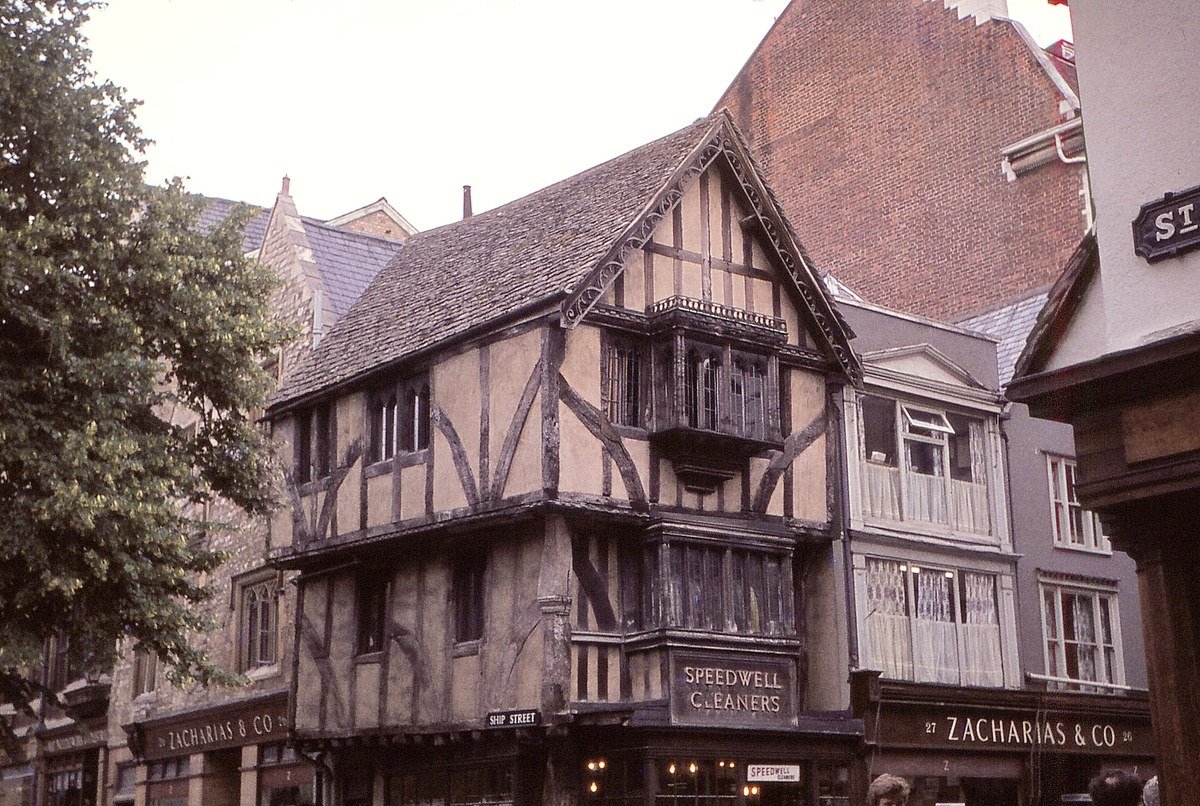
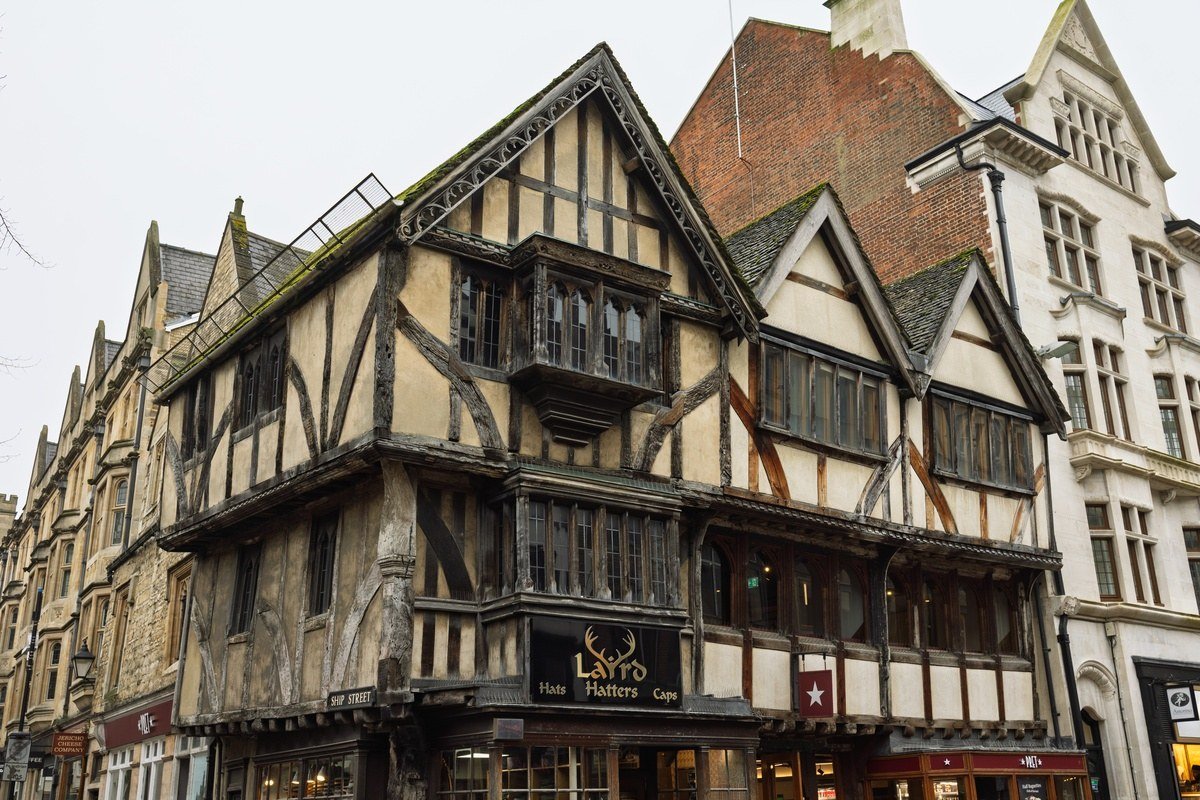
The projecting windows and timber framing at the corner of Cornmarket and Ship Street make this one of the easiest buildings to recognise in the collection. Jeff Buck’s July 1979 photograph shows the frontage with Zacharias & Co and Speedwell signs at street level. In the January 2026 view by The wub, Laird Hatters is among the names beneath the old upper floors.
There is more to this comparison than a change of tenants. The Oxford History account of numbers 26 and 27 records extensive restoration by owner Jesus College in 1986–87, between the dates of these pictures. It describes a building probably dating from the fifteenth century, with later alterations.
Look closely at the windows and the neighbouring frontage as well as the timbers. The older photograph is a useful reminder that the historic streetscape itself has been repaired and altered over time. The recognisable outline has survived, even as the details and businesses below it have changed.
Broad Street: from parked cars to places to sit, 1960 and 2024
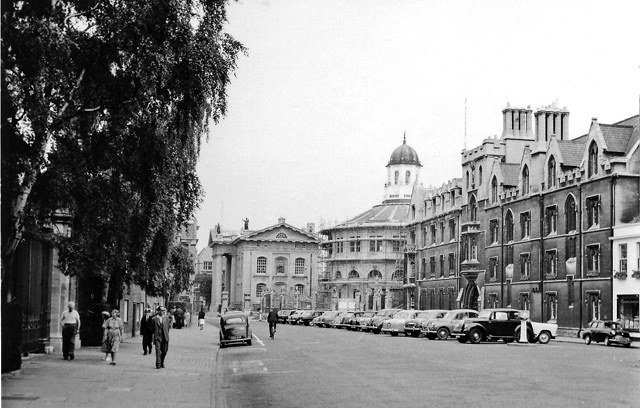
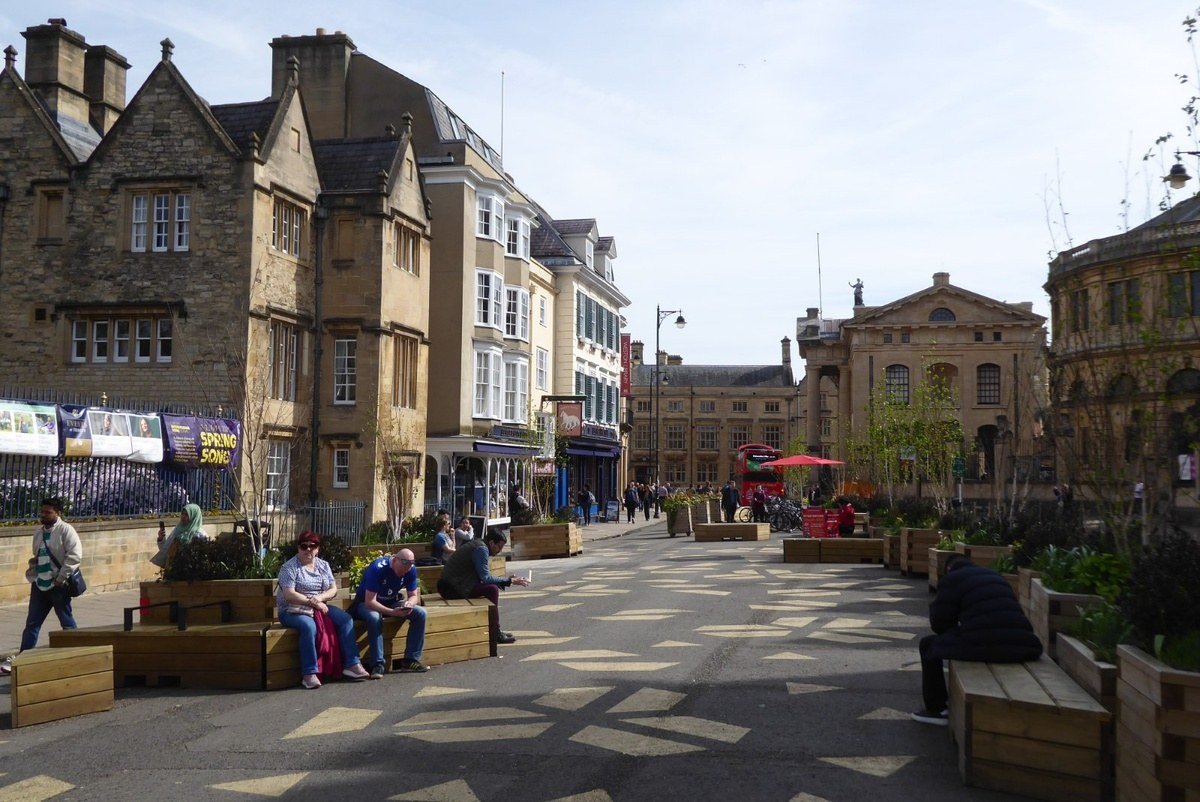
Ben Brooksbank’s photograph of 3 July 1960 looks east along Broad Street towards the Clarendon Building and Sheldonian Theatre. Parked cars line the right-hand side, with a broad expanse of road occupying much of the foreground.
Philip Halling’s April 2024 photograph, taken from a different position along the street, brings benches, planting and people sitting outdoors into the foreground. The architectural landmarks provide continuity, but the use of the space has changed.
That difference has a documented recent chapter. Oxfordshire County Council opened the widened pedestrian space with seating and planting in October 2022. In December 2023, it approved making the scheme’s traffic arrangements permanent.
Of these five comparisons, Broad Street most clearly shows how a place can look different without losing its defining buildings. The change is in what happens between them.
Carfax Tower: the landmark that outlasted its church, 1968 and 2026
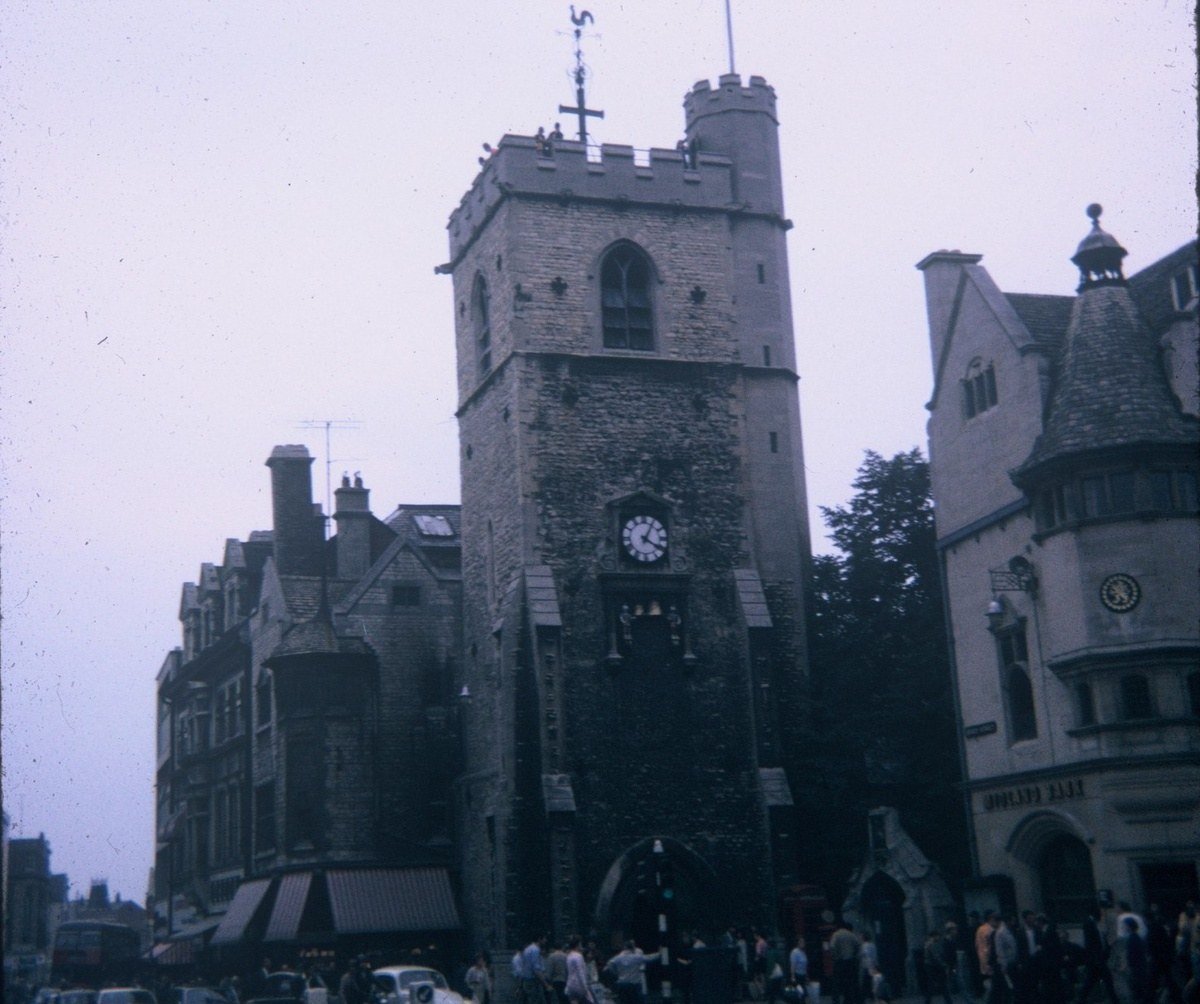
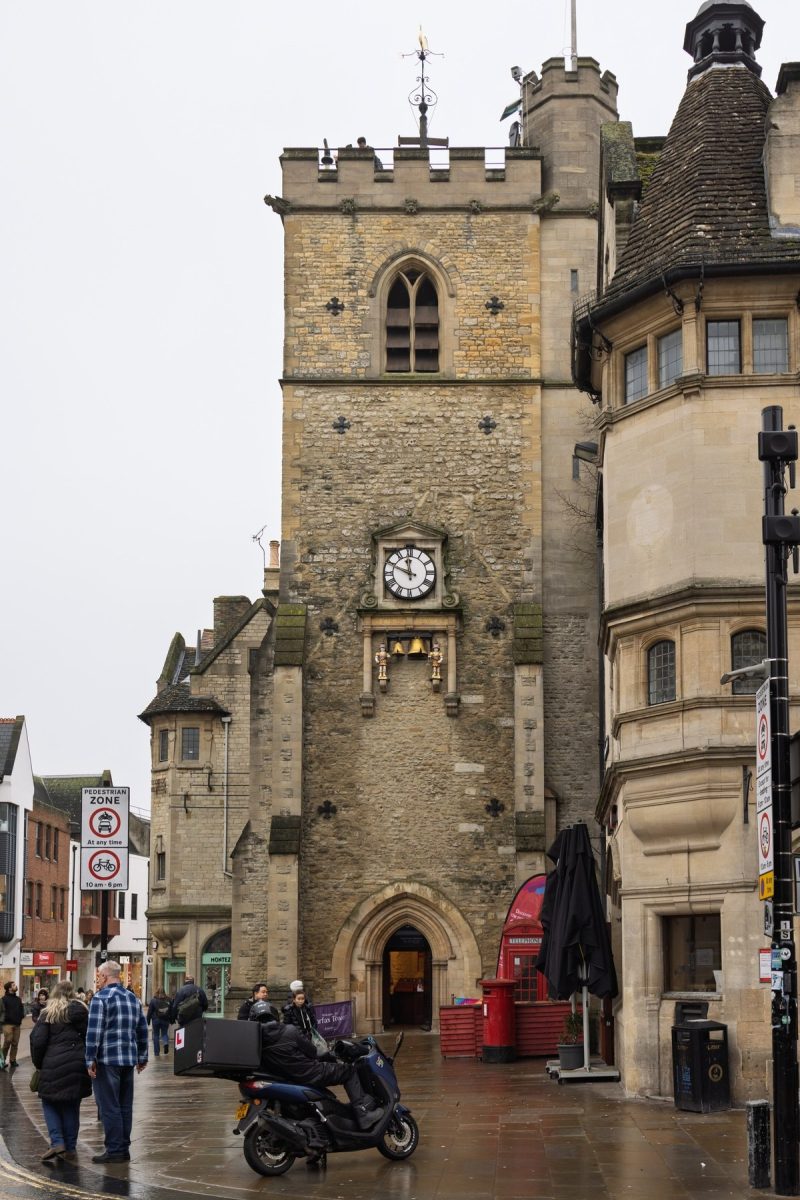
David Hillas photographed Carfax Tower in September 1968; The wub returned to the subject in January 2026. The earlier picture takes in more of the surrounding junction, while the later portrait view draws the eye upwards to the clock and battlements.
Both show a structure that had already survived a much larger transformation. According to Historic England’s listing, the tower is probably fourteenth-century. St Martin’s Church was demolished in 1896, leaving the tower standing.
That history changes the way these photographs read. The tower is not simply an old building preserved beside a busy street: it is the surviving part of a church whose main body had disappeared long before either photographer arrived. Its clock face gives the two views a particularly clear point of comparison.
Hertford Bridge: a recognisable Oxford view, 1979 and 2016
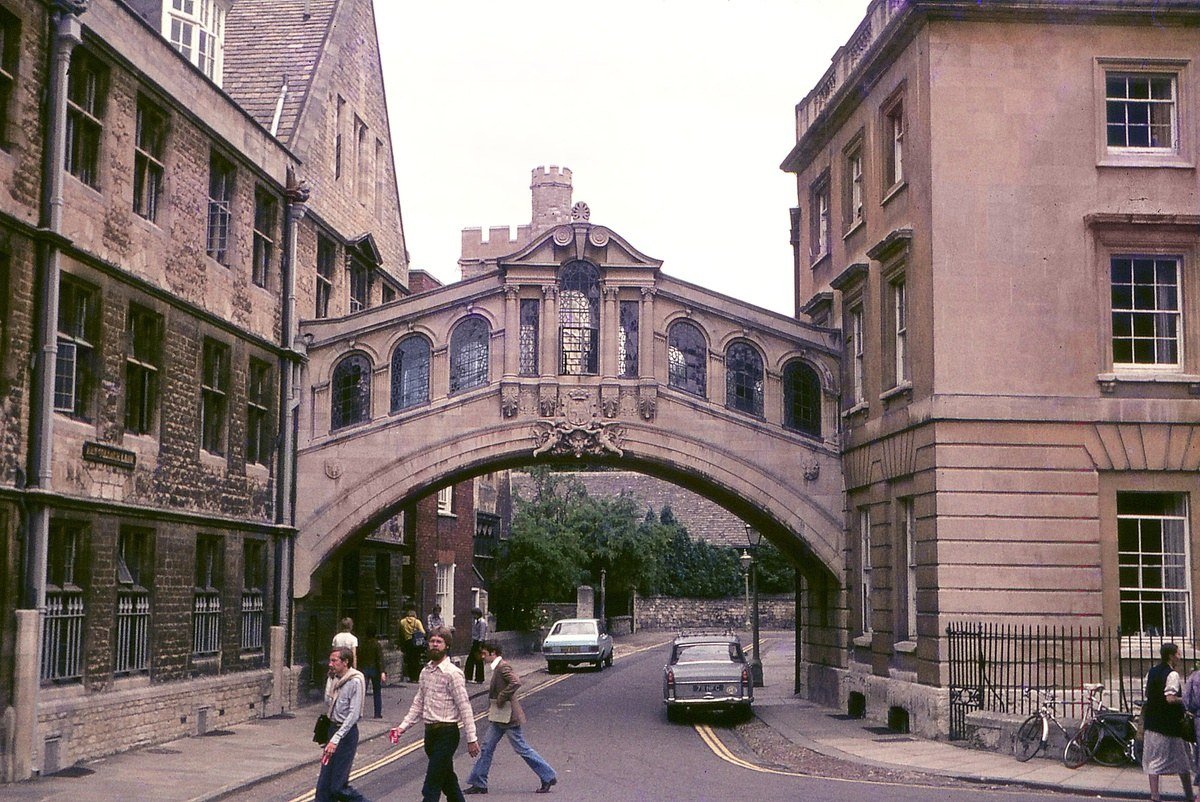
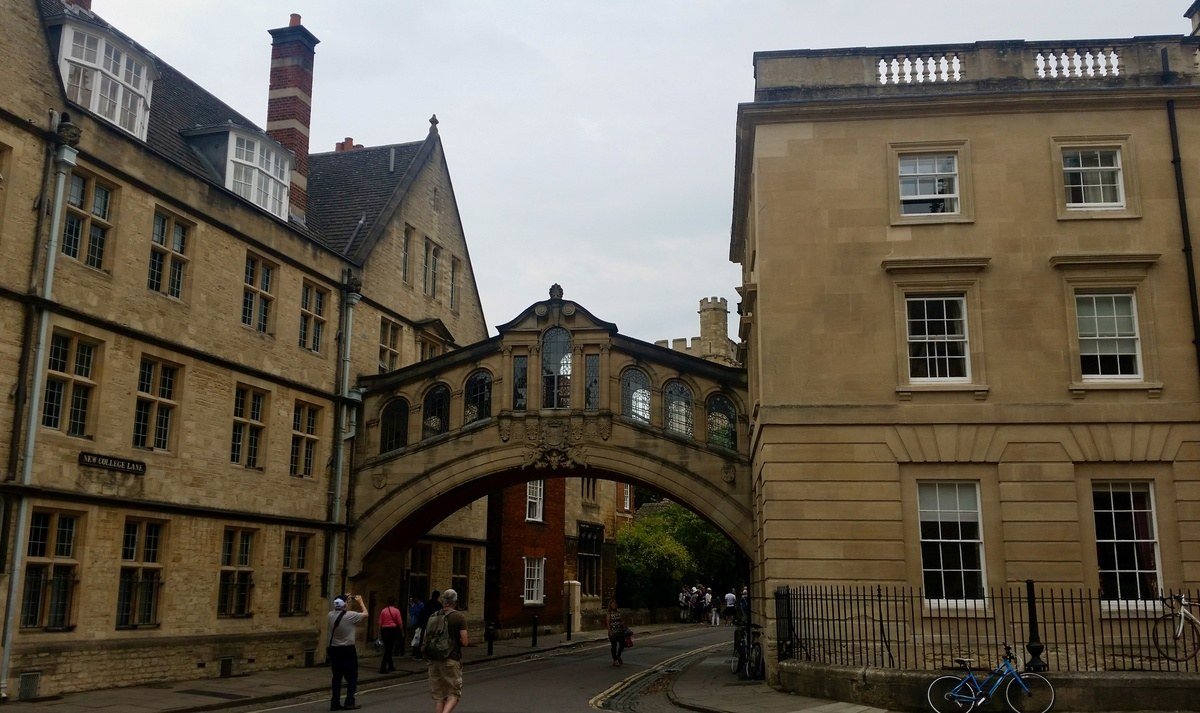
There are 37 years between Jeff Buck’s July 1979 photograph of Hertford Bridge and Lauren’s August 2016 view. The older frame includes cars beneath and beyond the arch and pedestrians crossing the foreground; the later picture takes in more of the buildings on either side.
Known as Oxford’s Bridge of Sighs, the bridge crosses New College Lane and connects parts of Hertford College. The college’s own history identifies Thomas Graham Jackson as its architect and notes that its appearance is closer to Venice’s Rialto Bridge than to the Venetian Bridge of Sighs.
The enclosed crossing, arched underside and surrounding stonework remain the main features in both photographs. Here, the pleasure is in the smaller differences around an enduring composition. The later image dates from 2016, rather than showing the street as it is today.
Banbury Cross: seventy years around the same landmark, 1954 and 2024
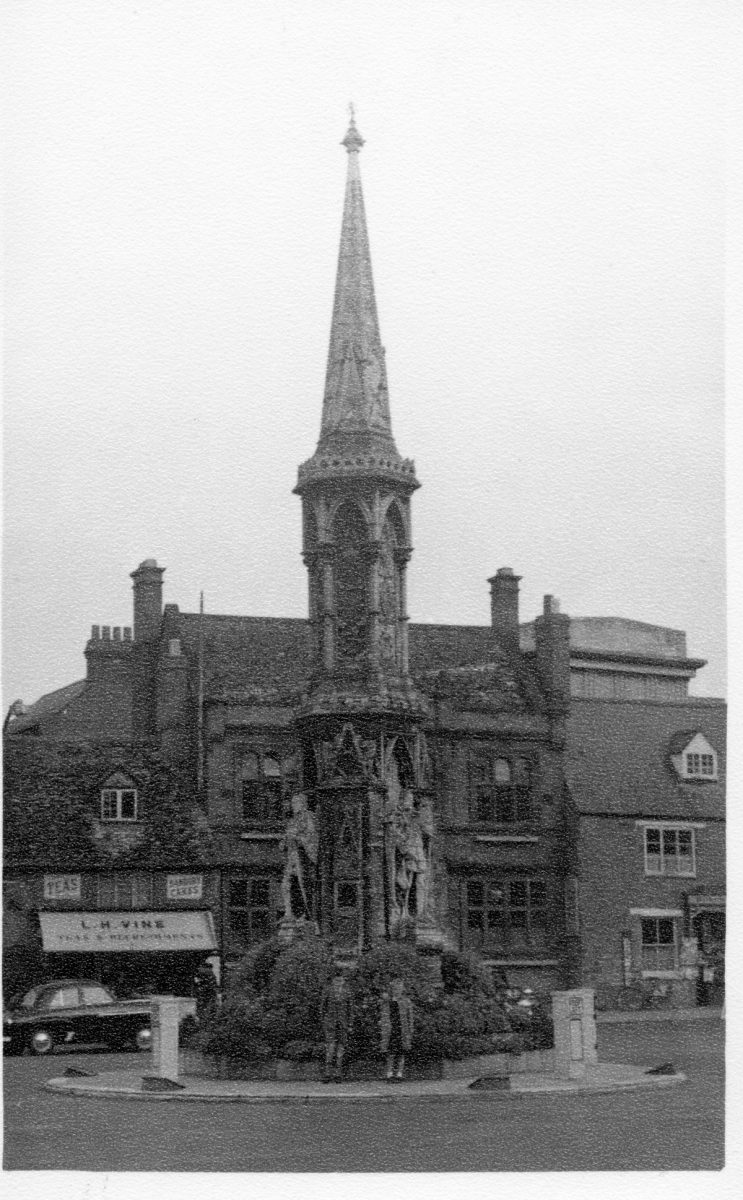
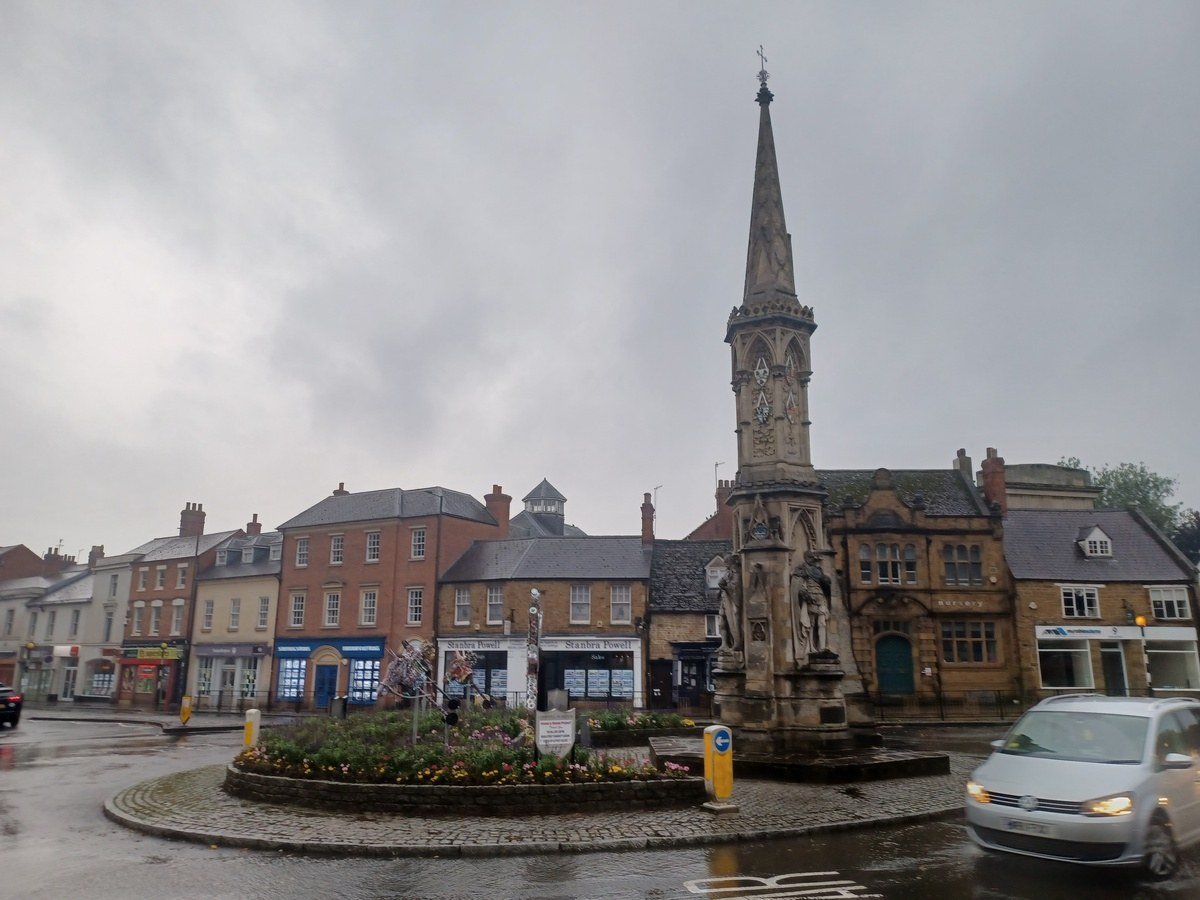
Keith Evans’s July 1954 photograph and Simon Burchell’s September 2024 image give this collection its longest interval: seventy years.
The older portrait photograph concentrates on the cross, with shops behind and pale traffic bollards near its base. The wider 2024 view shows the planted island, a blue directional sign and a car passing in the foreground. The cross remains the centre of the scene, while the everyday machinery of the road has changed around it.
Compare the rooflines and windows behind the monument as well as the monument itself. Those surrounding buildings help connect a black-and-white view from the 1950s with a colour photograph taken seven decades later. It is a striking example of continuity in a town centre that generations of residents have passed through.
Look again on your next visit
The four Oxford locations offer an easy theme for a city-centre wander: Cornmarket and Carfax, then Broad Street and Hertford Bridge by New College Lane. Banbury Cross makes a separate stop in Banbury.
Take the dated images with you and look above the shop signs, towards a roofline or across a junction. The most revealing details are often the ones a familiar journey has taught us to overlook.