

















Oxfordshire is fast becoming ground zero in the national conversation around how, and whether, local communities should benefit from the clean energy revolution. At the centre of the debate: the controversial Botley West Solar Farm proposal. And what happens here, could set the standard for England.
If approved, Botley West would be the largest solar farm in the UK, stretching across more than 2,471 acres and generating enough electricity to power 330,000 homes. Yet despite its size and projected income, a staggering £100 million annually, the developer’s current offer to local communities is just £200,000 a year, to be split between 15 parishes and councils.
Campaigners are calling this a “missed opportunity”, and one that could shape how similar deals are struck nationwide for years to come.
“Botley West is the first big test of how profits from large-scale solar projects are shared in England – and what happens here will set expectations nationwide, This isn’t about being for or against the project. It’s about fairness. Clean energy must deliver for the communities who host it.”
Dr Barbara Hammond, CEO of Low Carbon Hub
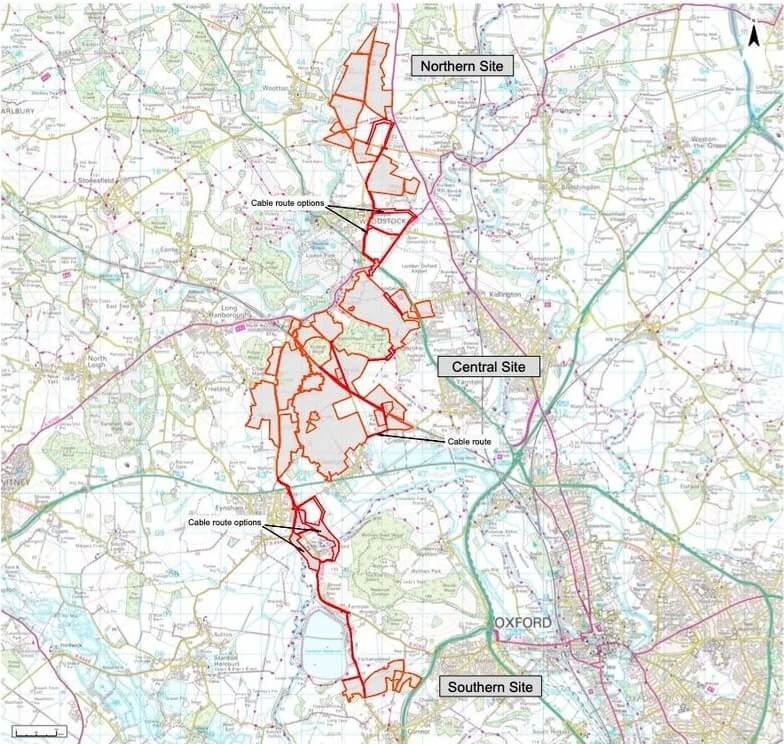
Botley West Solar Farm Scale and Land Use
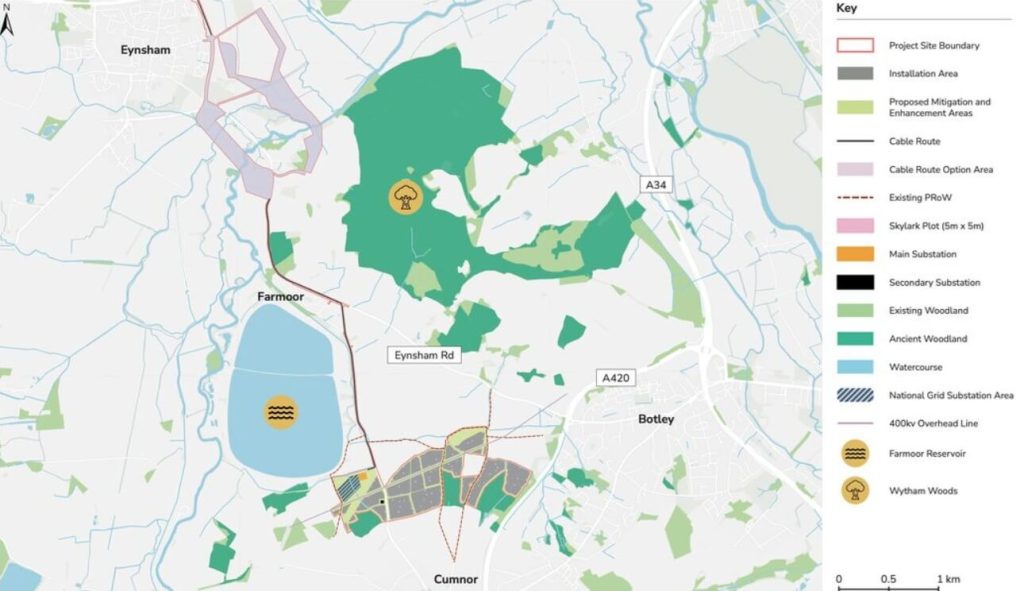
Botley West would span three major zones across rural Oxfordshire: north of Woodstock, west of Kidlington, and west of Botley.
At 2,471 acres, it would be more than eight times larger than Shotwick Solar Park, currently the UK’s largest.
For perspective, the proposed new stadium for Oxford United is on a 12-acre (5-hectare) site. And the largest golf course in Oxfordshire is Heythrop Park Golf Club on 440 acres of land.
A good reference point is the Blenheim Palace grounds, with the parkland 2,000 acres and Blenheim Estates owns around 90% of the land, which would be leased to developer Photovolt Development Partners (PVDP).
Why It’s Controversial
While there is no denying a move to renewable energy sources is a key and necessary development. Critics, including farmers and residents, have raised serious concerns over the sheer scale and rural impact of the farm.
It’s been described as an “ocean of glass and steel” by some residents, who have concerns about loss of food-producing agricultural land and the impact on pollinators and wildlife in biodiverse environment.
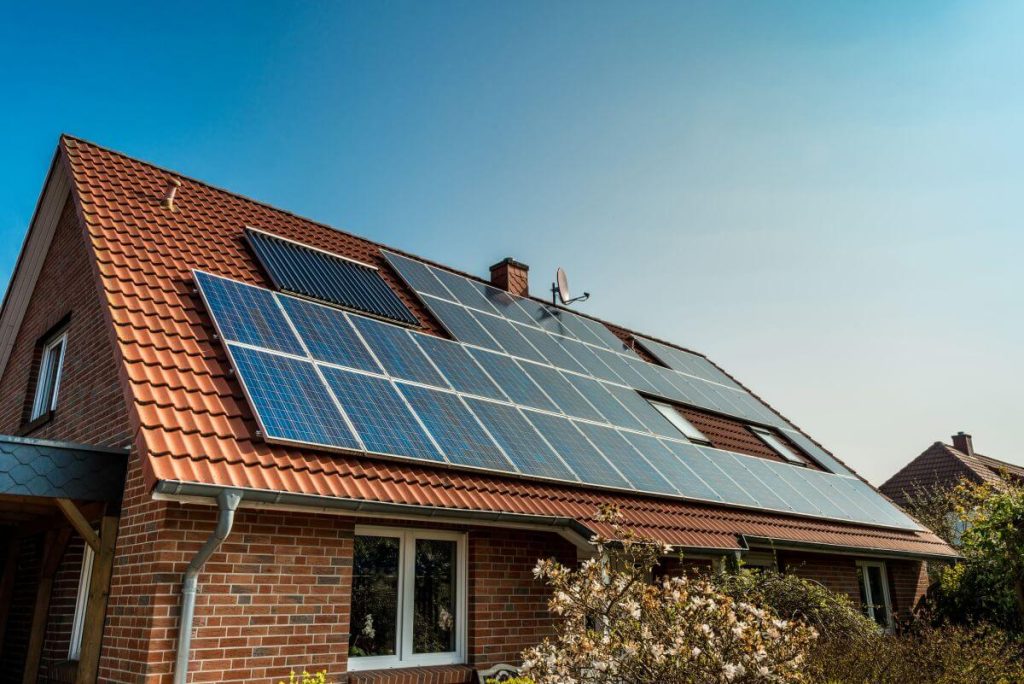
There are some claims it may disrupt the character of local countryside and village life. Which while seeming a NIMBY attitude, makes sense when you consider rooftop solar and car park canopies should be prioritised before using open fields.
There also strong arguments the current solar power infrastructure be used better, with new builds often putting solar panels North Facing with high tree canopies blocking the sunlight, which suggests more of a tick box completion than any genuine effort to harness the power of the sun.
Respected local Green Councillor Ian Middleton has previously expressed concerns on the use of Green Belt land he has long fought to protect saying “usable farmland is going to become even more important” due to climate change and shouldn’t be “tied up by armour plating it.” While he has gone on record to supports utility-scale solar energy projects of up to 100 acres, he says BWSF is “several orders of magnitude bigger.” and fears it would “blight” the countryside and become a “dominant feature in a largely rural area.”
Counterpoints from Experts
While concerns about land use persist, experts argue they may be overstated.
Prof. Nick Eyre from the University of Oxford told the BBC fears of impact on food production “hugely exaggerated”, and pointed out 1% of UK farmland are already golf courses.
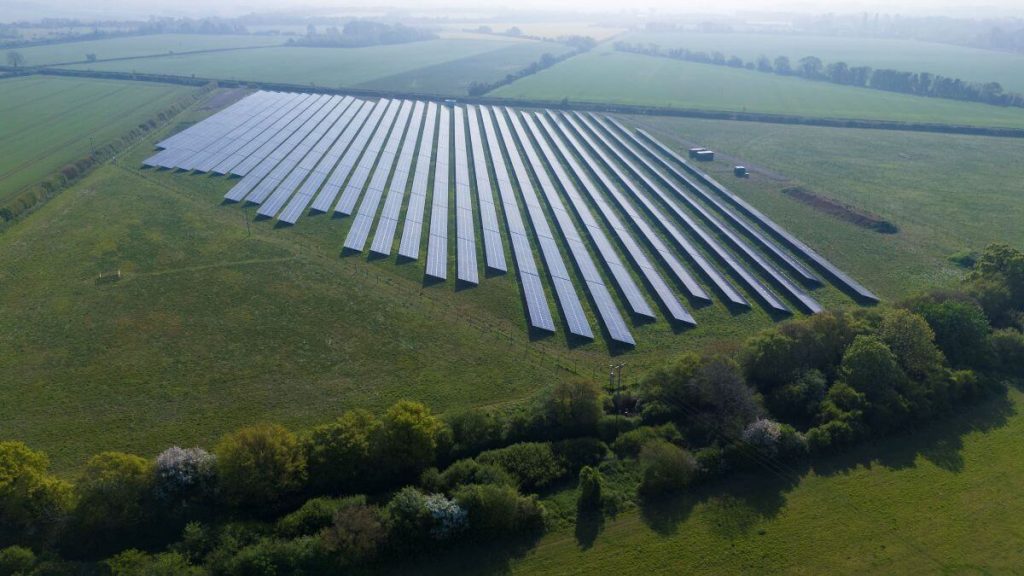
Others argue solar fields allow biodiversity projects underneath and around panels, reducing their net ecological impact.
It should be noted however, that Blenheim Estates have just announced the completion of their Weaveley Solar Park project on exhausted farmland, not only making them a net generator of green energy, but improving the land. Roy Cox, Managing Director at Blenheim Estates, said they were learnings that “can apply to larger infrastructure projects in the future” and they had already seen an “uplift in the site’s biodiversity”.
Timescales & Approval Process
Botley West is being treated as a Nationally Significant Infrastructure Project (NSIP), meaning its fate will be decided by the national government, not local councils.
Planning application review is ongoing, with public inquiry into the development opening on 14th May. If approved, construction could begin in 2026, with electricity is expected to be supplied to the National Grid by 2028.
A Precedent for England
What makes Botley West so significant is not just its scale, but its timing. It is the first major solar farm in England to navigate the NSIP framework, used for the UK’s biggest infrastructure projects.
In Scotland, developers contribute an average of £5,000 per megawatt to local communities, backed by government guidance. But England has no such policy, leaving deals like this to be privately negotiated and potentially inequitable.
This basically makes the fields of West Oxfordshire a scene for a battleground for fairness. While the developers are offering 0.2% of annual revenue, predicted to be £200k. With predictions that the farm would generate 840MW, in Scotland this would mean the hefty value of £4.2 Million. There are calls from local campaigners that a higher revenue share of 2% (£2 million) is a fairer compensation value, and it’s hard to disagree.
Pressure for Change
Oxfordshire-based Low Carbon Hub and community groups are putting pressure on Blenheim Estate, the project’s main landowner, to back their Make Botley West Fair campaign, which raises how wealth from renewable infrastructure be shared with the people and places who host them.
This increased revenue share, directly back to the local community, could fund:
- Home insulation and retrofit schemes
- Community EV chargers
- Local nature recovery and green space projects
- Support for households in fuel poverty
Blenheim Estate has a rare opportunity to lead – and to shape how clean energy delivers real local benefits, Botley West could set the standard for what fair solar development looks like in England.
Renewable installations can and should do more than provide clean energy. Communities should also benefit, whether through outright or shared ownership of the project or by allocating a share of the revenue to community initiatives. Communities across the country stand to benefit from making large scale projects like Botley West fair.”
Emma Bridge, CEO of Community Energy England.
Local Voices, National Impact
We asked some local residents their thoughts.
I regularly go walking and cycling in Green Belt Way, and pretty sure it will detract from that experience. but I am torn, as I do believe sustainable and renewable energy is important, and I won’t see it from my house due to the a420, and I rarely drive up the b4017.
Dan, Chawley
They are putting this on my doorstep, but it seems more about their profit than clean energy and net zero. I don’t want it regardless, but at least be fair about it as they are just taking the piss
Name Withheld, Filchampstead
Over 20 large-scale solar projects are currently in the national pipeline, including a similar sized project to Botley West Solar Farm green-lighted on the Cambridgeshire-Suffolk border. Many are watching to see how Oxfordshire’s response shapes what’s expected elsewhere, which might make the blot on the landscape more palatable.
Blenheim Estates declined the opportunity to comment.














