Cotswold Wildlife Park celebrates record-breaking stork breeding season as part of a pioneering national rewilding scheme.
Once a common sight across Britain’s skies, white storks disappeared as a breeding species in the 15th century. Hunted for food, persecuted in the English Civil War, and pushed out by habitat loss, they seemed destined to remain only in folklore and fables.
But thanks to a pioneering rewilding project, these iconic birds could soon be back for good, and Oxfordshire is playing a leading role.
Record-breaking season in Oxfordshire
Cotswold Wildlife Park near Burford has announced its most successful year yet in the White Stork Project, a partnership aiming to reintroduce a self-sustaining stork population to southern England by 2030.
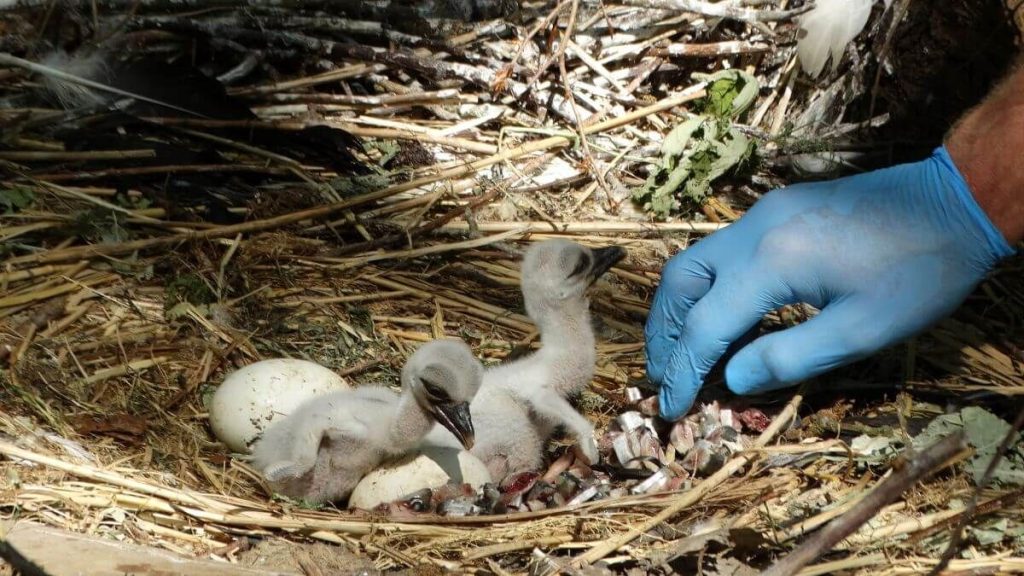
In 2025, the park reared a record 48 chicks, bringing its total contribution to more than 200 since the project began. Hatched in May, the young birds have now been transferred to Sussex for release into the wild, where some have been fitted with trackers to follow their migration routes.
Jamie Craig, Curator of Cotswold Wildlife Park, said:
We received our first batch of birds in late 2016. This enabled us to set up a breeding group of fifty storks at the Park and also send enough birds to our project partners in Sussex to establish small sedentary groups there. The young birds grow rapidly and by around two months of age, the birds will fledge the nest and become independent”.
A bird steeped in history and folklore
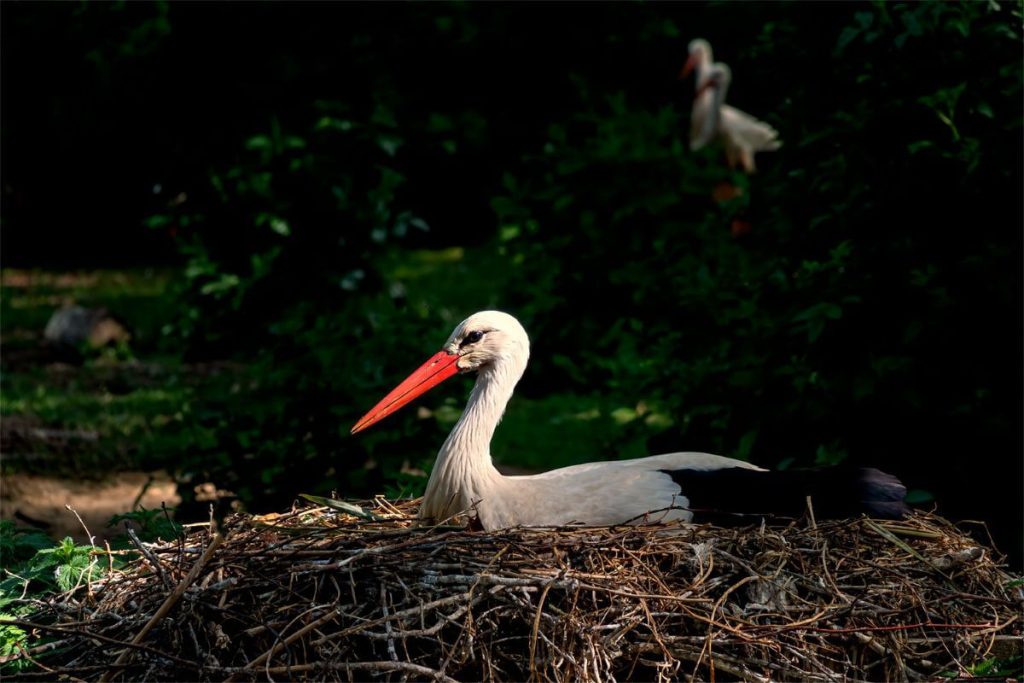
The stork’s history in Britain is long and colourful. The last known nesting was in 1416 at St Giles’ Cathedral in Edinburgh. In medieval times, they appeared on banquet menus and later became symbols of rebellion during the Civil War.
Across Europe, however, storks remained beloved. In Poland, France, and the Netherlands, they are welcomed on rooftops, often with cartwheels mounted to encourage nesting. In Bulgaria, villagers famously sheltered storks in their homes during a harsh winter in 2018.
Folklore has carried them even further: from Aesop’s fables and Greek mythology to Hans Christian Andersen’s stories and Disney’s Dumbo, storks have been tied to themes of hope, new life, and parental devotion.
How the project works
The White Stork Project, launched in 2016, is the first rewilding initiative of its kind in the UK. Its goal: at least 50 breeding pairs across southern England by 2030.
Cotswold Wildlife Park received its first storks from Warsaw Zoo in Poland, rehabilitated wild birds unable to return to nature due to injuries. From this core group, a dedicated breeding colony was established.
Every spring, keepers at the park provide tonnes of twigs and sticks for the huge nests, monitor egg laying, and support the adults by delivering finely chopped fish and insects directly to chicks. By two months old, the young birds are ready to fledge and eventually move to release pens in Sussex.
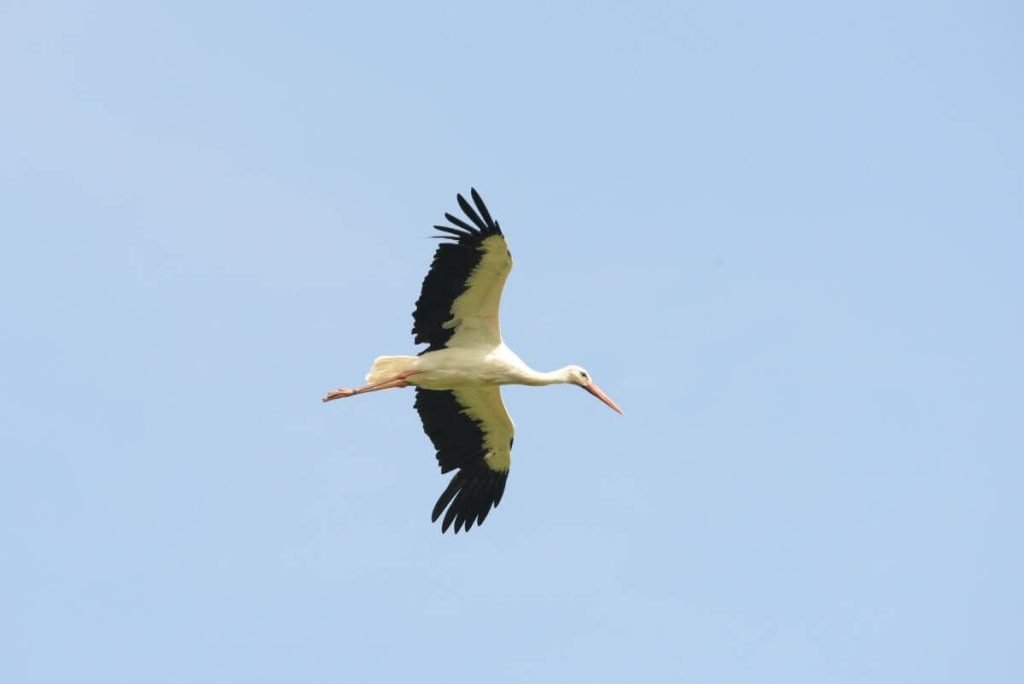
Many of the storks migrate south to Africa before returning at maturity around age four. The project team is hopeful that the first “Oxfordshire storks” will soon be nesting wild on English soil.
A wider European movement
Similar reintroduction programmes have already succeeded in mainland Europe, restoring once-vanished populations to France, the Netherlands, and beyond. In 2025, the Knepp Estate in Sussex, a partner in the project, and nearby Storrington were even recognised as the UK’s first official “Stork Village” by the European Stork Village Network.
Craig added:
So far, we have transferred over two hundred young storks to Sussex for release. Many have successfully crossed the Channel and followed traditional migration routes down through Europe and into Africa. Storks do not return to their nesting ground until they have matured at four years, so we are all hoping for the first Cotswold Storks to return to England and become a permanent breeding fixture in the landscape once again”.
Get involved
All storks bred for the project are fitted with unique coloured rings. Members of the public spotting one in the wild are encouraged to report it at whitestorkproject.org/report-a-sighting.
Visitors can also see the breeding group at Cotswold Wildlife Park in the walk-through area next to the Children’s Farmyard. The park is open daily from 10am–6pm during the summer, with last entry at 4pm.
For local families, it’s not just about a great day out. The return of the white stork after more than 600 years represents Oxfordshire’s role in shaping the future of Britain’s landscapes. It’s a story of conservation, cultural heritage, and hope, with Burford right at its heart.
Fun Stork Facts for Kids
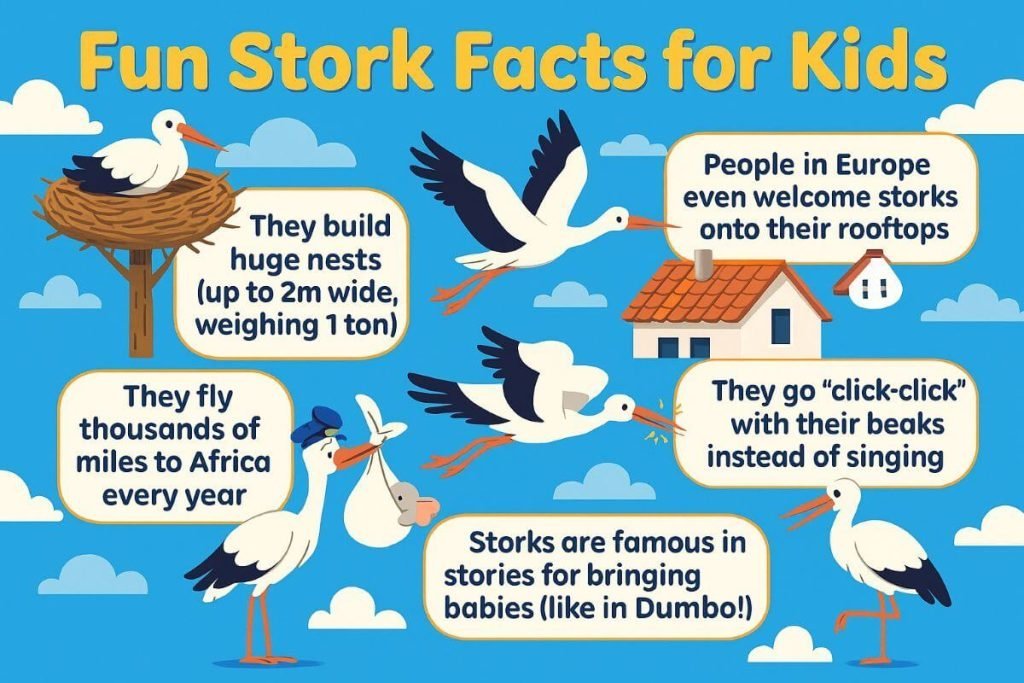
- They build huge nests: White stork nests can be 2 metres wide and weigh over a ton! Some are used year after year, with new layers added each spring.
- Roof-top lodgers: In parts of Europe, people put cartwheels on their roofs to encourage storks to nest there, it’s seen as a sign of good luck.
- Long-distance travellers: Storks migrate thousands of miles. Some fly from Europe all the way to Africa for the winter, without using passports!
- Famous in fairy tales: Ever heard that babies are delivered by storks? That story comes from old European folklore and was made famous by Hans Christian Andersen, and even appears in Disney’s Dumbo.
- Click, click, click: Storks don’t sing, instead, they make a loud clattering sound by rapidly snapping their beaks together.
- Standing on one leg: Storks often balance on one leg to keep warm (and maybe just to show off their skills!).