Trauma can change a life in an instant, and its aftermath can be just as difficult to navigate. From the emotional impact of post-traumatic stress to the complex legal rights of victims, recovery often involves more questions than answers.
With the new Victims and Prisoners Act 2024 strengthening protections for survivors in England and Wales, it’s important to understand both the emotional and legal journey after trauma. This explainer outlines what support is available, how therapy can help, and what rights victims can now expect.
Not Everyone Recognises Trauma Straight Away
Many people approach trauma on the assumption that the survivor will instantly recognise their experience as traumatic. That’s not always the case. Delayed responses and reactions are incredibly common; it’s often part of our brain’s coping mechanism. Whether it is immediate, a month later, or two years after, there’s always help available.
Once it is realised, it’s important to understand post-trauma responses. PTSD responses can be debilitating and unpredictable, rearing their head at specific triggers or chronically weaving into day-to-day life. For instance, an individual might experience flashbacks (emotional or physical), nightmares, or avoidant tendencies.
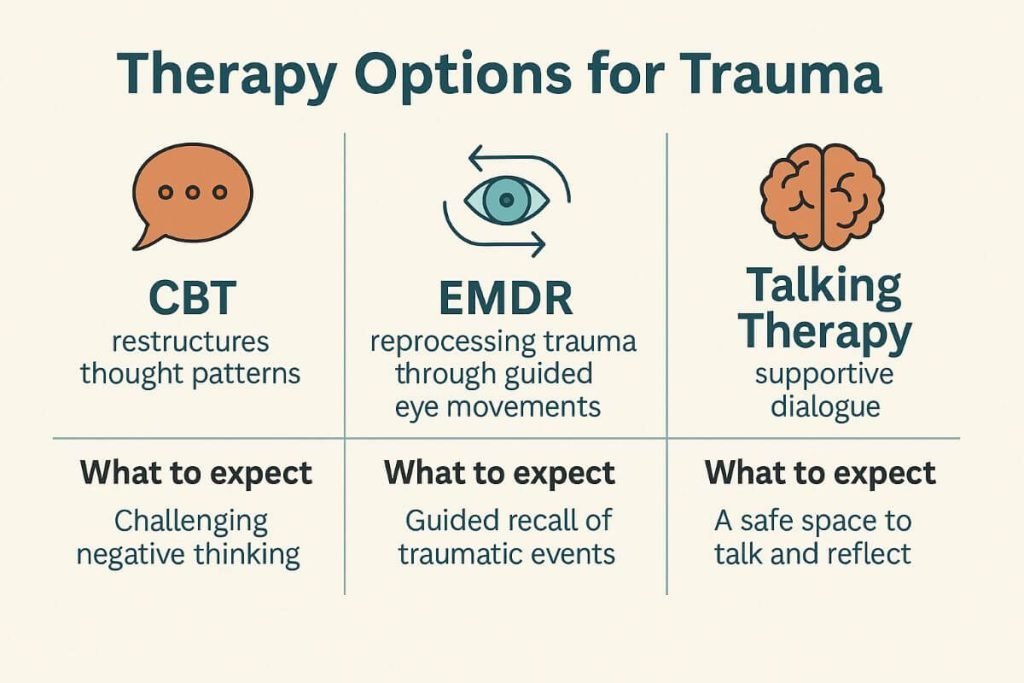
Therapy Options: What Evidence Says Works
Trauma-focused therapy is an important part of recovery. It isn’t essential, but taking that step is highly advisable; nobody has to solve symptoms alone. Figuring out what to expect will depend on which type of therapy you choose; CBT, EMDR, and talking therapy are popular options.
EMDR (eye movement desensitisation and reprocessing therapy) takes a solution-focused approach, but often requires patients to be stabilised beforehand. CBT also requires stabilisation, but afterwards takes a deconstructing approach, removing unhelpful narratives about the trauma and processing any emotional impact. It is worth addressing that talking therapy has received recent criticism over a lack of effectiveness in treating depression and anxiety in young adults. However, everyone is different; find the approach for you.
The Law Is Changing: What Victims Need to Know
Regardless of the transgression you’ve experienced, it’s important to remember your rights. As a surviving victim, there is protection available. In fact, new legislation has come into place as of January 29th, 2025.
The Victims and Prisoners Act 2024 has strengthened victims’ entitlements in England and Wales. Survivors will now be able to increasingly exercise their right to deliver victim statements (even at mental health tribunals) and will be appointed a standing advocate. With more changes to come, this message is clear: your voice matters.
Compensation and Practical Support Routes
Compensation is never a singular route; there are multiple avenues to take. The biggest priority is always preserving evidence and seeking timely legal support. The quicker you can speak with the police, the better. The faster you can contact a lawyer, the better.
There are government support systems in place, like the Criminal Injuries Compensation Scheme. However, this is typically reserved for violent incidents, like wide-scale terrorist attacks. If your experience involved sexual or physical abuse, specialist solicitors can advise on abuse claims alongside (or instead of) a CICA application.
Where to Find Help in Oxfordshire
Recovering from trauma is rarely linear, but support exists. Local organisations such as Oxfordshire Mind and Restore run peer groups and therapy programmes, while national charities like Victim Support offer confidential advice.
And for anyone in immediate distress, the Samaritans are available 24/7 on 116 123.
With growing awareness of trauma and stronger legal protections in place, survivors in Oxfordshire and across the UK are being given a clearer message: healing is possible, and your voice matters.
Recovering from trauma is never straightforward, but survivors are not alone. From NHS-backed therapies such as CBT and EMDR to legal protections under the Victims’ Code, there is a framework of support designed to help people regain control of their lives.