Carmen Giannattasio’s passionate Tosca, Sir Bryn Terfel’s chilling Scarpia and the rich playing of the Oxford Philharmonic Orchestra made an absorbing introduction to Oxford’s new opera company.
Oxford International Opera launched at the New Theatre with a fully staged production of Puccini’s Tosca, and Saturday evening’s performance delivered on the considerable promise of its cast.
The new venture comes from the Oxford Philharmonic Orchestra and its music director, Marios Papadopoulos, with Terfel serving as artistic director. For its first production, the company chose a tragedy of love, jealousy, corruption and betrayal, presenting it in a contemporary setting that kept the drama firmly in focus.
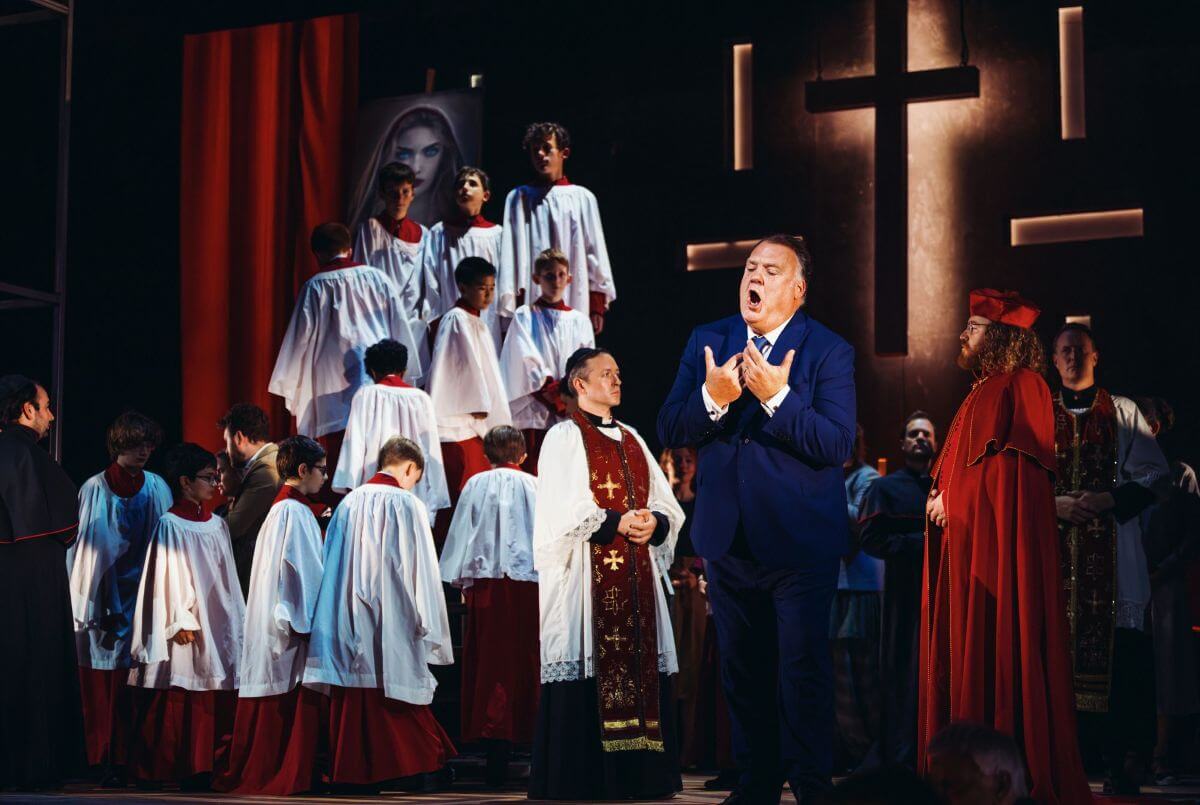
A modern setting, with Puccini’s music at its heart
Directed by P Burton-Morgan, with set and costume design by Anthony Lamble, this was a refreshingly modern production. The simple set left room for the characters and their confrontations, while contemporary costumes brought the story away from the appearance of a period piece.
That restraint worked well. There was little to distract from the emotional intensity of the performances, and the three acts moved at a compelling pace. We were drawn in from beginning to end.
Much of the credit belonged to the Oxford Philharmonic Orchestra. Under Papadopoulos, its playing was rich, powerful and beautifully balanced, giving Puccini’s score the weight and emotional force that the drama demanded.
The music was one of the evening’s great pleasures, not simply an accompaniment to the action but central to what made the performance so absorbing.
Terfel’s chilling Scarpia and Giannattasio’s commanding Tosca
The story begins with painter Mario Cavaradossi, played by Saimir Pirgu, helping escaped prisoner Cesare Angelotti, played by Jamie Woollard. Cavaradossi’s lover, the singer Floria Tosca, becomes caught in the danger surrounding them when police chief Baron Scarpia exploits her jealousy and fears.
The second act brought Terfel’s Scarpia to the fore. Charismatic and terrifying, he portrayed the corrupt chief of police with chilling authority. His attempt to coerce Tosca into sex in exchange for her lover’s life made the character’s abuse of power deeply disturbing.
Colin Judson was wonderfully sinister as Scarpia’s henchman Spoletta. His sharp black suit and sunglasses suggested a modern secret police officer, reinforcing the menace of the production’s contemporary setting.
There were welcome flashes of humour, particularly in Tosca’s fiery jealousy. Those lighter moments offered some relief before the story moved towards betrayal and heartbreak.
But for us, the evening belonged to Carmen Giannattasio. Her Tosca was passionate, vulnerable and fiercely determined, a combination that made the character’s predicament all the more affecting. Her singing was breathtaking, while her portrayal gave the tragedy its emotional centre.
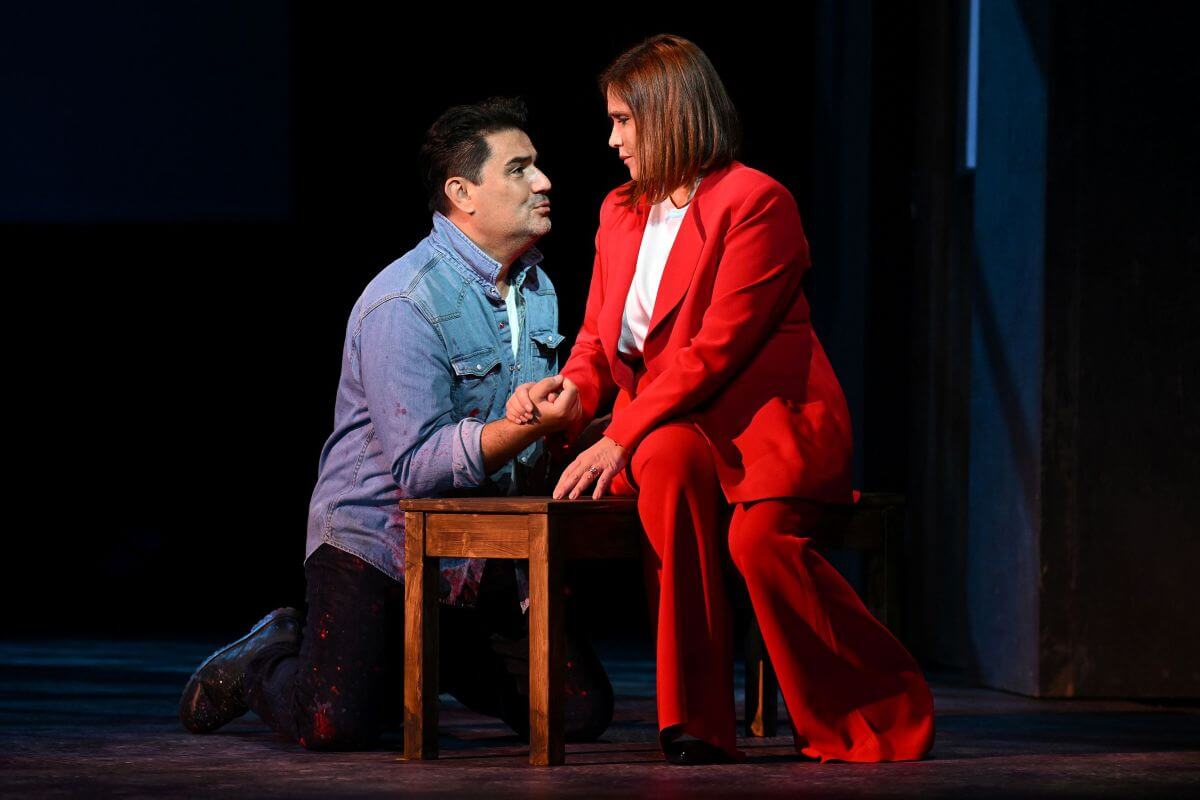
At a glance: Tosca at the New Theatre
| Production | Oxford International Opera’s Tosca, by Giacomo Puccini |
| Venue and dates | New Theatre, Oxford, 24 and 26 September 2026 |
| Performance reviewed | Saturday 26 September 2026 |
| Principal cast | Carmen Giannattasio as Floria Tosca; Saimir Pirgu as Mario Cavaradossi; Sir Bryn Terfel as Baron Scarpia |
| Also featured | Peter Van Hulle as Spoletta; Jamie Woollard as Cesare Angelotti |
| Orchestra and conductor | Oxford Philharmonic Orchestra, conducted by Marios Papadopoulos |
| Director | P Burton-Morgan |
| Set and costume designer | Anthony Lamble |
| Language | Italian, with English surtitles |
| Run status | The two Oxford performances have concluded |
The verdict: a triumphant first production
Oxford International Opera’s debut succeeded through the combination of an absorbing modern staging, powerful orchestral playing and performances that made the characters’ desperation and cruelty feel immediate.
Terfel’s authority and Giannattasio’s emotional intensity were the defining strengths of an evening that gave this new company a memorable beginning. If this is the standard it intends to maintain, Oxford audiences have good reason to look forward to its next production.
There is already a further project on the horizon. The company has announced Beethoven’s Fidelio for the 2027/28 season as part of the Oxford Beethoven Festival.
The September run of Tosca has finished. Information about the company and its future plans is available on the Oxford International Opera page.