If you’ve been sweating during the recent half term heat wave, spare a thought for the animals at Cotswold Wildlife Park! Keepers there have produced the highest number of frozen animal enrichments in the park’s 56-year history as temperatures climbed above 33C in Oxfordshire. And award-winning Oxfordshire photographer Philip Joyce was there to capture the animals getting their treats.
At a glance
| What happened | Cotswold Wildlife Park keepers made a record number of ice treats and frozen enrichments during the May heatwave |
| Where | Cotswold Wildlife Park and Gardens, Bradwell Grove, Burford, Oxfordshire, OX18 4JP |
| Animals involved | Bactrian camels, giraffes, pygmy marmosets, lemurs, tapirs, otters, penguins, red pandas, meerkats and others |
| New arrival | Klaus, a four-week-old Bactrian camel calf, tried his first ice treat |
| Weather context | Oxford reached 33.4C during the record-breaking May heatwave |
| Opening hours | Summer hours are 10am to 6pm, with last admission at 4pm |
Animals at Cotswold Wildlife Park were given an unusual menu of frozen treats as keepers worked to keep them cool during the record-breaking May heatwave.
The Burford attraction said its team produced the highest number of ice enrichments in the park’s 56-year history after temperatures in Oxfordshire rose above 33C.
The frozen creations were given to animals across the park, from Mabel the pygmy marmoset to the giraffes, lemurs, tapirs and Bactrian camels.
Among those trying the cooling treats was Klaus, a four-week-old Bactrian camel calf and the park’s newest large mammal arrival.
Keepers turn to frozen enrichment
Animal enrichment is used by keepers to encourage natural behaviour, provide mental stimulation and add variety to an animal’s day. During hot weather, frozen enrichment can also help animals cool down while still feeding in a species-appropriate way.
Chris Kibbey, Assistant Animal Manager at Cotswold Wildlife Park and Gardens, said keepers had been working hard during the exceptional heat to make sure the animals had water, shade and access to cooler indoor areas.
He said:
“With the hottest temperatures ever recorded for May, keepers have been working extra hard to ensure the animals they care for stay cool.
“As well as ensuring they have access to fresh drinking water, shade and cool indoor areas, keepers have been using their culinary skills to create unique flavoured ice lollies for some of the animals using all natural ingredients, many taken from their normal diet.”
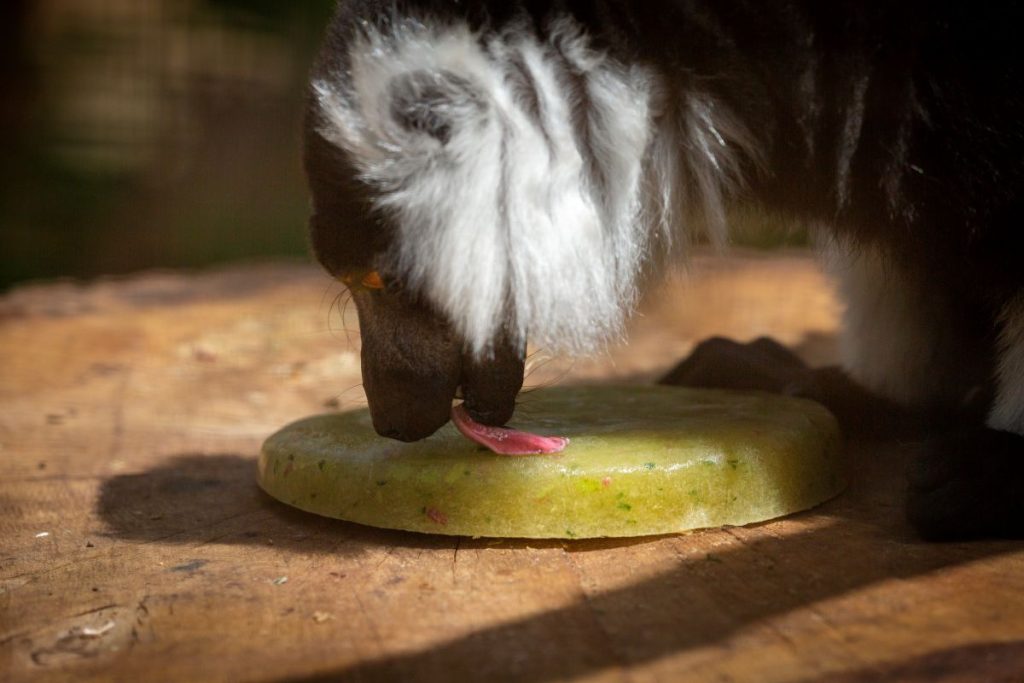
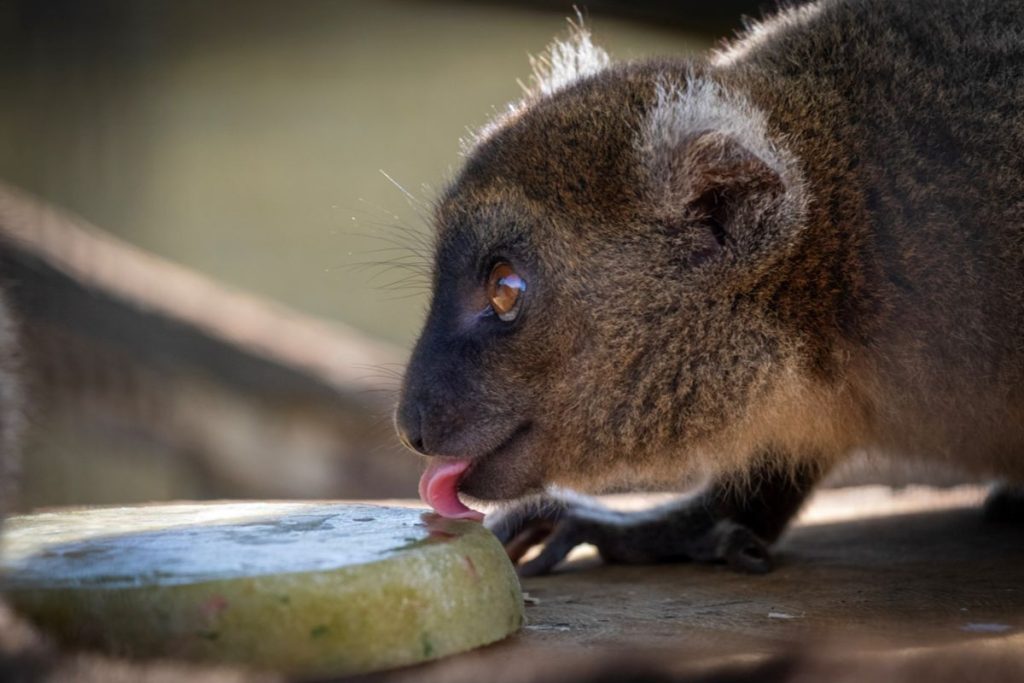
The lemurs were given lollies made from blended cucumber and pear, while the bamboo lemurs had a mix of cucumber and celery.
The park’s pygmy marmosets were offered an experimental lolly made from frozen Arabic gum, a natural tree sap that the tiny monkeys would usually eat by gouging holes in trees.
Giraffes, camels and tapirs join in
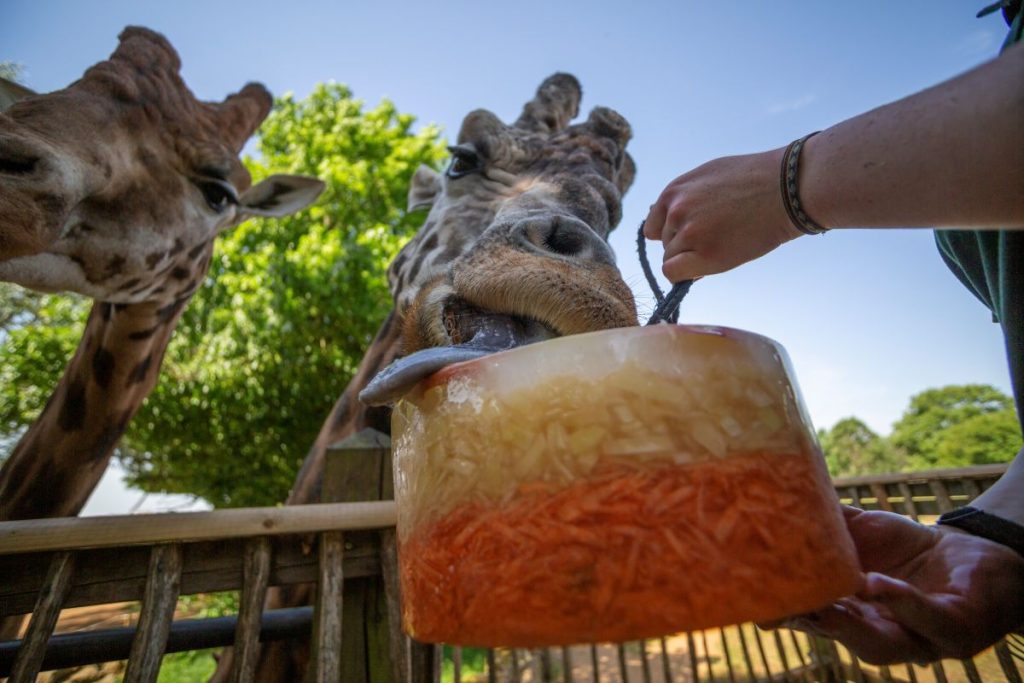
The larger animals were not left out. The Bactrian camels were given a frozen mix of carrot, cabbage, watermelon and apple, while the giraffes received carrot, cabbage and apple.
Tapirs Lolita and Gomez were also given cooling ice treats, alongside other residents including clouded leopards, otters, penguins, colobus monkeys, siamangs, red pandas, binturong, wolverines and meerkats.
Mr Kibbey added:
“The keepers always enjoy giving these treats to the animals, and it’s a good excuse to spend time cooling off in the walk-in freezer.”
Klaus the camel calf tries his first ice lolly
For some of the animals, the heatwave treats were a first.
Klaus, the four-week-old Bactrian camel calf, was quick to investigate the frozen block placed in his enclosure and attracted a crowd of visitors as he tucked into his first ice lolly.
Mammal keeper Charlotte said: “It was really sweet to see Klaus enjoying his first ice lolly. He was one of the first over to investigate it and seemed to really enjoy nibbling on the cooling treat.
“Their ice lolly took about two days to make as I had to freeze it in different stages. It proved to be a great success and hugely rewarding to watch, and the visitors seemed just as delighted watching Klaus tuck in as he was enjoying it himself.”
What the animals were given
| Animal | Frozen enrichment |
|---|---|
| Bactrian camels | A frozen cocktail of carrot, cabbage, watermelon and apple |
| Giraffes | Ice blocks made with carrot, cabbage and apple |
| Pygmy marmosets | Frozen Arabic gum, similar to the tree sap they would naturally feed on |
| Lemurs | Frozen fruit and vegetable lollies made with natural ingredients |
| Tapirs | Cooling ice treats |
| Other residents | Frozen enrichments were also given to animals including otters, penguins, red pandas, wolverines and meerkats |
Heatwave brought record May temperatures
The heatwave came during an exceptional spell of late-May weather across the UK.
The Met Office said the UK’s May temperature record was broken during the heatwave, with 35.1C recorded at Kew Gardens in London. In Oxford, temperatures reached 33.4C, while Benson in Oxfordshire reached 33.6C.
The national forecaster said many locations recorded new May maximum temperature records, with unusually high daytime heat matched by warm nights in some parts of the country.
For keepers at the wildlife park, the focus was on making sure animals had shade, water and appropriate ways to stay cool while continuing to encourage natural feeding and foraging behaviour.
About Cotswold Wildlife Park
Cotswold Wildlife Park and Gardens opened in 1970 at Bradwell Grove, near Burford.
The park is home to one of the UK’s largest zoological collections and supports conservation breeding programmes, education work and conservation projects in the wild.
Visitors can find opening times, tickets and visitor information through the Cotswold Wildlife Park website.
FAQs
Why were animals at Cotswold Wildlife Park given ice treats?
Keepers used frozen enrichments to help animals stay cool during the May heatwave while also giving them variety and encouraging natural feeding behaviour.
Which animals received frozen treats?
Animals given cooling enrichments included Bactrian camels, giraffes, pygmy marmosets, lemurs, tapirs, clouded leopards, otters, penguins, red pandas, binturong, wolverines and meerkats.
Who is Klaus?
Klaus is a four-week-old Bactrian camel calf at Cotswold Wildlife Park. He tried his first ice treat during the recent heatwave.
What were the ice treats made from?
The treats were made using natural ingredients, many from the animals’ normal diets. Ingredients included cucumber, pear, celery, carrot, cabbage, watermelon, apple and Arabic gum.
Where is Cotswold Wildlife Park?
Cotswold Wildlife Park and Gardens is at Bradwell Grove, Burford, Oxfordshire, OX18 4JP.
When is Cotswold Wildlife Park open?
The park’s summer opening hours are 10am to 6pm, with last admission at 4pm. Visitors should check the park’s website before travelling.