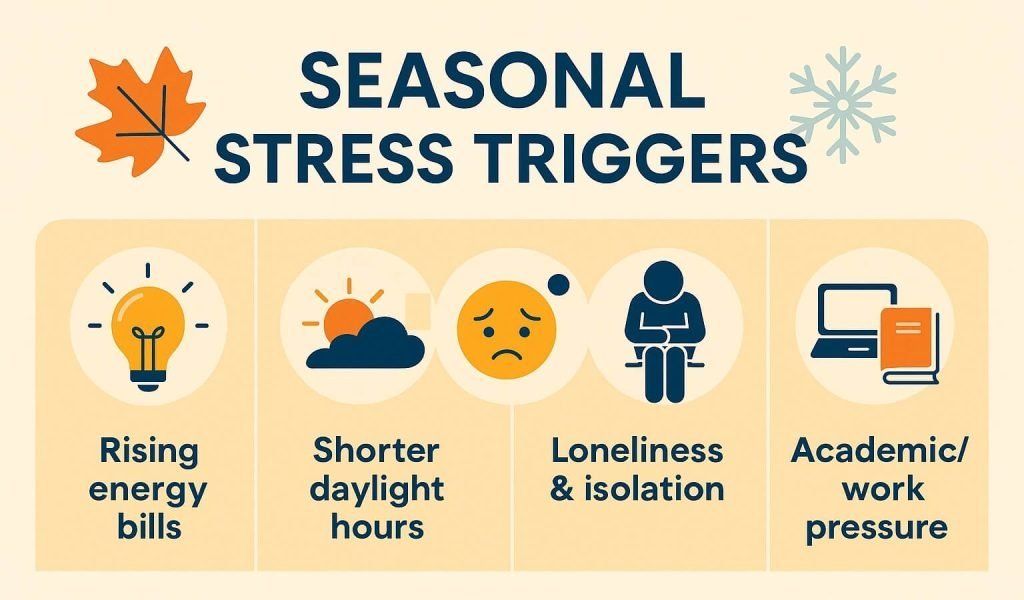
As the days shorten and energy bills creep higher, many in Oxfordshire brace themselves for a difficult season. Autumn and winter are traditionally harder months for mental health, with NHS figures showing spikes in depression and Seasonal Affective Disorder (SAD), alongside stress linked to financial pressures and loneliness.
And it’s not just the cost of living increases, the younger generation are also feeling the strain. Researchers at Oxford University have been at the forefront of studying these challenges. The MYRIAD study, led by Professor Willem Kuyken, tracked over 6,300 UK schoolchildren through the COVID lockdowns and revealed sharp rises in depression and emotional difficulties. Protective factors like school connectedness, friendships, and self-compassion were shown to make a tangible difference.
So how will Oxfordshire residents finding ways to cope in the upcoming colder months?
Science-Backed Solutions
Mindfulness-Based Cognitive Therapy (MBCT): Developed in part at Oxford, MBCT combines meditation with cognitive techniques and is now used worldwide to reduce relapse in depression. Local MBCT courses are available through the University and the NHS.
Light Therapy for SAD: Recommended by the NHS, light boxes that simulate daylight are increasingly popular to ease winter blues.
Exercise in Nature: The county’s Chiltern Hills, Thames Path and Cotswold trails offer more than a view, research shows “green exercise” can reduce stress and boost mood.
Lifestyle Practices That Work
Yoga & Breathwork: Studios in Oxford, Witney and Banbury are reporting higher attendance as residents turn to body-based methods for managing stress.
Journaling & Gratitude: Low-cost and backed by research, journaling provides structure and perspective, while gratitude practices have been shown to improve mood and resilience. Personally, I find visualising climbing out of the deep dark pit of depression helps me.
Sleep Hygiene: NHS Every Mind Matters offers simple tips from limiting screens before bed to warm baths and herbal teas that can counter disrupted winter sleep cycles.

Community & Connection
Oxfordshire’s strong community networks are also playing a role.
- Peer Support Groups: Charities like Restore and Oxfordshire Mind run regular sessions where residents share experiences.
- Volunteering: Opportunities through Oxfordshire Community & Voluntary Action are known to reduce stress while building social connection.
- Pet Walking Groups: Especially in rural areas, walking with dogs provides routine, exercise, and companionship.
Exploring New Frameworks
Alongside these mainstream approaches, people are also experimenting with newer systems that claim to support wellbeing. One example is GSR (referred to by its proponents as “The Deep System of Self-development”), created by Dmitry Ustinov, which focuses on working with personal “states” to manage stress and improve performance.
It is taught through structured training modules and used both for self-practice and within a growing community of specialists. While the pilot studies and approach has followers abroad, it is not yet backed by the same level of independent scientific evidence as Oxford’s MBCT or CBT.
For Oxfordshire readers, it sits in the broader landscape of alternative methods people may encounter on their wellbeing journeys.
Practical Takeaways
- Balance evidence-backed approaches (like MBCT, exercise, sleep hygiene) with low-cost lifestyle habits.
- Consider community support, whether volunteering, groups, or simply social walking.
- Stay cautious but curious about emerging frameworks; some may be useful, but established research should guide your first steps.
As Oxford prepares for another challenging winter, one message rings clear: there is no single solution, but a toolbox of methods from cutting-edge Oxford University science to grassroots community action, that can help people feel more resilient through the season.
If you’re struggling with your mental health, you don’t have to go through it alone. Help is available:
- Samaritans: Call free on 116 123 or visit samaritans.org for support.
- NHS Every Mind Matters: Expert tips and self-help guides: nhs.uk/every-mind-matters