Gaining a place to study Medicine at the University of Oxford is one of the most competitive and prestigious academic goals in the UK. With world-class teaching, cutting-edge research opportunities, and a centuries-old reputation for excellence, Oxford attracts thousands of high-achieving applicants every year.
If you’re aiming to apply for Oxford Medicine in 2025, for 2026 before the 15th October deadline, preparation is everything. And this guide will help you navigate each stage of the process with clarity and confidence from targeting a high UCAT score or making a standout personal statement.
Step 1: Understand Oxford’s Unique Approach
Oxford’s six-year undergraduate Medicine program (A100) is built around a strong emphasis on academic rigour and scientific understanding. The six-year medical programme is split into two core phases:
- Years 1–3 (BA): Pre-clinical (science-heavy, including biomedical sciences)
- Years 4–6 (BM BCh): Clinical placement-based learning
Because of this split structure, Oxford looks for students who not only have a passion for medicine but also excel in academic thinking, scientific reasoning, and independent learning. Admissions tutors are looking for future medical professionals who enjoy solving problems, grasping complex ideas, and committing to long-term goals.
Step 2: Meet the Academic Requirements
To be considered for Oxford Medicine, applicants typically need:
- A-levels: A*AA in three A-levels (excluding Critical Thinking and Thinking Skills), taken in one academic year, with at least grade A in Chemistry and one of Biology, Physics, Mathematics, or Further Mathematics
- GCSEs: Not detailed as a requirement but high performance will be expected. Applicants need at least grade C/4 in GCSE Biology, Physics, and Mathematics (or equivalent), with higher grades (8s/9s) expected for competitiveness.”
- Predicted Grades: These should reflect high academic potential, ideally with at least two sciences at the highest levels
While grades are essential, they’re only part of what Oxford considers, contextual data and overall academic trajectory also play a role.
Contextual factors are also considered, so apply even if your background isn’t “typical Oxford.”
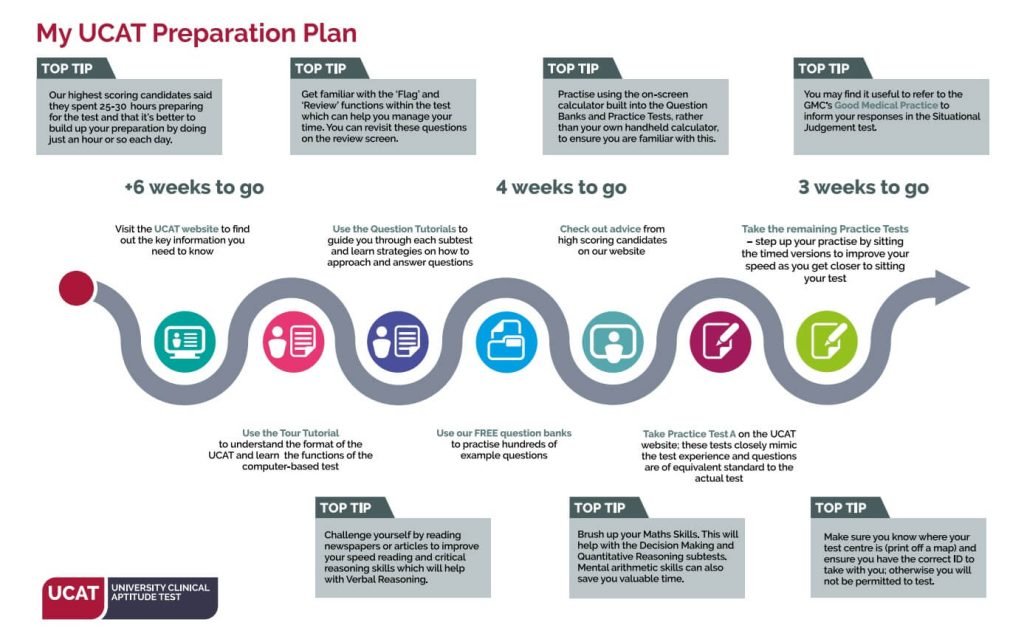
Step 3: Prepare for the UCAT
In a notable shift for 2025, Oxford is now incorporating the UCAT (University Clinical Aptitude Test) as part of its selection process. This places additional importance on aptitude preparation, as your UCAT score will now be considered alongside your academic credentials and personal statement.
The UCAT assesses a range of cognitive skills including:
- Verbal Reasoning
- Decision Making
- Quantitative Reasoning
- Abstract Reasoning
- Situational Judgement
Oxford has not yet confirmed how it will weight UCAT results in the overall process, but a strong score will undoubtedly strengthen your application. The mean UCAT score for 2025 offer holders was 3130.6.
As a strong UCAT score is now crucial, many students now turn to professional guidance to boost their score. UCAT Tutoring from UniAdmissions offers unlimited, personalised support tailored to the needs of medical applicants. Their resources are especially useful for competitive courses like Oxford Medicine, where every point can make a difference.
Step 4: Write a Compelling Personal Statement
Oxford wants to see clear motivation for studying medicine, academic curiosity, and a genuine interest in the scientific foundations of healthcare. Your personal statement should include:
- Reflections on relevant work experience or volunteering, especially if at a hospital or health care setting
- Evidence of independent reading or academic exploration in science/medicine, clinical treatment, diagnosis, or innovations in the field.
- Key transferable skills like empathy, communication, teamwork, and resilience
Avoid generic statements or overused phrases. Focus on why medicine appeals to you, what you’ve done to explore it, and how you’ve grown from those experiences.
Step 5: Prepare for the BMAT Alternative
Oxford University has moved towards UCAT for 2025 from the BMAT (Biomedical Admissions Test), but it’s the first year so stay up to date with official guidance from Oxford’s medical faculty as more information may come out to help you prep, including benchmarks.
An understanding of what the BMAT format tested would be to your advantage though, but not required.

Step 6: Nail the Oxford Interview
Oxford uses an interview format that typically involves two separate interviews with different tutors from different colleges. Expect a strong academic focus, your scientific thinking, logical reasoning, and ability to apply knowledge will all be tested in real time.
Common themes include:
- Ethical dilemmas in medicine
- Scientific problem-solving
- Interpretation of data or graphs
- Thought experiments relating to human biology or healthcare
Practice with teachers, mentors, or specialist interview coaches can help improve your confidence and fluency in responding under pressure.
We spoke to a previous unsuccessful interviewee who noted they were extremely nervous and were incapable of putting coherent sentences together. So we reached out to an expert for some advice.
“It’s understandable to be nervous at an interview when you really want something, often exacerbated by inexperience and family pressure” says Ciaran Clarke, former corporate interviewer, “of course the aim is to understand your key skills and personality, and it’s crucial it flows as naturally as possible. The key is simply preparation (which is available on the UCAT website) and a bottle of water.”
“Confidence comes from knowledge, so research and practise as much as you can, making notes of anything you want to discuss. While you’ll be learning to be a doctor in physiology, pharmacology, or pathology, some knowledge and understanding of anatomy and disease would be a powerful tool to proving you are right for the course.”
“Body language is vital to making a connection, so don’t slouch, smile lots, and maintain eye contact. If you get flustered, take a couple of deep breaths and take sips of water to stall if you need thinking time. ”
Step 7: Choose Your College Wisely (or Let Oxford Decide)
When applying through UCAS, you can choose to apply to a specific Oxford college or make an open application (where the university assigns you one). While college choice doesn’t significantly impact your chances, you may want to research:
- Tutors in your area of interest
- Accommodation or location preferences
- College size and academic style
Ultimately, all Oxford colleges offer the same exceptional standard of medical education.
2025 Oxford Medicine Application Timeline for 2026
| Month | Task |
|---|---|
| June–August | Begin UCAT preparation |
| September | Register UCAS & finalise personal statement |
| 6pm on October 15 2025 | UCAS deadline for Oxford |
| November | Interviews invitation |
| December | Interviews held |
| January | Decisions sent |
Wrapping Up
Getting into Oxford Medicine in 2025 is a challenge, but absolutely achievable with the right mindset, strategy, and preparation. The addition of the UCAT into the admissions process means early planning is more crucial than ever. By focusing on academic excellence, refining your application materials, and building confidence through mock interviews and structured test prep, you can stand out in one of the UK’s most competitive applicant pools.
Oxford is looking for future leaders in medicine, curious, dedicated, and intellectually sharp. If that sounds like you, now’s the time to commit to the journey and give it your all.
FAQs About Oxford Medicine Applications
Is the UCAT harder than the BMAT?
The UCAT is more speed-focused, while the BMAT tests academic problem-solving. UCAT preparation requires practice under timed conditions.
What’s a competitive UCAT score for Oxford?
While no official cut-off is published, the mean UCAT score for 2025 offer holders was 3130.6 so over 3000 would be a competitive target but not guaranteed.
Can international students apply?
A: Yes, but there is a maximum of 14 per year, and 8 successful in 2025.
Does college choice affect my chance of admission?
Not significantly. Apply to the one that fits your vibe, or go open. At the time of writing, the following colleges offer the standard medical course (A100):
Balliol College
Brasenose College
Christ Church
Corpus Christi College
Exeter College
Hertford College
Jesus College
Keble College
Lady Margaret Hall
Lincoln College
Magdalen College
Merton College
New College
Oriel College
Pembroke College
The Queen’s College
St Anne’s College
St Catherine’s College
St Edmund Hall
St Hilda’s College
St Hugh’s College
St John’s College
St Peter’s College
Somerville College
Trinity College
University College
Wadham College
Worcester College