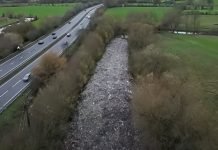
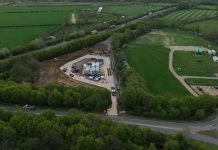
An Oxford-based environmental charity has reported “concerning” levels of metal and chemical pollution in the River Cherwell near Kidlington, after a community-led investigation prompted by last year’s discovery of a huge illegal waste mound on land beside the river.
The study, coordinated by Earthwatch Europe with partners including Thames21 and Friends of the Thames, found that nine metals and metalloids were detected in the Cherwell at concentrations above their Predicted No Effect Concentrations (PNECs), thresholds used to indicate levels below which harmful effects on ecosystems are unlikely.
However, the report says the elevated metals and toxic chemicals were found upstream of the illegal landfill site, suggesting the dump is not currently the main source of the measured metal and chemical pollution.
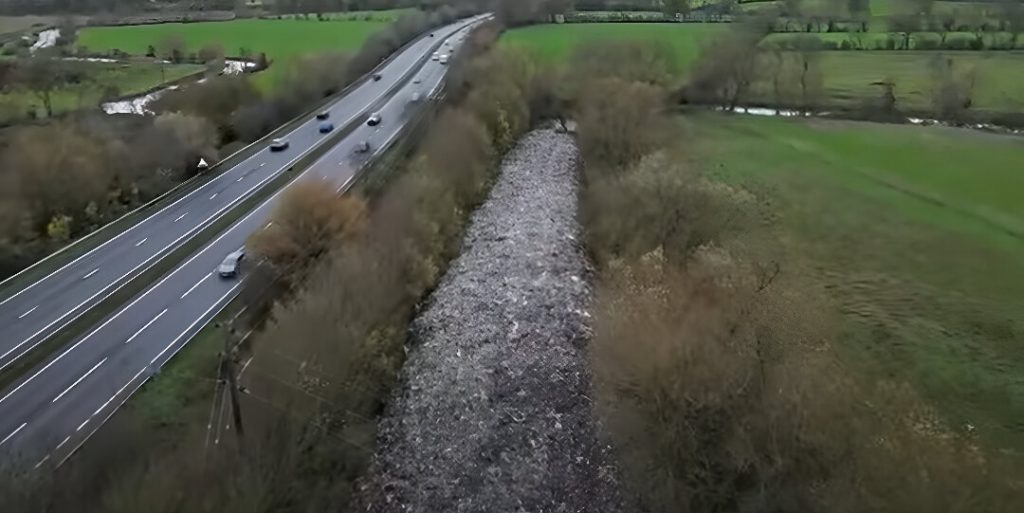
Pollution detected upstream of the illegal dump
The fly-tipped waste mound, described in the Earthwatch report as around 150 metres long and six metres high, was discovered on farmland between the River Cherwell and the A34 near Kidlington in late 2025, prompting concern about river contamination.
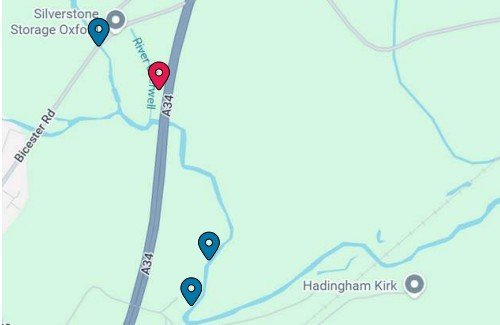
To test whether the site was polluting the river, trained community volunteers (“citizen scientists”) collected samples from three locations on Wednesday 26 November: one upstream of the dump and two downstream. Samples were analysed by Artemis Analytical for metals and by Emissions Analytics for organic micropollutants.
Earthwatch reported that concentrations of several metals and chemicals were not higher downstream than upstream, meaning the landfill site is “currently unlikely to be a significant source of metal and chemical pollution” in the Cherwell, though it warns this does not rule out future risks or other forms of contamination.
Road runoff highlighted as likely source
The report suggests the upstream findings point towards road runoff and other upstream sources as more likely causes. The upstream sampling point was taken from a bridge carrying Bicester Road, and Earthwatch notes that the higher upstream concentrations “indicate a source… possibly related to road runoff”.
It adds that pollutant concentrations downstream may be reduced through dilution from tributaries and through vegetation that can help retain metals in biomass and sediments.
Key pollutants identified
The report’s headline findings include:
- Nine metals and metalloids detected above PNEC thresholds: arsenic, barium, cobalt, copper, lead, nickel, selenium, thallium and zinc.
- Two chemicals detected at particularly high concentrations upstream: 2,4-di-tert-butylphenol and methylene chloride.
Earthwatch notes that 2,4-di-tert-butylphenol is “known to be very toxic to aquatic life with long lasting effects,” and flags methylene chloride as a concern, citing the US Environmental Protection Agency’s classification of it as a probable human carcinogen.
Calls for collaboration and citizen science
Dr Sasha Woods, Director of Science and Impact at Earthwatch Europe, said the work shows how citizen science can “generate robust data, challenge assumptions and support evidence-based decision-making”.
“We urge authorities to work with communities to integrate citizen science into national freshwater monitoring frameworks, and we encourage volunteers to continue championing the health of their local rivers.”
Dr Claire Robertson, Catchment Manager at Thames21, said the study offered reassurance on one point but underlined the wider pressures facing the river.
“Whilst this study gives some reassurance that chemicals from the illegal landfill are not yet polluting the River Cherwell, it just highlights how this lovely river is under pressure from so many angles.”
She added that “everything that washes down a drain eventually ends up in a river”, and pointed to nature-based solutions such as small wetlands to capture pollution before it enters waterways.
Laura Reineke, Chief Executive of Friends of the Thames and Save Our Cherwell, said community monitoring had been key to ensuring the illegal dumping was identified and acted on.
“This is exactly why guardianship matters… when communities work in partnership with bold, independent scientists, we can generate robust data that exposes pollution, drives accountability, and delivers real-world change for our rivers.”
Environment Agency position
The Earthwatch report notes that the Environment Agency previously said specialist officers had “found no evidence of pollution” after tests of both the waste and the river, and that work was continuing to ensure the river and surrounding environment were protected.
What happens next
While the study concludes the illegal landfill is not currently the primary source of the measured metal and chemical pollution, it cautions that the dump could still pose other risks (including microplastics, PFAS and microbial contamination) and that leaching into soils and waterways could occur over time without further investigation.
The full report is published by Earthwatch Europe