

















Update, 16 October 2026: Oxford’s temporary £5 congestion charge ended on 27 September 2026. The traffic-filter trial replaced it the following day. Drivers can no longer pay £5 to pass through a filter during its restricted hours. See our current traffic-filter guide and the county council’s confirmation.
This is an updated archive report of the cabinet decision on 10 September 2025. The former charging rules below are historical.
Oxfordshire County Council’s cabinet approved a temporary £5-a-day congestion charge for cars at six locations in Oxford on 10 September 2025, while the closure of Botley Road was delaying the traffic-filter trial.
At the time, the council intended to launch the scheme by 10 November 2025. It subsequently began on 29 October 2025 and ended on 27 September 2026. The August 2026 date in our original report was the anticipated reopening timetable, not the eventual end date of the charge.
Why the council approved a temporary charge
The council’s announcement said the scheme aimed to reduce traffic while Botley Road remained closed, improve bus services and make journeys easier for people who qualified for permits.
Andrew Gant, then cabinet member for transport management, said in that announcement that reducing car traffic was necessary to improve journey reliability and conditions for walking and cycling. This is a summary of his published statement, rather than a quotation from the meeting.
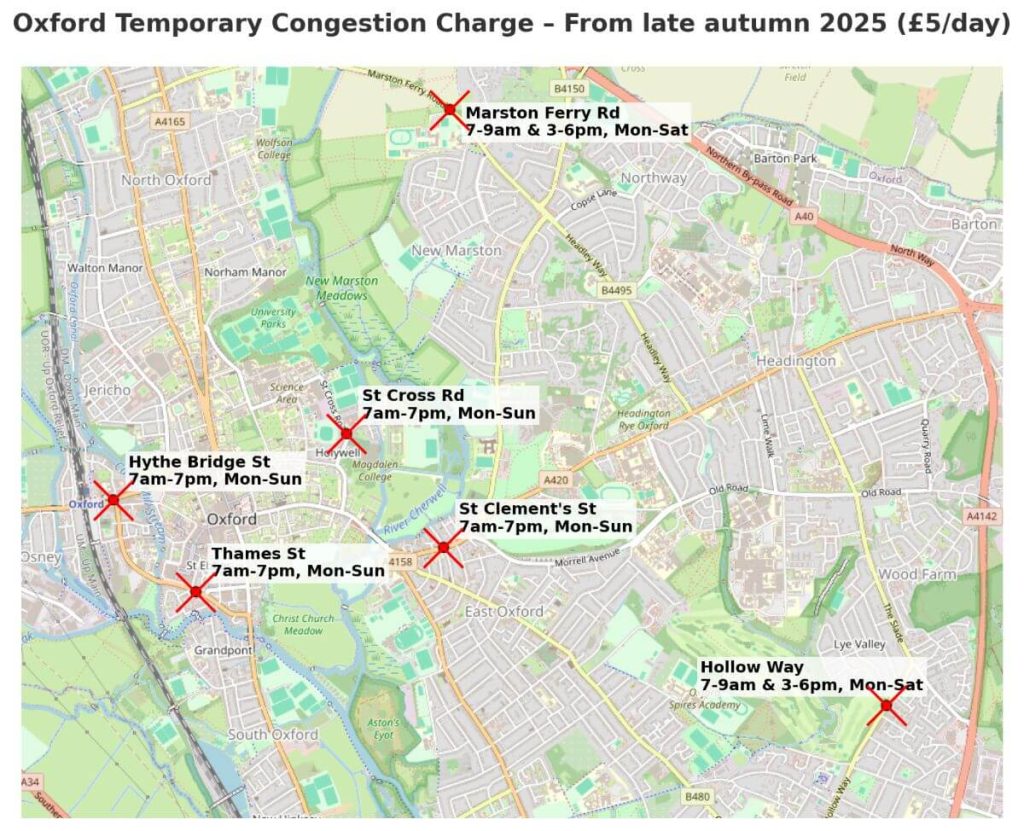
How the former charge worked
| Detail | Historical scheme |
|---|---|
| Daily charge | £5 per car (unlimited journeys through all six sites on that day) |
| Who pays | Cars without a valid permit or day pass; non-car vehicle classes were exempt |
| Charge times | Hythe Bridge St, St Cross Rd, St Clement’s St, Thames St – Mon–Sun, 7am–7pm. Marston Ferry Rd & Hollow Way – Mon–Sat, 7–9am and 3–6pm |
| Enforcement | ANPR cameras; £70 fine (reduced to £35 if paid in 21 days) |
| Permits | Eligibility-based permits included carers, Blue Badge holders, community health and care workers and mobile traders. NHS employment alone did not confer a blanket exemption. Residents in the Oxford permit area could apply for 100 day passes; eligible wider-county residents for 25. |
| Duration | Ran from 29 October 2025 to 27 September 2026; the original approval allowed a maximum of two years |
Permits were subject to the relevant eligibility and application requirements. The table should not be used to decide whether a journey is permitted under the current traffic-filter trial.
Consultation and objections
The six-week consultation ran from 23 June to 3 August 2025 and received 7,165 survey responses. According to the council’s published consultation summary, 73.9% of respondents said the proposals would affect them negatively. That is a figure for consultation respondents, not a representative poll of all Oxfordshire residents.
Concerns included fairness, business impacts and the cost of travelling by car. Supportive responses cited potential reductions in congestion and pollution and improvements to public transport.
Following consultation, the council added permit categories for regular Oxford Ice Rink users and eligible pool cars owned and operated by businesses or organisations in the Oxford permit area.
The cabinet report records objections from Open Roads for Oxford and Oxford Business Action Group. It also records that bus operators proposed service improvements if reduced congestion allowed resources to be redeployed.
What the £3.2m forecast meant
The original financial forecast was approximately £3.2m in net surplus over ten months, after operating costs. It was not a statement that the charge would generate £3.2m in gross income in its first year, nor a confirmed amount collected.
The August 2025 scrutiny minutes record an estimated £5m gross income over ten months, including charge payments and penalty notices, with an approximately £3.2m surplus after administration and enforcement costs.
The September cabinet decision delegated approval of future surplus investment to senior officers in consultation with the relevant cabinet members. The original report discussed cheaper Park & Ride travel, but not every suggestion constituted an approved spending commitment.
How it differed from London
Oxford charged cars at six specified road locations. London’s Congestion Charge applies within a defined central charging zone, not across most of London. The two schemes should not be confused with London’s separate Ultra Low Emission Zone.
For current London charges and boundaries, use Transport for London’s official guidance. Oxford’s £5 charge is no longer operating.
What happened after approval?
- 10 September 2025: cabinet approved the temporary scheme, with a maximum duration of two years and an intended launch no later than 10 November.
- 29 October 2025: the temporary charge began.
- 27 September 2026: the temporary charge ended.
- 28 September 2026: the traffic-filter trial replaced it, using the same six locations and operating hours.
Open Roads for Oxford subsequently sought judicial review. The council’s case summary and linked court documents record that permission was refused at a renewal hearing on 24 March 2026. This was a refusal of permission for judicial review, not a full trial of the challenge.
The council’s traffic-filter launch announcement explains the current system. The former £5 payment option must not be treated as permission to drive through a filter now.
Correction, 16 October 2026: This report has been updated to distinguish the former charge from current restrictions, clarify permit eligibility and the financial forecast, and correct the description of London’s charging area. Quotations without supporting source records available for this review have been removed pending editorial verification. The original publication date and URL have been retained.














