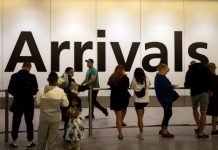
Families in Oxfordshire could avoid extra airline charges for sitting with their children under government proposals intended to take effect before the summer 2027 holidays.
Airlines would be required to seat children under 14 with a parent or accompanying adult without an additional charge. Passengers would also be able to correct simple name mistakes on flight bookings for free.
The measures announced on Friday 2 October would apply across airlines operating in the UK, according to the Department for Transport. However, implementation is linked to the passage of the Civil Aviation Bill, and travellers should not assume the charges have already been abolished.
A separate proposal would allow airlines to share information about persistently disruptive passengers when considering bans from their services.
At a glance: proposed changes for airline passengers
| Measure | What has been announced? |
|---|---|
| Family seating | Children under 14 would be seated with a parent or accompanying adult without an extra seating charge. |
| Booking mistakes | Passengers would be able to correct simple name errors free of charge. |
| Disruptive passengers | The government is working with airlines and trade unions on an information-sharing system concerning repeat offenders. |
| Intended timing | Before the summer 2027 holidays, with implementation dependent on legislation and further arrangements. |
| What passengers should do now | Check the airline’s existing seating and name-correction policies rather than assuming the proposed rules already apply. |
Source: Department for Transport announcement. The measures are described as proposals pending implementation.
When would the airline fee changes take effect?
The government says it wants the changes in place for next summer’s holidays, but its announcement links their introduction to Royal Assent of the Civil Aviation Bill.
The Civil Aviation (Consumer Protection and Regulatory Reform) Bill is still before Parliament. A parliamentary update schedules the start of its Commons committee scrutiny for Tuesday 20 October 2026.
The Bill would give ministers powers to make further regulations on air passenger rights. Its passage should not be confused with confirmation that every proposed protection begins immediately.
There is also conflicting wording in the government’s announcement: its introductory sentence refers to 2 October, while the main text describes future implementation after Royal Assent. A definitive commencement date therefore needs clarification.
For passengers booking an October half-term break or arranging travel further ahead, the practical step is to check the airline’s current conditions and any updates applying to their journey.
What would change for families travelling with children?
The proposed requirement covers children younger than 14 travelling with a parent or another accompanying adult. It concerns the additional charge for seating them together, rather than the price of the child’s flight.
The Department for Transport says a parent and child can currently face extra seating charges of up to £104 on a return journey. That is a figure cited by the government, not a standard charge across airlines or a saving every family would receive.
Some airlines already provide family-seating arrangements without requiring passengers to purchase specific seats.
British Airways, for example, says children under 12 will be seated with an accompanying adult even when seats have not been selected in advance. Its family seating policy also warns that the wider group may be spread across adjacent rows or the aisle.
The Civil Aviation Authority’s existing passenger guidance says airlines should aim to seat under-12s in the same row as their accompanying adult, or no more than one row or aisle away. That guidance is different from a guarantee of free advance seat selection for an entire family.
Before paying to choose seats, families should check what their airline already provides, which ages its policy covers and when seats are allocated.
Free corrections for simple booking mistakes
The second proposed change would remove charges for correcting simple name errors on bookings. The government says passengers can sometimes face fees of as much as £40 for minor mistakes.
The announcement concerns correcting an error, not a general right to transfer a ticket to another person or change the date or destination without paying.
Here, too, some airlines already allow certain corrections free of charge. Under easyJet’s published policy, title changes and spelling corrections of up to three characters per name can be made free through its website or app. Customers needing a larger spelling correction are directed to its customer service team.
Passengers should still check names against their travel documents before paying and contact the airline or booking agent promptly when they spot an error. The government announcement does not yet set out a detailed definition of the mistakes covered or a deadline for making corrections.
Rory Boland, editor of Which? Travel, welcomed the proposals. On name corrections, he said:
“It is also positive to see greater flexibility to amend simple mistakes, protecting consumers from unnecessary charges.”
Information-sharing proposal for disruptive passengers
The government is also working with airlines and trade unions on a system for sharing information about persistently disruptive passengers.
According to the Department for Transport, airlines logged more than 1,000 serious disruptive passenger incidents in 2025. Its announcement includes an example of an onboard fight that led to a flight diversion.
The proposed system would help individual airlines decide whether to extend a ban to their own services. It is not described as an automatic, industry-wide ban on everyone reported for an incident.
The announcement does not set out the system’s detailed eligibility criteria, how long information would be held or how a passenger could challenge a record.
Frequently asked questions
Would the whole family be guaranteed seats together?
The proposal is to seat an under-14 with a parent or accompanying adult without an extra charge. The announcement does not promise that every member of a larger family group can choose adjacent seats free of charge.
Does this mean baggage and extra-legroom charges are being scrapped?
No general ban on those charges has been announced as part of these measures. The proposals focus on seating children with an adult and correcting simple booking errors. Other optional extras should still be checked when comparing fares.
Can passengers reclaim fees they have already paid?
The announcement does not establish a retrospective refund scheme. Anyone disputing an existing charge should raise it with the airline and keep their booking confirmation, receipts and correspondence.
Where can passengers take an unresolved complaint?
The CAA advises complaining to the airline first. Eligible unresolved complaints may then be referred to its alternative dispute resolution provider, including where the airline has not responded within eight weeks of a written complaint. The CAA’s complaints guidance explains the schemes, their scope and other possible routes. Not every dispute about an airline’s terms or charges can be considered.
Information checked on 2 October 2026. The proposed reforms remain subject to legislation and implementation details; check current airline policies before booking or travelling.