Oxford is a compact university city whose medieval roads meet modern traffic. The easiest way to enjoy your first journey here is to accept the slower tempo, read the signs, and plan your route before you travel. Once you do, even rush-hour congestion starts to feel predictable rather than stressful.
What Oxford feels like at the wheel
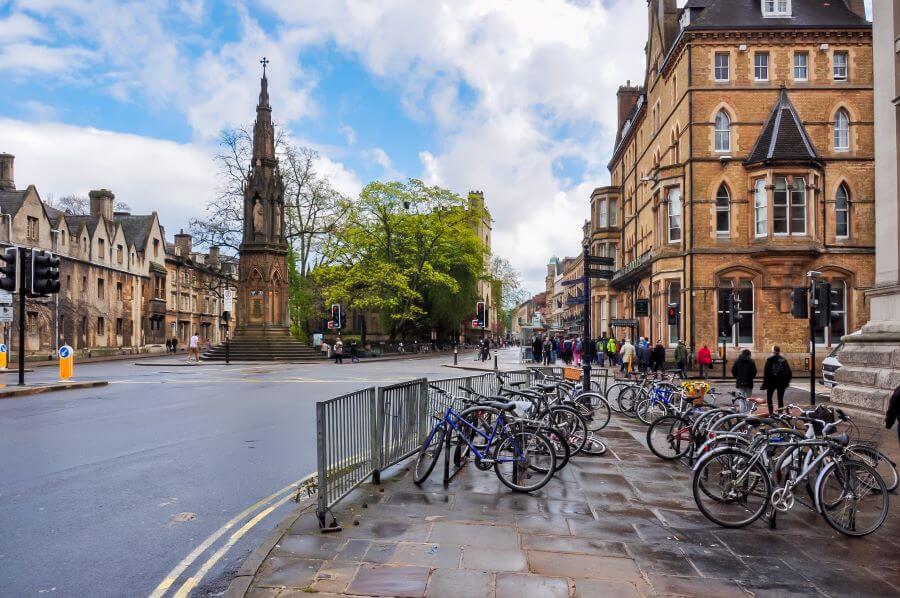
In the centre you’ll notice the rhythm immediately: people on foot, every sort of bicycle, and lots of short hops by bus or car. Many streets carry a speed limit of 20 mph and the signs matter more than your navigation app. Think of Oxford as a place where you look further ahead; who’s crossing, where the next roundabout feeds in, whether a lane becomes a bus lane, and you’ll settle into the flow quickly.
Sharing space with cyclists and people on foot
Oxford’s cyclists are not an occasional sight; they are part of daily public transport in all but name. The Highway Code now expects drivers to give at least 1.5 metres when overtaking a bicycle at up to 30 mph and more at higher speeds, and to allow riders to “take the lane” through pinch points.
At side roads, the Code also gives pedestrian priority when you turn in or out, so slow, look and yield. Two habits help: check mirrors before turning across a cycle lane and open your door using the Dutch Reach so you naturally glance over your shoulder.
Rules that catch newcomers
Oxford has a small central Zero Emission Zone (often shortened to ZEZ) with restrictions and a possible charge for some vehicle types during set hours. Read the zone signs; a quick look at the map on the Oxfordshire County Council (county council) website before you travel will save hassle. Elsewhere, bus lanes and “bus gates” are widely camera-enforced. If your navigation tries a shortcut, remember: the roadside signs beat the app.
Getting into town without the stress
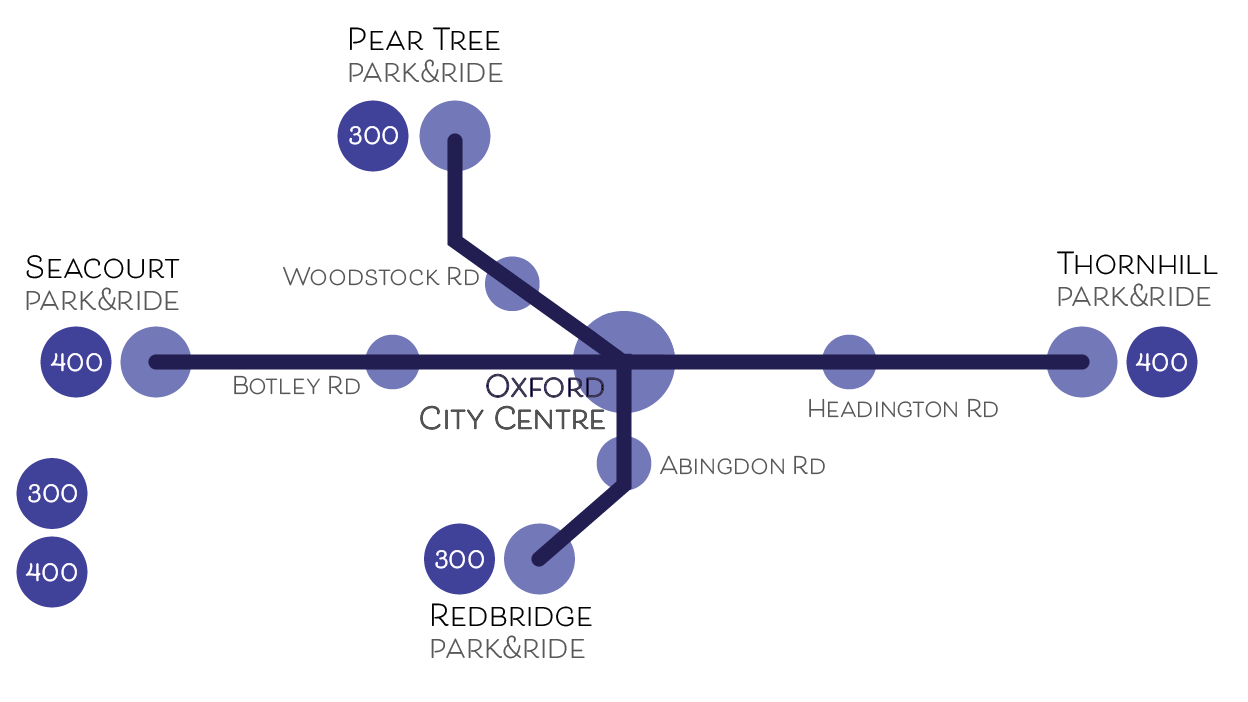
If you don’t need the car in the very centre, use Park & Ride, the simplest public transport gateway for most visitors and new residents.
rom Redbridge, Seacourt, Thornhill, Pear Tree or Oxford Parkway/Water Eaton, frequent bus services follow direct routes to the colleges, museums and shops. On busy days it’s quicker, calmer and cheaper than circling for parking.
Parking without the pitfalls
Oxford’s parking is managed by Controlled Parking Zones (CPZs) with residents’ bays, shared bays and time-limited bays. Always read the sign on the bay you’re using, not one you passed five minutes ago, and not only what your app suggests. Watch for suspensions and kerb markings that limit loading. If you need hours rather than minutes, choose a long-stay car park or a Park & Ride rather than gambling on a side street.
Peak times, weather and patience
Weekday peaks (roughly 07:30–09:30 and 16:00–18:30) slow any commute. If you must travel then, leave margin and avoid the tightest corridors into town. In rain or leaf-fall, demist fully before moving off, leave longer gaps and expect braking distances to stretch on older surfaces.
A note on the car itself
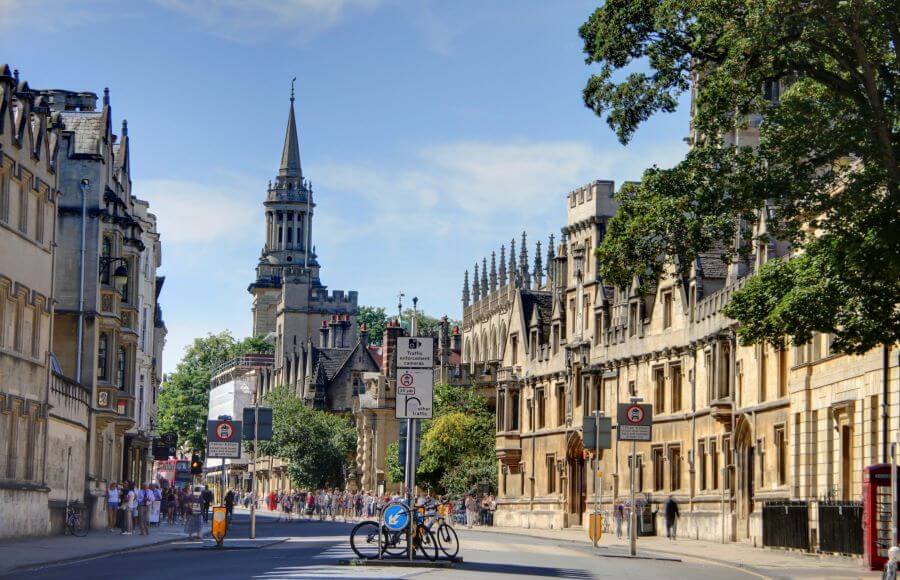
Oxford’s centre is full of signs, cameras and people. Keep your vehicle tidy and legal: readable number plates, working lights, tyres with at least 1.6 mm of tread, and valid MOT/insurance/tax. If a plate is damaged, replace it through a registered supplier—you’ll be asked for proof of identity and entitlement.
Planning a simple first route
New to oxford? Park at Pear Tree or Thornhill, take the bus into town, and walk the last ten minutes. If you drive in, assume 20 mph, look well ahead for the next decision point and let the signs guide you. Oxford rewards drivers who treat the journey like they would a good tutorial: prepared, attentive and unhurried.
New Drivers in Oxford often Ask
Do I have to pay the ZEZ charge?
Only inside the small central zone, and only during set hours for certain vehicle types. Check your number plate and the live map on the Oxfordshire County Council site before you enter.
Can I use bus lanes when they look empty?
Only if the roadside sign says you can. Most are ANPR-enforced, so the camera will ignore your navigation shortcut.
Where should I leave the car for the day?
Use Park & Ride for the centre. If you need city parking, pick a long-stay car park; side streets in CPZs are rarely a bargain.
What’s a safe distance to pass a bicycle?
At least 1.5 m up to 30 mph; more when faster. If there isn’t room, wait.
Useful links (live rules and maps)
- Park & Ride information — routes, timetables and fares (search the Oxfordshire County Council site)
- Parking & CPZs — bay types, permits, charges (Oxford City Council)
- Bus lanes & enforcement — locations and operating times
- Zero Emission Zone (ZEZ) — restrictions, zone map and possible charge
- Highway Code (2022 updates) — pedestrian priority, passing distances, Dutch Reach