The Peacock has been named Britain’s favourite butterfly after more than 20,000 people voted in the first national poll of its kind.
At a glance
| Winner | Peacock |
| Poll | Britain’s Favourite Butterfly, run by Butterfly Conservation |
| Votes cast | More than 20,000 across the UK |
| Top five | Peacock, Orange-tip, Red Admiral, Holly Blue and Brimstone |
| Next step | Big Butterfly Count, Friday 17 July to Sunday 9 August 2026 |
| How to take part | Spend 15 minutes counting butterflies and day-flying moths in a sunny outdoor space |
| More information | bigbutterflycount.org |
The Peacock has been crowned Britain’s favourite butterfly after winning a public vote organised by wildlife charity Butterfly Conservation.
The colourful garden visitor beat 59 other species to take the title, with more than 20,000 votes cast across the UK between Thursday 15 May and Sunday 7 June.
The Orange-tip came second, followed by the Red Admiral in third, the Holly Blue in fourth and the Brimstone in fifth.
The result has been announced ahead of this summer’s Big Butterfly Count, when people in Oxfordshire and across the UK will be asked to spend 15 minutes recording butterflies and day-flying moths in gardens, parks, school grounds, allotments, countryside and other outdoor spaces.
Why the Peacock won
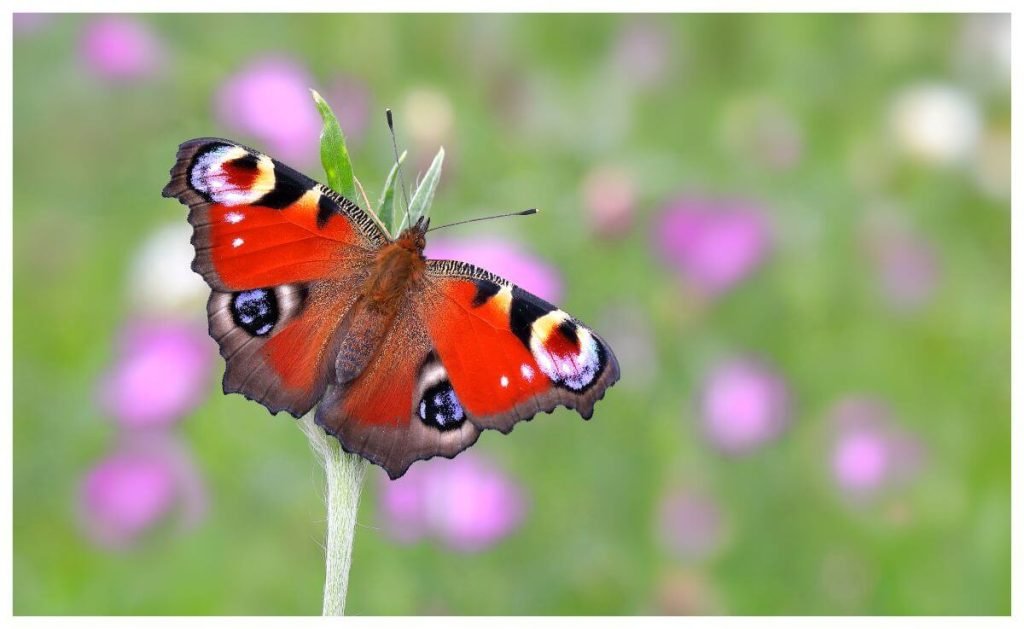
The Peacock is one of Britain’s most recognisable butterflies, with deep red wings, dark markings and striking eye-spots on its wings.
Those eye-spots are more than decoration. Butterfly Conservation says they evolved to startle or confuse predators, while the dark underside of the wings can make the butterfly look like dead leaves when it is resting.
The species is often seen in gardens, parks and green spaces, particularly where nettles are allowed to grow. Nettles are an important foodplant for Peacock caterpillars, as well as for several other familiar butterfly species.
Kate Merry, Head of Engagement at Butterfly Conservation, said:
“The response to Britain’s Favourite Butterfly has been absolutely wonderful, and we’re not surprised.
“It’s clear that people up and down the country love butterflies of all shapes, sizes and colours, and voted in their thousands for their favourites.
“The Peacock is a worthy winner, it’s a true showstopper and a species that I bet a lot of us picture when we think of butterflies.
“It’s been really special seeing people get so passionate about their favourites and throw their support behind them. Now we can’t wait to see how many Peacocks are spotted up and down the country in this summer’s Big Butterfly Count.”
The top butterflies in the poll
| Rank | Butterfly | Why people recognise it |
|---|---|---|
| 1 | Peacock | Red wings, bold eye-spots and a strong presence in gardens and green spaces |
| 2 | Orange-tip | A spring species, with males showing vivid orange tips on the wings |
| 3 | Red Admiral | Black wings with red bands and white markings, often seen in gardens |
| 4 | Holly Blue | A small blue butterfly often seen around gardens, hedges and parks |
| 5 | Brimstone | A bright yellow butterfly often associated with the first signs of spring |
Why the count matters this year
The celebration comes against a serious conservation backdrop.
In 2024, Butterfly Conservation declared a national butterfly emergency after the Big Butterfly Count recorded the lowest average number of butterflies per count in the survey’s history.
The charity said participants spotted just seven butterflies on average during each 15-minute count in 2024, down from 12 the previous year.
This year’s Big Butterfly Count will therefore give conservationists an updated picture of how common butterfly species are faring after a difficult period for many insects.
Butterflies are sensitive to weather, habitat loss, pesticide use and changes in the wider environment. Because of that, conservationists use butterfly records as one indicator of the health of the countryside, gardens and urban green spaces.
How Oxfordshire residents can take part
People in Oxfordshire do not need to be wildlife experts to join the Big Butterfly Count.
The survey asks participants to choose a sunny outdoor spot, spend 15 minutes counting the butterflies and day-flying moths they see, and submit the results online or through the free Big Butterfly Count app.
That can be done in a back garden, balcony, school field, churchyard, allotment, park, meadow, nature reserve or countryside walk.
For Oxford residents, the count can also be a way to look more closely at the city’s green and blue spaces, from riverside paths and parks to gardens, verges and community green spaces.
Oxford City Council’s 2026 Biodiversity Report highlights the value of green and blue infrastructure, including trees, woodland, hedgerows, rivers and wetlands, for biodiversity, wellbeing, recreation and climate adaptation.
Oxfordshire’s butterfly landscape
Butterfly Conservation’s Upper Thames Branch covers Berkshire, Buckinghamshire and Oxfordshire, including the Chilterns, Oxfordshire and Berkshire Downs, Oxford and Aylesbury clay vales, the Bernwood Forest complex and the edge of the Cotswolds.
The branch says the region is home to several rare species of butterfly and moth, including Black Hairstreak, Duke of Burgundy, Adonis Blue, Silver-spotted Skipper and Striped Lychnis.
While this summer’s Big Butterfly Count focuses on common and widespread species, everyday sightings can still help build a clearer picture of what is happening to butterflies locally and nationally.
Which species can be recorded?
The Big Butterfly Count includes 20 butterflies and day-flying moths. The Peacock, Red Admiral, Holly Blue and Brimstone are all included among the species people can record.
Participants may also see familiar garden visitors such as Large White, Small White, Green-veined White, Small Tortoiseshell, Comma, Speckled Wood, Gatekeeper, Meadow Brown and Painted Lady, depending on the location, weather and time of day.
Kate Merry said:
“Taking part in the Big Butterfly Count couldn’t be easier. Simply spend 15 minutes in any outdoor space and count the butterflies and day-flying moths you see and submit your sightings to help build our interactive map.
“This information will help conservationists to see how some of our more-common species are faring, which in turn helps to build a wider picture of how all butterflies and moths are doing.
“It’s easy, fun for all the family, and a great excuse to get outside and experience the simple joy of spotting butterflies.”
How to help butterflies at home
Residents can also support butterflies by making gardens and community spaces more wildlife-friendly.
Simple steps include growing nectar-rich flowers, allowing some nettles to remain in a quiet corner, reducing pesticide use, leaving sunny sheltered areas and providing a mix of plants that flower at different times of year.
Even small spaces can help. Window boxes, balconies, front gardens and shared courtyards can provide food for adult butterflies if planted with pollinator-friendly flowers.
For the Peacock in particular, nettles matter because they are used by the caterpillars. Leaving a small patch in a less-used part of a garden can support the next generation of butterflies.
Big Butterfly Count 2026
| Dates | Friday 17 July to Sunday 9 August 2026 |
| Time needed | 15 minutes |
| Where to count | Any sunny outdoor space, including gardens, parks, school grounds, allotments and countryside |
| What to record | Butterflies and selected day-flying moths seen during the 15-minute count |
| How to submit | Use the Big Butterfly Count website or free app |
| Website | bigbutterflycount.org |
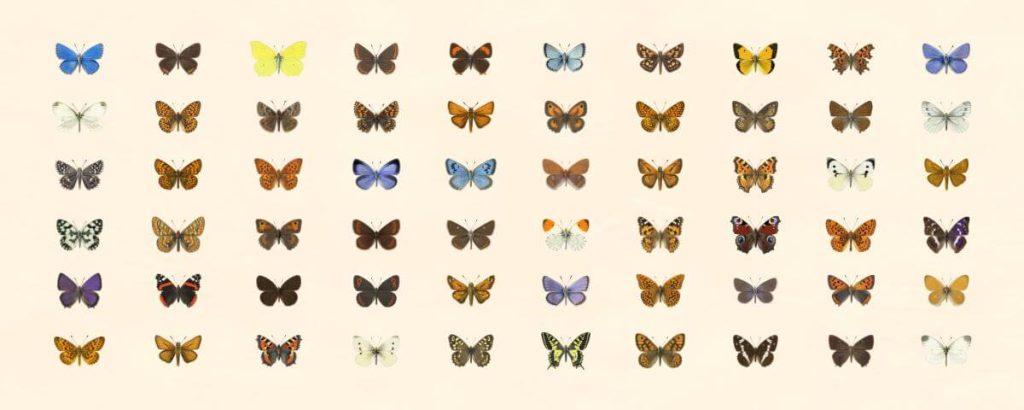
Top 60 butterfly species of Britain’s Favourite Butterfly
- Peacock
- Orange-tip
- Red Admiral
- Holly Blue
- Brimstone
- Comma
- Common Blue
- Small Tortoiseshell
- Swallowtail
- Painted Lady
- Speckled Wood
- Small Copper
- Marbled White
- Adonis Blue
- Purple Emperor
- Chalk Hill Blue
- Gatekeeper
- Green Hairstreak
- Purple Hairstreak
- Large Blue
- Silver-washed Fritillary
- Marsh Fritillary
- Silver-studded Blue
- Scotch Argus
- Small Heath
- Clouded Yellow
- Small White
- Small Blue
- White Admiral
- Meadow Brown
- Ringlet
- Wall
- Large Tortoiseshell
- Large White
- Grizzled Skipper
- Northern Brown Argus
- Pearl-bordered Fritillary
- Brown Argus
- Duke of Burgundy
- Mountain Ringlet
- Brown Hairstreak
- Glanville Fritillary
- Small Skipper
- Dingy Skipper
- Green-veined White
- Cryptic Wood White
- Dark Green Fritillary
- Wood White
- High Brown Fritillary
- Heath Fritillary
- Grayling
- Lulworth Skipper
- White-letter Hairstreak
- Large Skipper
- Essex Skipper
- Large Heath
- Chequered Skipper
- Black Hairstreak
- Silver-spotted Skipper
- Small Pearl-bordered Fritillary
FAQs
What is Britain’s favourite butterfly?
The Peacock has been voted Britain’s favourite butterfly in Butterfly Conservation’s first national poll of its kind.
Which butterflies made the top five?
The top five were Peacock, Orange-tip, Red Admiral, Holly Blue and Brimstone.
When is the Big Butterfly Count 2026?
The Big Butterfly Count runs from Friday 17 July to Sunday 9 August 2026.
How do I take part in the Big Butterfly Count?
Choose a sunny outdoor space, spend 15 minutes counting butterflies and day-flying moths, then submit your sightings through the Big Butterfly Count website or free app.
Can I take part in Oxfordshire?
Yes. Counts can be submitted from gardens, parks, school grounds, allotments, nature reserves, countryside walks and other outdoor spaces across Oxfordshire.
Why are nettles important for Peacock butterflies?
Peacock caterpillars feed on nettles, so leaving a small patch in a quiet, sunny part of a garden can help support the species.
Why does Butterfly Conservation run the count?
The count helps conservationists track how common butterflies and day-flying moths are faring across the UK, giving a wider picture of environmental health.