Oxfordshire parents and carers are being reminded that England’s stricter school absence fine system remains in place for 2026. The main rules have not changed this year (the major reform started in August 2024) but a five-day unauthorised term-time holiday can still be enough to trigger consideration of a penalty notice.
In England, a first penalty notice is £80 per parent, per child if paid within 21 days. It rises to £160 if payment is made after day 21 but within 28 days. A second notice for the same parent and child within three years is charged at £160, with no lower-rate option.
The reminder matters because many families compare the financial cost of holidays inside and outside school breaks. However, the money saved on travel, transport or accommodation does not normally outweigh a parent’s legal obligation to secure regular attendance for a child of compulsory school age. Oxfordshire County Council says a parent or carer may receive a penalty notice if they allow a child to take leave in term time without the school’s authorisation.
| AT A GLANCE | |
| First notice | £80 per parent, per child if paid within 21 days; £160 after day 21 and within 28 days. |
| National threshold | 10 unauthorised sessions in a rolling 10-school-week period — usually five school days. |
| Repeat notice | A second notice for the same parent and child within three years is £160. |
| Third occasion | A third notice cannot be issued in that three-year period; other action, often including prosecution, may be considered. |
Has anything changed for 2026?
The key fine amounts and national threshold are the same as last year. The major change came from 19 August 2024, when England introduced a national framework for attendance penalty notices. That framework set the current £80/£160 structure, the two-notice limit and the threshold of 10 unauthorised sessions in a rolling 10-school-week period.
The Department for Education’s July 2026 statutory guidance continues to use that threshold. The number of sessions can build through one unauthorised holiday, separate absences or late arrivals after the register closes. The 10-week window can also cross terms or academic years.
The guidance also refers schools to the School Attendance (Pupil Registration) (England) Regulations 2024 for their register duties and attendance codes.
For school administration, governance and compliance, the important distinction is that reaching the threshold does not make every fine automatic. State-funded schools must consider each case individually. They should look at whether help or attendance support is appropriate, whether a penalty is the best available sanction and whether any equality obligations apply. For an unauthorised term-time holiday, support is often considered inappropriate and a notice should normally follow if the other conditions are met.
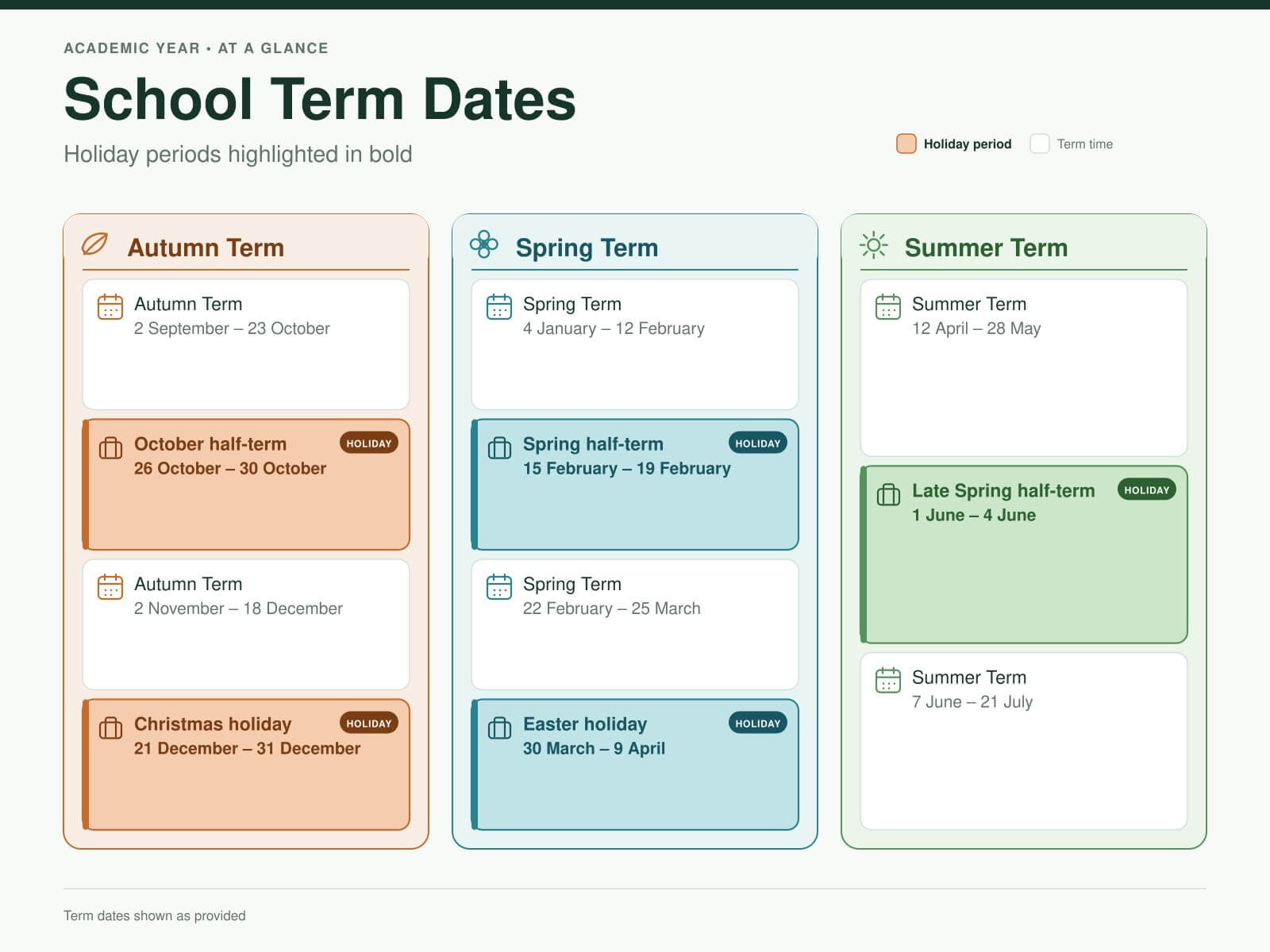
The graphic follows the council’s term-date table; it does not list every day schools are closed. Additional 2027 bank holidays include 1 January, 26 and 29 March, 3 May and 31 May. School calendars can differ.
How much is the school holiday fine in Oxfordshire?
For Oxfordshire families, the England penalty notice system applies. These are attendance penalties, not tuition fees, school charges or a fee for buying permission to miss lessons.
| Situation | Fine or action |
|---|---|
| First notice, paid within 21 days | £80 per parent, per child |
| First notice, paid after 21 days but within 28 days | £160 per parent, per child |
| Second notice for the same parent and child within three years | £160 |
| Third occasion within three years | No third notice; other action, often including prosecution, may be considered |
Source: Oxfordshire Penalty Notice Code of Conduct and Department for Education statutory guidance.
Oxfordshire’s code says timely payment discharges the parent’s liability for the specific offence named on the notice. The three-year period starts from the date of the first notice issued on or after 19 August 2024. Under the national guidance, receipts first cover administration and prosecution, with surplus used for attendance support. Any remaining year-end surplus must be paid to the Secretary of State.
Can a five-day holiday trigger a fine?
Yes. A five-day term-time holiday normally equals 10 school sessions because each day has a morning and afternoon registration session. That reaches the national threshold at which a state-funded school must consider whether a penalty notice is appropriate.
This is not a blanket rule that turns every absence into an automatic violation. Individual situations still matter. The school and local authority consider the circumstances, available support and the most appropriate response. But a full unauthorised week away is enough to meet the threshold, and separate unauthorised absences can add up to the same number within the rolling period. The threshold is not permission to take fewer days: Oxfordshire’s code allows a notice below it where an authorised officer considers that appropriate.
| A QUICK LANGUAGE NOTE | |
|---|---|
| UK wording | Official guidance usually uses “unauthorised absence”, “offence” and “penalty notice”. |
| Search wording | People may search for a school absence “infraction” or “violation”, but those are not the usual terms used in English attendance law. |
| What it is not | The system is an attendance enforcement measure, not ordinary classroom discipline and not a tuition charge. |
Is the fine per family, per child or per parent?
The fine is per parent, per child. That means the financial consequences can rise quickly when more than one person is issued with a notice or more than one child is absent.
| Family situation | First fine if paid within 21 days |
|---|---|
| One parent, one child | £80 |
| Two parents, one child | £160 |
| One parent, two children | £160 |
| Two parents, two children | £320 |
If the first fine is not paid within 21 days, each notice rises to £160. Parents should follow the payment instructions on the notice and contact the issuing authority promptly if details appear wrong.
Who decides whether a term-time holiday is allowed?
The school decides whether to authorise a pupil’s absence. Parents and carers should ask before booking or travelling. If the institution does not grant leave and the child is taken away anyway, the absence is normally recorded as unauthorised.
Oxfordshire County Council says headteachers may not grant term-time leave unless there are exceptional circumstances. A school may consider the content of the request, the evidence provided and the impact on the child’s education and learning. The fact that flights, accommodation or other services cost less during term time is unlikely to be enough on its own.
What counts as exceptional circumstances?
There is no automatic right to a term-time holiday. Schools consider requests case by case, and the Department for Education says a need or desire for leisure or recreation is generally not exceptional.
Ordinary reasons such as cheaper travel, preferred accommodation, convenience, business commitments or avoiding peak-season charges are unlikely to be approved. Where there is a genuinely exceptional event affecting family life, give the school clear information and evidence before the absence begins.
Practical advice: contact the school by its requested route — for example an online form, email or phone — and keep a copy of the decision. Do not assume that asking is the same as receiving permission, and remember that leave cannot be authorised retrospectively.
What happens if the fine is not paid?
A penalty notice is an alternative to prosecution. If it is paid on time, liability for that specific offence is discharged. If payment is not made within the prescribed 28-day period, the local authority may prosecute for the underlying offence of failing to secure regular attendance.
The county council distinguishes two attendance offences. The basic offence under section 444(1) of the Education Act 1996 carries a maximum £1,000 fine. The more serious offence under section 444(1A), involving a parent who knows about the non-attendance and fails without reasonable justification to secure attendance, can carry a £2,500 fine, up to three months in prison, or both. These are court penalties, not the amount of an ordinary penalty notice.
A third penalty notice cannot be issued to the same parent for the same child within three years of the first. If the threshold is met again, authorities should consider another route. Prosecution is often considered, but the guidance also allows other attendance interventions where they are more appropriate.
What if the absence is linked to illness, medical needs or SEND?
Illness, medical appointments, disability-related barriers and special educational needs are different from an unauthorised holiday. Parents should report an absence at the start of the day in line with the school’s attendance policy and provide evidence where reasonably requested.
Where a child has ongoing physical or mental health needs, anxiety, SEND, caring responsibilities, transport difficulties or other barriers, speak to the school early. Attendance support services, local authorities and other agencies may be able to help. Schools must also consider relevant obligations under the Equality Act 2010 when deciding whether a legal intervention is appropriate.
The attendance framework is intended to distinguish between families who need support and situations where support is not appropriate, such as many unauthorised holidays. It should not treat all children, students or young people as though their circumstances are identical.
School attendance across the UK: figures for the stated periods
The figures below provide context rather than a league table. Definitions, coverage and publication dates differ, so direct comparisons should be made with care. National research and statistics nevertheless show that persistent absence remains a significant issue.
| Area and period | Reported figure | What it shows |
|---|---|---|
| England 2025/26 (provisional) | About 6.9% overall absence; 19.05% persistent absence | Persistent absence rose 0.35 percentage points from 2024/25, although the figures remain provisional. |
| Oxfordshire (council scrutiny report, Sept 2025) | 7.1% overall absence; 17.9% persistent absence | Overall absence was above the reported national comparator, while persistent absence was slightly better. |
| Wales primary schools 2024/25 | 20.5%–23.2% persistent absence by year group | Persistent absence remained high across primary year groups. |
| Scotland 2024/25 | 91.0% attendance | Attendance improved from 2023/24 but remained below 2018/19. |
| Northern Ireland 2024/25 | 92.1% attendance | Attendance rose by 0.4 percentage points from the previous year. |
Sources: DfE England data; Oxfordshire scrutiny report; Welsh Government; Scottish Government; NISRA.
How the rules differ outside England
Wales
Wales has a different fixed penalty notice system. Welsh Government guidance says the penalty is £60 if paid within 28 days, rising to £120 if paid after 28 days but within 42 days. Notices can only be issued for unauthorised absence, and local councils operate their own codes of conduct within the Welsh framework.
Scotland
Scotland does not use England’s routine £80/£160 penalty notice structure. Scottish Government guidance says family holidays during term time should not be recorded as authorised absence except in exceptional circumstances, including some situations where a parent’s employment means school-holiday leave cannot be accommodated.
Northern Ireland
Northern Ireland uses a different enforcement route. nidirect says the Education Welfare Service can become involved when a child misses school without good reason. It can work with families and other services, and as a last resort can apply to the courts to fine a parent up to £1,000 for each child who is not attending regularly.
Frequently asked questions
Are school fines new for 2026?
No. The current national framework began on 19 August 2024. The 2026 reminder is that the same post-2024 rules, thresholds and payment levels continue to apply.
How much is the Oxfordshire school holiday fine?
The first notice is £80 per parent, per child if paid within 21 days. It is £160 if paid after day 21 but within 28 days. A second notice for the same parent and child within three years is £160.
Can I be fined for taking my child away for one week?
Yes, if the absence is unauthorised. One school week normally equals 10 sessions, reaching the national threshold at which a penalty notice must be considered.
Does good attendance for the rest of the year prevent a fine?
Not necessarily. The threshold looks at 10 unauthorised sessions in a rolling 10-school-week period. A wider attendance record may form part of the individual assessment, but it does not create a right to a term-time holiday.
Can I appeal a school holiday fine?
There is no statutory right of appeal against an attendance penalty notice. If you think a notice is wrong — for example because the absence was authorised or the details are inaccurate — contact the school or issuing authority immediately for advice.
The bottom line for Oxfordshire parents
The school fine rules have not been newly changed for 2026, but they remain stricter than they were before August 2024. A five-day unauthorised term-time holiday can be enough to reach the threshold for a penalty notice. The first fine is £80 per parent, per child, rising to £160, and repeat cases can lead to a higher charge or court action rather than another lower-rate notice.
For most families, the safest course is simple: speak to the school before booking or travelling, explain any exceptional circumstances fully and wait for a decision. If permission is refused and the holiday goes ahead, expect the absence to be recorded as unauthorised. If attendance problems are linked to health, SEND, caring, money, transport or difficulties at home, ask the school and council services for help at the earliest opportunity.
Useful official links
- GOV.UK: School attendance and absence
- GOV.UK: Legal action to enforce school attendance
- Department for Education: Working together to improve school attendance
- Department for Education: July 2026 statutory guidance PDF
- GOV.UK Explore Education Statistics: Pupil attendance in schools
- Oxfordshire County Council: Attendance
- Oxfordshire Schools: Penalty Notice Code of Conduct
- Welsh Government: Penalty notice guidance
- Scottish Government: School attendance guide
- nidirect: School attendance and absence
Information checked: 16 October 2026. This review checked the rules, source statistics and term-date graphic, clarified court penalties and removed the unverified holiday-price comparison. The statistics relate to the periods shown, not live attendance.