Shock absorbers are the unsung heroes of a vehicle’s suspension system, ensuring a smooth ride and stable handling by controlling vibrations and motion. However, not all shock absorbers are created equal; there are various types, each with its own set of strengths and weaknesses. Let’s explore the most common shock absorber types and their characteristics in detail.
1. Twin-Tube Shock Absorbers
This is the most prevalent type, comprising two nested tubes. The inner tube holds the hydraulic fluid and piston, while the outer tube acts as a reservoir. As the piston moves, fluid flows through valves to regulate the suspension’s motion.
Pros: Widely used due to affordability and general comfort.
Cons: Prone to overheating under heavy use, which can reduce damping performance and lead to a “spongy” feel.
2. Mono-Tube Shock Absorbers
Mono-tube shocks, in contrast to twin-tube designs, feature a single cylinder that houses both gas and hydraulic fluid, separated by a floating piston. This design allows for superior heat dissipation and provides more consistent damping.
Pros: Better heat management and more precise damping make them suitable for sportier driving or off-road conditions.
Cons: Higher cost compared to twin-tube shocks, and may result in a firmer ride.
3. Gas-Charged Shock Absorbers
Similar in structure to twin-tube shocks, gas-charged absorbers include a low-pressure gas charge in the reservoir. The gas pressure prevents the hydraulic fluid from foaming, which enhances damping performance.
Pros: Improved performance under heavy use and less prone to damping fade.
Cons: Can deliver a stiffer ride compared to standard hydraulic shock absorbers.
4. Coilover Shock Absorbers
Coilovers integrate a shock absorber with a coil spring wrapped around it, forming a single unit. They offer adjustable ride height and stiffness, making them popular for both road tuning and off-road applications.
Pros: Wide adjustment range for suspension height and damping stiffness, ideal for custom setups.
Cons: More complex installation and higher cost than traditional shock absorbers.
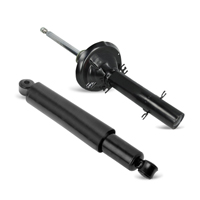
5. Shock Struts
Struts serve a dual purpose, functioning as both a structural part of the suspension and a shock absorber. Commonly used in MacPherson strut-type suspensions, they help support the vehicle’s weight and provide damping.
Pros: Space-efficient design and contribute to structural integrity.
Cons: Typically more expensive to replace than standard shock absorbers due to their structural role.
Choosing the Right Shock Absorber
Selecting the ideal shock absorber depends on several factors:
- Type of Vehicle: Passenger cars often utilise twin-tube or gas-charged shocks for a balance of comfort and performance, while sports cars and off-road vehicles may benefit from mono-tube or coilover shocks for enhanced handling and adjustability.
- Driving Style: Aggressive drivers or off-road enthusiasts will need shocks that can handle heavy use, while those prioritising comfort may prefer softer options.
Practical Considerations
When choosing shock absorbers, it’s important to factor in not only the vehicle type and driving habits but also the potential for future adjustments or upgrades. For instance, coilovers allow for fine-tuning of the suspension setup, while mono-tube shocks provide consistent performance under demanding conditions.
Conclusion
Understanding the differences between various shock absorber types can help you make an informed choice that enhances your vehicle’s handling, comfort, and overall performance. Whether you’re prioritising everyday comfort, sporty handling, or off-road capability, there’s a suitable option for every need.
By taking into account the specific characteristics and use cases of each type, drivers can ensure they select shock absorbers that best match their vehicle’s requirements and driving preferences.