Thinking of buying a used car? One of the most important steps is checking the vehicle’s maintenance records. These documents tell you how well the car has been looked after, highlight any major repairs, and could save you from expensive surprises later on.
A thorough review now can protect your wallet (and your peace of mind) down the road.
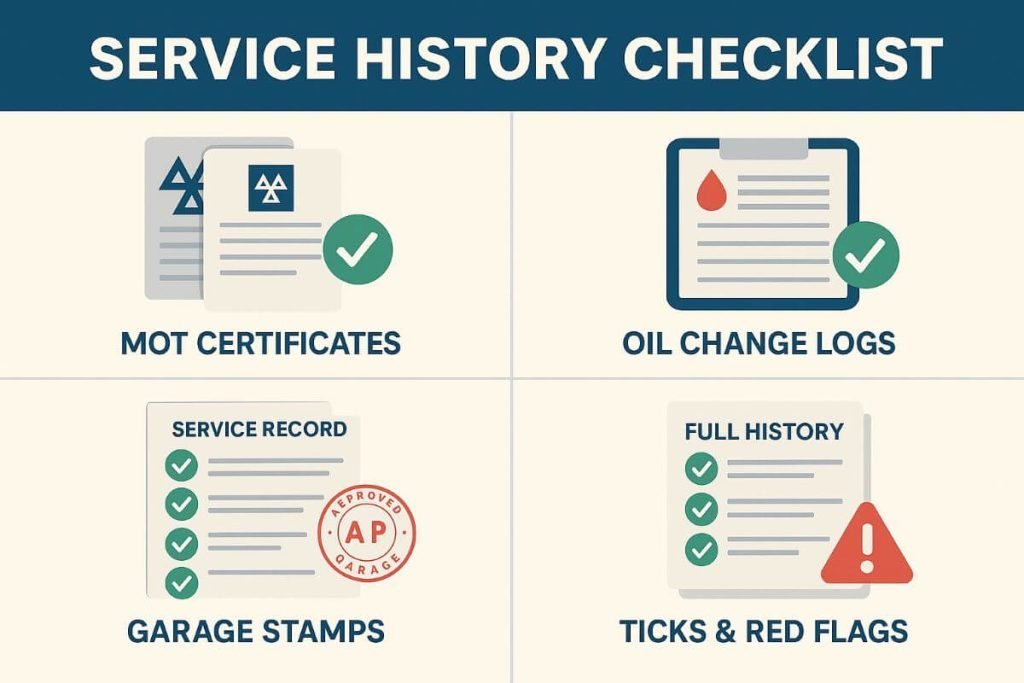
Why a Full Service History (FSH) Matters
A full service history is a sign the car has been cared for properly. It should include:
- Regular oil changes
- Brake inspections
- Routine services at manufacturer-recommended intervals
- Stamps or signatures from authorised garages
Cars with a FSH often have higher resale value, fewer hidden faults, and a longer lifespan.
How to Check If Records Are Genuine
It’s not enough to just glance at the paperwork, you need to verify that the service records are legitimate. Here’s how:
- Check garage details: Contact the garages listed and confirm services.
- Look for date and mileage consistency: Gaps or conflicting info = red flag.
- Use the GOV.UK MOT checker: Cross-reference past advisories and mileage.
- Cross-check the service records with the car’s MOT history with past advisories and mileage.
If any records feel vague, missing, or don’t match the car’s wear and tear then ask questions. Sellers who can’t explain may be hiding something.
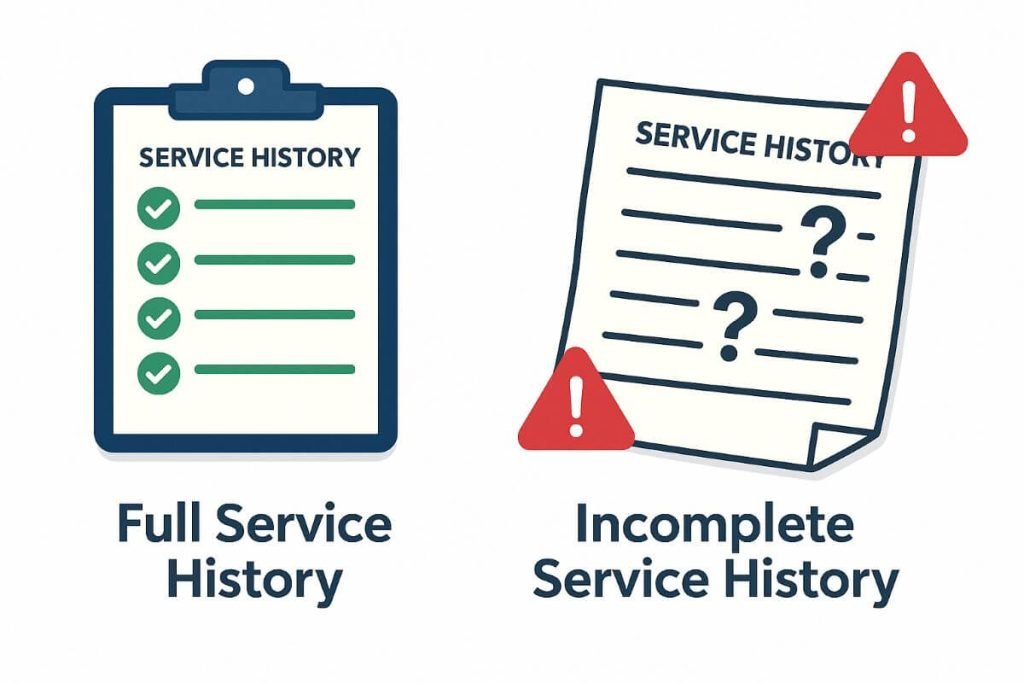
Consistent Servicing = Reliable Car
Most cars should be serviced every 12 months or 10,000 miles (whichever comes first), so check the service history. You want to see a record that covers the car from the time it was first registered, ideally with a stamp or signature from each service visit.
Consistent servicing helps avoid:
- Engine wear
- Brake system issues
- Costly mechanical failures
Missing records could indicate that crucial repairs were skipped. If there are gaps in the history or the records don’t align with the car’s current mileage, that’s a red flag. Be sure to ask the seller for any missing documents. If they can’t provide the necessary paperwork, it could suggest neglect, which means you might end up facing costly repairs later on.
What About Digital Service Records?
Many modern cars now keep digital service logs, stored in manufacturer databases. Ask the seller if the car has a digital service record with BMW / Audi / Mercedes etc.
You can request access to view it directly through the dealership.
Used Car Service Record Checklist
- Full service history (FSH) from new
- Services done at regular intervals (10,000 mi/12 months)
- Stamps/signatures from authorised garages
- No major gaps or inconsistencies
- Matches MOT & mileage records
Tip: Cars serviced at main dealers or RAC/AA approved garages are often more trustworthy. Also look for WRAC-certification and digital service platforms (like Toyota’s MyT or VW’s WeConnect).
A car’s service history is like its medical record. Incomplete or suspicious documents could mean unreported accidents, neglected maintenance, or major repairs waiting to happen.
If the records check out, great! If not, walk away. Better to lose a car than buy a headache.