Us Brits rarely need an excuse to get the BBQ out, and last weeks sunny spell ensured there was a whiff of burning charcoal was often in the air in Oxfordshire. Every time I fire up the grill, the song “when will I see you again” pops into my head, thanks to an ad campaign by the Food Standards Agency (during the 2006 World Cup I believe). Our public information films are always as impactful as a Zidane headbutt.
I’m not a BBQ chef who cremates everything, but I do use the oven to cook the chicken before I put it on. That’s not to say I’ve never had food poisoning from other peoples cooking. The worst episode was over 25 years ago from a dodgy late night kebab in London and the details are still far too vivid.
Food poisoning, according to the Food Standards Agency, affects around 2.4 million people in the UK each year. The numbers tend to rise during summer, when barbeque weather prompts many Brits to take their chances with under grilled sausage, chicken, and other meats.
Some people might be more prone to suffering from food poisoning than others. What’s more, we might respond to different foods in different ways. It’s worth knowing your preferences, so that you know exactly what to avoid when ordering at a restaurant, or experimenting with your weekly shop.
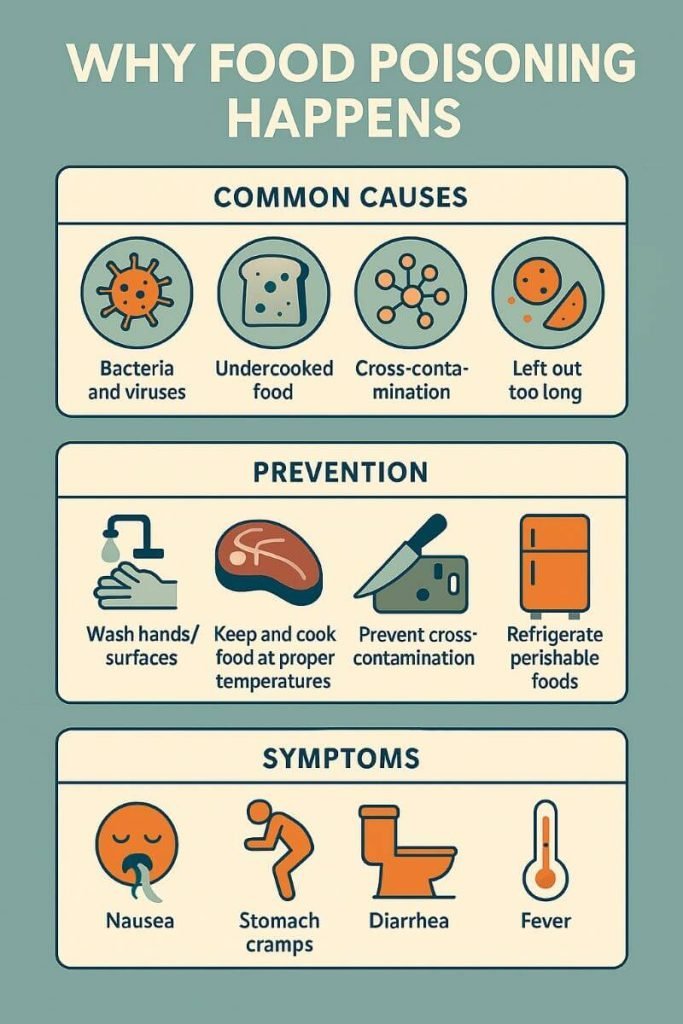
What Causes Food Poisoning
Food poisoning is a kind of illness that comes from ingesting certain kinds of harmful pathogens, including viruses, bacteria, and parasites. It can come from food or drink. Some of the more common culprits are Salmonella, E. coli, Listeria, and Norovirus, all of which tend to thrive in food preparation environments where hygiene is not taken seriously. In some cases, harmful substances like mould and pesticides can find their way into food, which can cause an adverse reaction, too.
Food poisoning can occur in any environment where food is consumed. In the home, the safe storage and preparation of food is your responsibility. If you’re being served food at a restaurant, or at a special catered event like a wedding, then the people providing that food have a duty to do so safely. If they fail to meet the required standard, and food poisoning is suffered as a result, they could be held accountable by a personal injury lawyer.
How to Prevent Food Poisoning
So, what’s the best way to minimise the likelihood of food poisoning. If you’re ordering food, you can look at the hygiene rating of the business.
If you’re cooking at home, then there are a number of habits you’ll want to get into.
First, make sure that every surface and utensil you’re using is clean. The same goes for your hands, which should be washed with soap and hot water before and after you handle food.
Next, you’ll want to be sure that all of the meat, eggs and seafood you’re cooking have been safely cooked all the way through. Don’t rely on the colour of things like chicken, or even the transparency of the juices. Internal temperature is the best indicator of safety. Get everything to 74°C, and the pathogens will be killed, and you can simply test the biggest fattest piece of meat to be sure.
If you don’t have a meat thermometer, common sense should prevail, especially with BBQ’s. If the sausages have been on 2 minutes, they are not done even if burnt on the outside. That just means the heat is too high, so raise the tray higher and let them cook for longer.
It’s also important to avoid chopping raw meat on the same board you’re using to chop other things, like vegetables, especially if you intend to serve those vegetables raw. You can buy separate boards that are different colours to prevent this. I always used a dedicated scrubbing brush for washing up raw meat boards.
Finally, be sure that all perishable food is appropriately refrigerated. If you accidentally leave your leftovers out all night, then it’s safest to bin them, despite the waste.

Symptoms of Food Poisoning
Food poisoning is typically indicated by nausea, vomiting, stomach cramps, and diarrhoea. Often at the same time. You may also experience sweating and fever. In most cases, these symptoms can be treated at home. You should recover within a week. Get plenty of fluids.
In a minority of cases, however, food poisoning can be more dangerous, and medical attention should be sought. Babies who stop breastfeeding, or cannot keep their food down, might qualify. Call 111 and seek advice. If your vomit is green, or resembles blood or ground coffee, then it is time to call 999 immediately.
Who’s Most at Risk from Food Poisoning?
While most healthy adults recover from food poisoning within a few days, certain groups are at a higher risk of developing serious complications. These include:
- Young children, whose immune systems are still developing
- Pregnant women, where foodborne illness can pose risks to both mother and baby
- Older adults, who may have weakened immune responses
- Immunocompromised individuals, such as those undergoing chemotherapy or with chronic health conditions
For these groups, even mild cases of foodborne illness can lead to dehydration, organ complications, or require hospitalisation. Extra care should be taken to follow food safety guidelines at all times to minimise the risk.
What Temperature Should Meat Be Cooked To?
The UK Food Standards Agency (FSA) recommends that poultry, reheated food, and minced products (like burgers or sausages) should reach a core temperature of 70°C for 2 minutes, or 75°C instantaneously, to be considered safe.
The US Department of Agriculture (USDA) though are more numbers people and provides a more detailed breakdown by food type:
- Poultry: 74°C (165°F)
- Ground meats: 71°C (160°F)
- Whole cuts (beef, pork, lamb): 63°C (145°F) with 3 mins rest
- Fish: 63°C (145°F)
- Egg dishes: 71°C (160°F)
- Leftovers: 74°C (165°F)